Best Affordable Book Editors For Indie Authors


Table of Contents
Defining “Affordable” Without Compromising Quality
Affordable does not mean cheap. It means buying the right edit at the right time. Pay for structure when structure wobbles. Pay for polish when the bones hold.
Here is the sequence most indie authors use:
- Developmental edit, structure, plot, character arcs, stakes, pacing, market fit.
- Line edit, voice, rhythm, clarity, awkward phrasing.
- Copyedit, grammar, usage, style consistency.
- Proofreading, final quality check after layout.
Skip a rung and you pay twice. I once worked with a thriller writer who booked a line edit on draft two, then rewrote the middle third after beta feedback. Fresh prose, old invoice. Painful.
Benchmarks to sanity-check quotes
Rates vary by complexity and niche, with nonfiction and heavy coaching on the higher end.
- Developmental editing, 0.02 to 0.06 per word.
- Line editing, 0.02 to 0.05 per word.
- Copyediting, 0.015 to 0.035 per word.
- Proofreading, 0.01 to 0.02 per word.
Quick math examples:
- 80,000 words at 0.03 per word, copyedit, 2,400 dollars.
- 90,000 words at 0.04 per word, line edit, 3,600 dollars.
- 70,000 words at 0.05 per word, developmental, 3,500 dollars.
If a quote sits far below these bands, ask what is included. If a quote towers above, ask why. Depth of notes, second looks, and coaching windows affect price.
What signals real value
You are not buying hours. You are buying outcomes and a process.
Look for:
- Clear deliverables. Editorial letter with concrete priorities. Annotated manuscript with comments in Track Changes. A debrief call or Q and A window.
- Genre expertise. Proof they know your tropes, heat levels, clue plants, or world rules.
- Testimonials and book links in your niche. Results you can verify.
- A paid sample edit. Tone and depth in miniature, before you commit.
Two sample notes, to illustrate the difference:
- Weak, “Tighten the prose here.”
- Strong, “Scene goal is unclear by paragraph three. If Rowan enters wanting the map, block progress with a guard or time pressure, then force a choice that raises risk for chapter two.”
Indie-savvy saves money
Editors who understand KDP, IngramSpark, and ARC timing protect your calendar. They know a proofreader works after layout. They know preorders lock you to real dates. Series planning matters too, shared style sheets and story bibles keep later books consistent and faster to edit.
A quick scenario:
- You book a developmental edit for March. Debrief in early April. Four to six weeks of revision. Line edit in June. Copyedit in July. Formatter in August. ARCs out by early September for a late September launch. Fewer rush fees. Fewer fire drills.
Match service to manuscript stage
Ask yourself three questions, then buy only what solves those questions.
- What outcome do you need right now.
- Structural clarity. Scenes with goals and turns. A midpoint that flips pressure. Strong stakes.
- Prose polish. Line-level rhythm and voice. Cleaner sentences.
- Final proof. Typos, punctuation, widows and orphans after layout.
- What budget ceiling makes sense for this project.
- Set a hard number. Build backward from that number.
- Price two options, a full pass or a lighter assessment, and choose based on outcome, not fear.
- Where does this draft sit on the readiness scale.
- Early and messy. Choose a manuscript assessment or first 50 pages plus synopsis. You get a diagnostic letter without margin notes, fast and affordable.
- Solid shape, but wobbly in places. Full developmental edit. You get chapter-level feedback with specific fixes and a plan.
- Strong structure, voice needs work. Line edit.
- Clean prose, ready for a final check. Copyedit, then proof after layout.
Mini exercise, write three lines:
- Outcome, “I need help with [structure or prose or final proof].”
- Budget, “Ceiling is [amount].”
- Stage, “Draft is [early, mid, late].”
You now have a shopping list. Send those three lines with any inquiry.
A few trade-offs that keep quality intact
- Shorter scope, not weaker work. Ask for a full developmental pass plus a lighter revision check on five key chapters, rather than two full passes.
- Focused support. One debrief call and a two-week Q and A window, instead of ongoing coaching.
- Partial now, full later. First 50 pages and synopsis today to fix trajectory, full pass on the next draft.
Quality editing guides decisions. Affordable editing aligns scope with goals. When you know your outcome, know your ceiling, and pick the right rung in the ladder, you save money and reach readers sooner.
Where to Find Vetted, Budget-Friendly Book Editors
You need names, not noise. Here is where to look, and how to sort the keepers without draining your budget.
Professional directories
Start with places built for pros.
- EFA, Editorial Freelancers Association. Use the member directory. Filter by service, developmental editing, line editing, copyediting, proofreading. Add your genre in the keyword box, romance suspense, epic fantasy, memoir.
- CIEP, Chartered Institute of Editing and Proofreading. Filter by subject, service, and experience level. Read full profiles, not only the headline.
- ALLi Partner Directory. Look under Editors. Partners pass a basic vet, and many list indie friendly packages.
- Reedsy. Filter by service and genre. Review portfolios, client books, and response times. Ask for a paid sample, and a scope with deliverables.
Mini task, 20 minutes:
- Open one directory.
- Save five names who list your subgenre and service.
- Note rates, deliverables, and two books they edited.
Genre and writer orgs
Editors follow the work. Genre orgs connect the dots.
- RWA for romance. SFWA for science fiction and fantasy. Sisters in Crime for crime and mystery. HWA for horror. SCBWI for children's and YA.
- Post in member forums or Discords. Ask for editors who work in your exact niche, historical fantasy, sweet small-town romance, hard-boiled PI, and request recent client titles.
Copy this referral prompt:
- "Seeking a budget-friendly developmental editor for a 90k romantic suspense. First in series. Target KDP and print. Timeline eight weeks. Budget up to 3 cents per word. Paid sample welcome. Recommendations with recent titles appreciated."
You will get better leads with specifics. Word count, subgenre, timeline, budget ceiling.
Rising-talent pipelines
Experienced does not always mean expensive. Try these paths.
- University writing centers. Email the coordinator and ask for graduate tutors with book-length experience.
- MFA programs. Many list alumni with editing services. Search "[program name] alumni editor" and follow links.
- Ex in-house assistant editors. Search LinkedIn for "assistant editor freelance." Many take projects between jobs.
- Small-press editors. Check mastheads, then search names plus "freelance editing." Ask for references and a paid sample.
One thriller author I worked with hired a former assistant editor between gigs. She knew structure, she knew house style, and her rate sat 30 percent below senior-level quotes.
Community hubs
Writers trade intel. Go where they gather.
- Local writing centers and Meetup groups. Attend a class, then ask for editor referrals at the end.
- NaNoWriMo regions. Regional forums and Discord servers share service feedback year round, not only in November.
- Targeted Facebook groups and Substack communities, romance authors, indie SFF, memoirists. Search the group for "editor" and read recent threads before posting.
Ask for specifics, not vibes. Rate, service level, timeline, and how feedback landed.
Marketplaces with caution
Upwork and Fiverr hold bargains, along with noise. Use a process.
- Write a tight brief. Genre and subgenre. Word count. Service level. Budget range. Timeline. Top three questions you want answered.
- Require a paid sample. For dev work, 5 to 10 pages with a short diagnostic note. For line or copy, 1 to 2k words with Track Changes.
- Ask for a written scope. Editorial letter length, margin notes, debrief call, revision window, and turnaround.
- Check references. Ask for two recent titles in your niche, then read the Look Inside pages. You will hear line quality fast.
- Start with a small paid tranche. First chapter, or first 5k words. If the fit feels off, move on without losing the whole budget.
Red flags:
- Promises of bestseller status.
- "I fix grammar" for a dev brief.
- Scope-less hourly quotes.
- Pressure to accept all changes.
Build a strong longlist
Eight to twelve names gives you choice without overwhelm.
- Use a simple spreadsheet. Columns, Name, Service, Subgenre match, Rates, Deliverables, Sample offered, Timeline, Source, Notes.
- Pull at least two names from directories, two from org referrals, two from rising-talent paths, two from community hubs. Add one marketplace contender if you like your sample.
- Aim for editors who mention your exact niche. Space opera differs from near-future thriller. Sweet romance differs from dark romance. Memoir differs from prescriptive nonfiction.
Quick screen, 30 minutes:
- Visit each website.
- Confirm service match and genre match.
- Note deliverables, editorial letter, line notes, debrief call.
- Drop anyone who lists no books in your niche.
Shortlist and sanity check
Narrow to three to five based on evidence, not hope.
- Commission paid samples from your top three. Send the same pages and synopsis. Give the same questions. Compare depth, clarity, and tone.
- Read one edited book from each, even two chapters. Listen for voice respect. The prose should sound like the author at their best, not like the editor.
- Schedule brief calls. Test communication fit. Ask how they preserve voice, handle disagreements, and structure notes.
Simple scoring, 1 to 5:
- Genre expertise.
- Clarity of sample notes.
- Voice preservation.
-
Reduce Your Editing Cost Before You Hire
The best editing investment starts before you send a single email to an editor. Clean up your manuscript first. You'll pay less and get better results.
Cut first, edit second
Trim 10-15% of your word count before you hire anyone. Math is simple here: fewer words equals lower bills. A 100,000-word manuscript becomes 85,000 words. At $0.03 per word, you save $450.
More words do not equal better books. They equal slower pacing and higher costs.
Start with these cuts:
- Delete repeated information. If you told us Jake hates crowds on page 12, skip the reminder on page 87.
- Remove throat-clearing. Characters don't need to sit down, order coffee, and exchange pleasantries before important conversations.
- Kill weak scenes that exist only to move characters from Point A to Point B.
Map your scenes like a surgeon
Create a scene inventory before you hire a developmental editor. Four columns: Goal, Conflict, Turn, Outcome. Every scene gets a row.
Example:
- Goal: Sara wants the bank records to prove her husband lied.
- Conflict: The manager demands a court order.
- Turn: Sara mentions her husband's gambling debts.
- Outcome: The manager agrees to help, but wants Sara to expose another client's fraud.
Mark each scene: Keep, Cut, Merge, or Move.
Cut scenes that fail two tests:
- No clear goal for the POV character.
- Nothing changes by the end.
Merge scenes with the same function. Three coffee shop conversations about the same topic become one stronger scene.
This exercise saves money two ways. You remove billable words, and your developmental editor spends less time diagnosing structural problems you already fixed.
Self-edit before professional editing
Run your manuscript through ProWritingAid or Grammarly. Fix the obvious problems. Grammar checkers miss nuance, but they catch simple errors that eat up billable time.
Target these specific issues:
- Crutch words: "just," "really," "quite," "rather." Search and destroy most of them.
- Passive voice: "The door was opened by Sara" becomes "Sara opened the door."
- Weak verbs: Replace "was walking" with "walked" or "strode" or "stumbled."
- Punctuation errors: Fix comma splices, missing apostrophes, and quotation mark problems.
Spend two days on this cleanup. Save hundreds on copyediting fees.
Build a style sheet
Create a reference document before your editor starts. List character names, place names, timeline markers, and special terminology. Include your preferences for hyphenation, capitalization, and formatting.
Example entries:
- Character: Jake Morrison (not Morison, not Jacob)
- Location: St. Mary's Hospital (not Saint Mary's)
- Timeline: Story begins Monday, March 15th
- Style: Wi-Fi (not WiFi), email (not e-mail)
A complete style sheet saves your editor research time. They spend more time on big-picture issues instead of hunting through your manuscript to check whether you spelled "gray" or "grey" on page 23.
Format like a professional
Use Standard Manuscript Format before you submit. Editors bill time for formatting cleanup. Don't give them billable busywork.
Standard format means:
- 12-point serif font (Times New Roman or similar)
- Double-spaced lines
- One-inch margins
- Page numbers in the header
- Chapter breaks on new pages
- Scene breaks marked with # or ***
Takes thirty minutes to fix. Saves hours of editorial time.
Use beta readers strategically
Get feedback on big structural issues before you hire a developmental editor. Target three specific areas:
- Plot holes and logic problems
- Character motivation and growth
- Pacing and tension
Brief your beta readers. Give them specific questions:
- Where did you get bored?
- Which characters felt unclear or inconsistent?
- What confused you about the plot?
Fix major structural problems before professional editing. Your developmental editor focuses on polish instead of major surgery. Scope stays contained. Costs stay controlled.
Prepare focused questions
Write a list of specific concerns for your editor. Target their expertise instead of asking for general feedback.
Strong questions:
- "Does the midpoint genuinely reverse the stakes?"
- "Is the POV consistent throughout Chapter 7?"
- "Do Jake and Sarah's relationship changes feel earned?"
- "Does the pacing drag in the middle third?"
Weak questions:
- "What did you think?"
- "How do I make it better?"
- "Is this good?"
Focused questions get focused answers. Your editor spends time solving actual problems instead of guessing what you need.
A three-day prep sequence
Day 1: Scene inventory. List every scene with goal, conflict, turn, and outcome. Mark keep/cut/merge/move decisions.
Day 2: Word cuts and self-editing. Remove weak scenes, trim wordiness, fix grammar checker issues.
Day 3: Style sheet and formatting. Document names, places, and preferences. Apply standard manuscript format.
This prep work cuts editing costs by 20-30% on average. More important: you get better feedback because your editor works on refinement instead of basic cleanup.
The payoff calculation
Example savings on an 80,000-word manuscript:
- Trim to 72,000 words: Save $240 at $0.03/word
- Self-edit reduces copyediting scope: Save $150-300
- Style sheet speeds editor efficiency: Save $100-200
- Professional formatting: Save $50-100
Total savings: $540-840
Prep time investment: 15-20 hours spread over three days.
Your hourly return: $27-42 per hour of prep work.
Plus you get a cleaner manuscript and more targeted feedback.
The preparation pays for itself before your editor opens page one.
Vet, Scope, and Negotiate Smartly
You are about to spend real money. Treat this like hiring a contractor for your house. You want proof of skill, a clear scope, fair terms, and a timeline you trust.
Start with a paid sample edit
Ask for a paid sample. For line or copyediting, send 1 to 2k words. For developmental, send 5 to 10 pages plus a synopsis and request a short editorial note.
Pick pages that represent your book. Include a scene with dialogue, one with interiority, and a transition beat. Avoid a polished prologue that hides the work your pages need.
What to look for in the sample:
- Diagnostic depth. Do they find the right problem, not a side issue.
- Respect for voice. Edits should lift your style, not replace it.
- Tone. Notes should feel direct and supportive, never snide.
- Specificity. Comments tie to lines or moments, not vague statements.
- Appropriate focus. A dev sample talks structure and stakes. A line or copy sample fixes sentences and consistency.
Score each sample 1 to 5 on those points. If two editors tie, pick the one who asks sharper questions about goals and audience.
Mini test: read their edits aloud. If your pages sound more like you on a good day, strong fit. If they sound like someone else, pass.
Define the scope like a pro
Put the deliverables in writing before you sign.
- Editorial letter. Agree on an expected range, for example 8 to 15 pages for a full dev edit, 3 to 6 for an assessment.
- Annotated manuscript. Track Changes for line or copyedits, margin notes for developmental.
- Debrief call. A 45 to 60 minute call to walk through major points.
- Second-pass review. Define what gets a second look, for example revised opening chapters, or a query letter check.
- Included style sheet. For line or copy edits, confirm you receive a style sheet on delivery.
Ask how they organize notes. Many editors use headers like Plot, Character, POV, Pacing, Theme, and Market Fit. You want a structure that lets you tackle revisions in a logical order.
Use cost-saving formats when they fit your stage
- Manuscript assessment. You receive a diagnostic letter only. Fast and affordable, best for early-stage drafts or when you want to confirm big-picture direction before heavy revision.
- First 50 pages plus synopsis. Ideal for novels. Fix the engine that drives reader engagement and identify patterns that repeat in later chapters.
- Coaching sessions. Chapter-by-chapter guidance on structure or process. Useful if you prefer to work in sprints with homework in between.
Pick one format, not three. A focused service beats a bloated bundle you will not use.
Align timelines and payments with your cash flow
Get clear dates. Ask about start date, delivery date, and buffer for questions. If you split the project, agree on batch sizes. For example, 40k words in two tranches one month apart.
Payment ideas:
- Deposit to book the slot, often 25 to 50 percent.
- Installments tied to milestones, for example deposit, delivery of edits, and debrief call.
- Batching, half now and half later, to match income cycles.
Avoid rush requests unless urgent. Rush work adds fees and reduces thinking time on both sides.
Negotiate ethically without gutting quality
Rates show expertise and time. If the quote stretches your budget, adjust scope instead of asking for the same work at a lower price.
Useful levers:
- Fewer follow-up calls. One debrief instead of three.
- Reduced page count. Focus on the first act and the finale, where stakes and setup live.
- Priority issues only. For example, structure and POV, not line-level prose.
What to say:
- “My budget tops out at X. If we focus on the first 50 pages plus synopsis and a 5-page letter, does that fit?”
- “Voice is sensitive for me. Please flag voice-only changes rather than rewriting lines. I will revise with your notes.”
This keeps the relationship respectful and the work focused.
Know the red flags
Walk away if you see:
- Promises of bestseller status or guaranteed sales.
- Hourly billing with no scope, no cap, and no sample.
- A contract that hides deliverables or timelines.
- A developmental sample full of comma fussing instead of structural analysis.
- Pressure to accept every change or to skip a sample.
- Replies that dodge your questions or arrive days late without explanation.
Trust your gut. If you feel managed, not supported, keep looking.
Lock down the contract
A good contract protects both sides. Make sure it includes:
- Service definition. Developmental, line, copy, or proof. No blurred lines.
- Deliverables. Editorial letter length, annotated file, style sheet, debrief call, second pass details.
- Word count and rate. Specify the count used to price the job and how overage will be handled.
- Milestones and dates. Start, delivery, and debrief.
- Confidentiality. Your work stays yours.
- Revision window. How long you have to ask questions or request small clarifications.
- Cancellation terms. Refund policy, kill fee, and rescheduling rules.
Read twice before signing. Ask for a plain-language summary if any clause looks murky.
Hold a smart discovery call
Book a 15 to 20 minute call before you commit. Treat it as an interview for both of you.
Questions to ask:
- “How do you preserve author voice while tightening prose?”
- “What are the top three issues you watch for in this genre?”
- “How do you prioritize edits when budget is limited?”
- “What does success look like for this project?”
- “What happens after delivery if I need guidance on next steps?”
Things to listen for:
- Clarity. Do they explain process in simple terms.
- Curiosity. Do they ask about your goals, comps, and readers.
- Boundaries. Do they set realistic timelines and resist scope creep.
- Fit. Do you feel heard.
After the call, write a short summary of what you heard and how you felt. If you leave calmer and clearer, strong sign. If you leave confused or defensive, move on.
A quick workflow you can steal
- Commission paid samples from your shortlist. Use the same pages.
- Score each sample on depth, tone, and respect for voice.
- Pick a finalist. Confirm scope, dates, and payment plan in writing.
- Sign the contract. Share your style sheet, synopsis, and top three concerns.
- Book the debrief call date now, before calendars fill.
You want an editor who shows their thinking, hits agreed milestones, and helps you make a stronger book without flattening your voice. Smart vetting and clean scope give you that partner, and they keep your budget intact.
Pricing Benchmarks and Money-Saving Packages
Numbers calm nerves. Price your own manuscript, then choose a path that serves the book and the budget.
Benchmark ranges at a glance
- Developmental edit: $0.02–$0.06 per word, often a flat fee, with an editorial letter plus margin notes.
- Line edit: $0.02–$0.05 per word, focused on voice, flow, and clarity.
- Copyedit: $0.015–$0.035 per word, focused on grammar, usage, and consistency.
- Proofreading: $0.01–$0.02 per word, final quality check after layout.
Rates shift with complexity, genre conventions, research density, and revision support. Nonfiction with citations or technical content often sits toward the top of each range.
What those numbers look like on real projects
- 80,000 words, copyedit at $0.03 per word. Total around $2,400.
- 95,000 words, developmental edit at $0.04 per word. Total around $3,800.
- 60,000 words, line edit at $0.025 per word. Total around $1,500.
- 100,000 words, proofread at $0.012 per word. Total around $1,200.
Want a rough monthly plan. Split an edit into two batches. For example, 40,000 words delivered in April, another 40,000 in June, with payments tied to each handoff.
Cost drivers to watch:
- Word count. Trim 10 to 15 percent and reduce every downstream bill.
- Messy formatting. Standard Manuscript Format saves fee hours.
- Reference features. Maps, timelines, citations, or back matter raise scope.
- Voice density. Lyrical prose demands slower line work.
Budget-friendly packages and when to use each
- Manuscript assessment. Diagnostic letter only, no margin notes. Best for early drafts or when structural confidence feels shaky. Expect a focused letter which flags stakes, pacing, POV, and market fit. Turnaround tends to be faster than a full dev edit.
- First 50 pages plus synopsis. Strong choice for novels. Editors surface patterns in setup, scene turns, and voice which echo across the book. Fixing the opening often clarifies revision targets for later chapters.
- Developmental edit plus revision check. Full structural pass, then a shorter second look at revised key chapters or a new opening. Good for authors who want confirmation before moving to line or copy.
- Series bundle. Multiple books booked together, one editor, one style sheet. Consistency improves, and per‑book rates often drop a bit.
Sample scenarios:
- Tight budget, early draft. Choose an assessment for $500–$1,200, revise for two months, then revisit heavier services.
- Strong structure, uneven sentences. Skip dev work. Commission a line edit on 30,000 words of the roughest sections for $900–$1,500, then apply lessons to remaining chapters.
- Launching book one of a trilogy. Negotiate a series bundle with shared world notes, a master style sheet, and set slots for each title.
Money-saving timing moves
- Book early. Many editors honor current rates for projects scheduled months ahead.
- Ask about off‑peak windows. Slow periods sometimes bring modest discounts or faster turnarounds.
- Combine services with one provider. A dev editor who returns for a revision check or a copyedit often works faster due to context, which lowers the total.
- Avoid rush requests. Rush fees bite, plus thinking time shrinks.
Quick pricing exercise
Use this five‑step check to price a project and pick a package without guesswork.
- Choose the service stage. Structural help, prose polish, or final proof.
- Confirm word count after a 10 to 15 percent trim.
- Pick a reasonable rate from the range. Midpoint works for most books.
- Multiply word count by rate. Write down the total.
- Compare value per dollar. Ask whether a partial service delivers most of the benefit now.
Examples:
- 80,000 words at $0.03 per word for a copyedit equals $2,400.
- If a first‑50 plus synopsis at $400–$800 answers core questions about hook, stakes, and POV, that route might deliver 80 percent of the benefit for half the spend.
- A dev edit at $0.035 per word on 90,000 words lands around $3,150. An assessment at $900 signals whether structure holds, which might delay or narrow later services.
One last tip. Ask for clear deliverables, a clean schedule, and a payment plan tied to milestones. A smart package plus strong timing often stretches a budget without sacrificing quality.
Inquiry Toolkit and Shortlisting Criteria
Editors respond faster when you send a tight brief. Give context, pages, and a clear ask. Aim for clarity over flair.
What to include in your first email
- Genre and subgenre. Example: romantic suspense, portal fantasy, domestic thriller.
- Word count. Round to the nearest thousand.
- Comps. Two recent books in your niche, not mega-hits from decades ago.
- Logline. One sentence with a protagonist, goal, obstacle, and stakes.
- Publishing path. KDP Select exclusive or wide via KDP plus IngramSpark.
- Timeline. Month range for the edit and target launch window.
- Top three pain points. Keep them specific, such as saggy middle or POV slips.
Mini exercise for the logline:
- Fill this in: When [character] tries to [goal], [obstacle] forces a choice, and failure means [stakes].
- Example: When a rookie mage tries to clear her father’s name, a city guild marks her as a traitor, and failure means exile for her family.
Materials to attach
- First 10 to 20 pages in Standard Manuscript Format, one .docx file.
- One to two page synopsis, present tense, full arc including the ending.
- Style sheet with names, places, terms, and any house style choices.
- Optional items. Back cover blurb, series plan, and a short note on target readers.
Helpful file names:
- LastName_Title_20pp.docx
- LastName_Title_Synopsis_2p.docx
- LastName_Title_Stylesheet.docx
A simple email template
Subject: [Subgenre], [Word Count], [Service] sample request
Hi [Editor Name],
I write [subgenre]. My novel, [Title], runs [Word Count]. Comps: [Comp 1] meets [Comp 2].
Logline: [One sentence].I plan to publish [KDP Select or wide via KDP and IngramSpark] in [Month or Quarter]. Seeking [service, for example line edit] in [Month range]. Top concerns:
1) [Issue one, for example pacing in the middle].
2) [Issue two, for example dual POV consistency].
3) [Issue three, for example worldbuilding clarity].Please share availability, a paid 1 to 2k sample, scope and rate, and two references in this niche.
Attached: first 15 pages, a one page synopsis, and a style sheet.Thank you,
[Your Name]
[Website or socials]Comparison matrix, score 1 to 5
Score each editor on a short list. Total the score, then look beyond the number for fit.
- Genre expertise. Familiarity with your subgenre and tropes.
- Clarity of sample edit. Notes show pattern-spotting and decisions, not vague nudges.
- Actionability of notes. You know what to do next.
- Communication style. Direct, respectful, consistent.
- Deliverables. Editorial letter length, margin notes, debrief call, and a revision window.
- Timeline. Start and finish dates with buffer.
- Total cost. Rate, payment schedule, and any second-pass pricing.
Create a one-page grid in your notes app. Editors across the top, criteria down the left. Score, then add a one-sentence gut check for each name.
Email tips that save time and money
- Lead with word count and service. Editors price by scope.
- Ask for a paid sample on the same passage from each editor. Apples to apples.
- Request a written scope. Deliverables, word count, rate, timeline, and one round of follow-up in writing.
- Ask for two references or links to recent books in your niche.
- Share deal breakers. For example, British spelling, clean romance boundaries, or sensitivity reads already completed.
- Keep replies in one thread. Fewer messages, less confusion.
Language to copy and paste:
- Scope request: “Please confirm the deliverables, word count, total price, start date, and debrief format.”
- Voice protection: “How do you preserve author voice when smoothing sentences or restructuring?”
- Priority focus: “Top issues for this edit are A, B, and C. Lower priority for D and E.”
Schedule backward from launch
Work from the date you want early reviews and build in margin.
- ARC window. 4 to 6 weeks before launch.
- Proofreading after layout. 1 to 2 weeks for 80k words.
- Formatting. 1 week for ebook, 1 week for print, with a day or two for tweaks.
- Copyedit or line edit. 2 to 5 weeks, depending on scope and complexity.
- Dev edit or assessment. 2 to 6 weeks for delivery, plus your revision time.
Sample timeline for a June launch:
- Mid April, proofread complete.
- Early April, copyedit complete.
- March, line edit in progress.
- January to February, developmental edit or assessment, then your revisions.
Shortlist and decide
- Pick three editors.
- Commission paid samples on the same 1 to 2k words. For a dev sample, send 5 to 10 pages plus a synopsis.
- Compare side by side. Where do notes converge. Where do they conflict. Which sample respects your voice while raising the bar.
- Choose the editor whose feedback aligns with your publishing plan and mission for the book.
A final nudge. Editors love clear briefs and decisive authors. Give strong context, ask direct questions, and protect the schedule. The right fit follows.
Frequently Asked Questions
Which editing stage should I buy first: developmental, line, copyedit or proofread?
Match the service to your manuscript readiness. If scenes lack clear goals, the midpoint doesn't shift, or the antagonist is off‑stage, invest in a developmental edit first. If the structure is solid but sentences snag, choose a line edit; grammar and consistency come at the copyedit stage; proofreading follows layout.
Use three quick checks before you spend: what outcome you need now (structure or prose or final check), your budget ceiling, and your draft stage (early/mid/late). Buy the right edit at the right time to avoid paying twice.
How can I reduce editing costs before I hire an editor?
Do targeted prep: trim 10–15% of redundant material, build a scene inventory spreadsheet (goal, conflict, turn, outcome), self‑edit with ProWritingAid or Grammarly for obvious errors, and produce a tidy style sheet. Standard manuscript formatting also saves billable hours.
These three days of prep typically cut editing time and cost substantially and mean your editor spends energy on structure and craft, not housekeeping — a high return on a small time investment.
What should I include in my outreach packet to developmental editors?
Send a concise packet: genre/subgenre, word count, two recent comps, a one‑sentence logline (protagonist + goal + obstacle + stakes), a 1–2 page synopsis, and 10–20 sample pages in .docx (Standard Manuscript Format). Attach a short style sheet and a one‑line beat outline if available.
Ask for a paid sample developmental edit on 1,000–2,000 words and include clear focus questions (for example, "Does the hook land by page 10?" or "Is there POV drift in chapters 1–3?"). Apples‑to‑apples samples speed decision making and highlight fit.
How do I vet editors and evaluate a sample developmental edit?
Use vetted directories (Reedsy, EFA, CIEP, ALLi), request a paid sample, and score responses on genre fluency, diagnostic clarity and actionability. A strong sample names problems tied to scenes and reader experience, preserves voice, and suggests concrete fixes such as moving a reveal or adding an antagonist beat.
Apply a simple rubric (1–5) for genre expertise, sample depth, voice preservation and communication; pick the editor whose notes make you eager to revise rather than defensive — that energy signals a usable partnership.
What are realistic pricing benchmarks and what affects cost?
Typical per‑word ranges (USD): developmental edit $0.02–$0.06, line edit $0.02–$0.05, copyedit $0.015–$0.035, proofreading $0.01–$0.02. Flat fees are also common and often banded by length. Complexity, multi‑POV, heavy worldbuilding, rush timelines and included follow‑ups raise the price.
Always compare itemised quotes showing deliverables (editorial letter, annotated manuscript, scene‑by‑scene beat sheet, debrief call). Example: 80k words at $0.03 for a copyedit ≈ $2,400; if a quote sits far below market, ask what’s excluded.
How can an indie‑savvy editor improve my launch and Kindle preview conversion?
An editor who understands the indie sequence will optimise the first act for the Kindle Look Inside preview (place a micro‑cliff within the sample), align the blurb and category choices with your comps, and advise on series seeding so book one drives read‑through to book two. They also time edits to fit preorder and ARC schedules to avoid rush fees.
Practical moves include moving the audit or inciting incident earlier, adding an antagonist beat before the midpoint, and crafting chapter endings that finish on a question or new risk — all designed to lift sample conversion and early reviews.
What red flags should I watch for when hiring an editor?
Walk away from guarantees of bestseller status, vague scope or hourly quotes with no cap, editors who refuse a paid sample or references, and anyone who treats a developmental brief as a grammar pass. "Accept all changes" track‑changes or line rewrites that erase your voice are also warning signs.
Good editors provide a written agreement with clear deliverables, timeline, revision support and a confidentiality clause, and their sample notes focus on scene purpose, causality and genre promise rather than only commas.
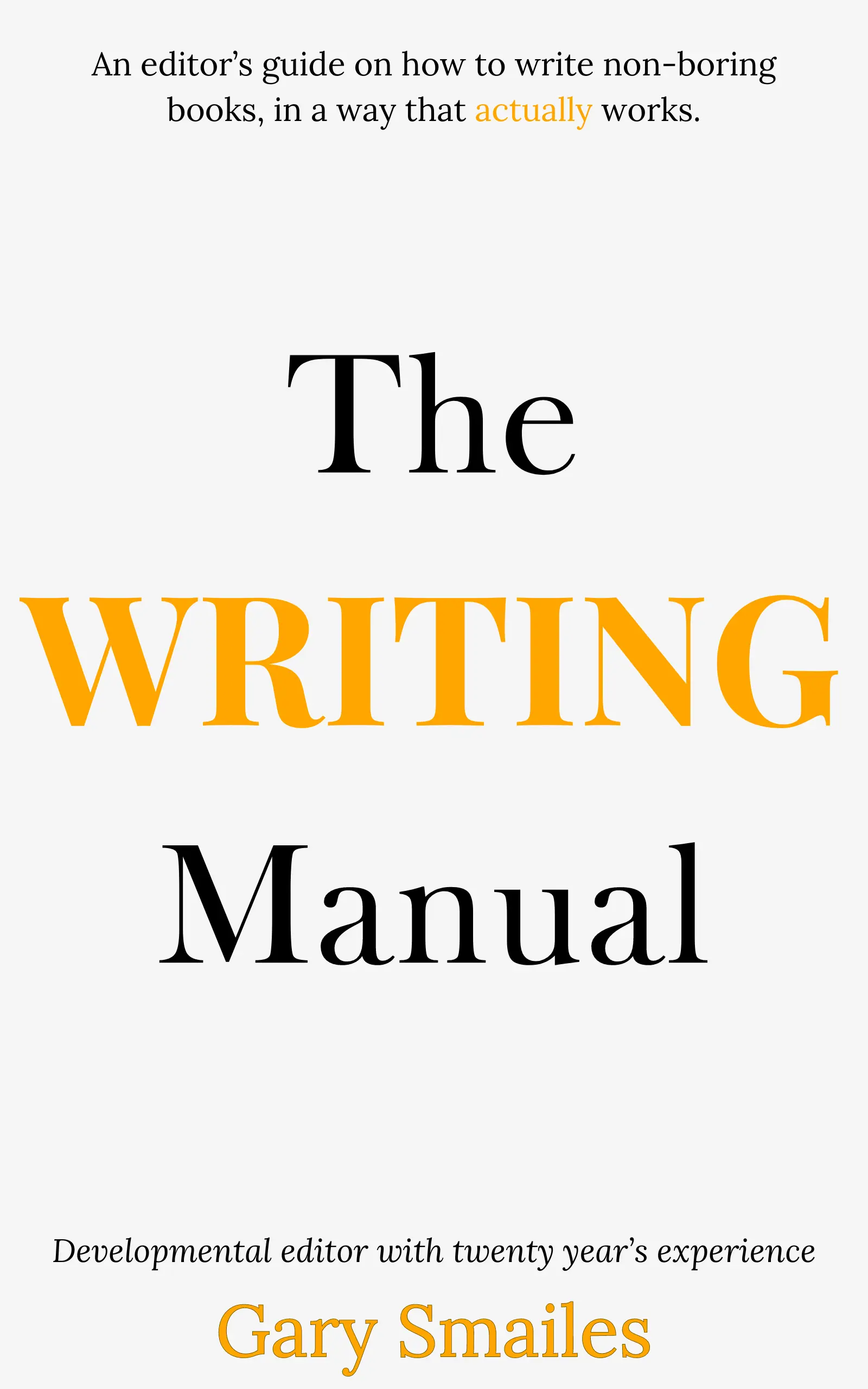
Download FREE ebook
Claim your free eBook today and join over 25,000 writers who have read and benefited from this ebook.
'It is probably one of the best books on writing I've read so far.' Miz Bent
Download your free ebook