The Difference Between Developmental And Substantive Editing


Table of Contents
Understanding Developmental Editing
Think of developmental editing as architecture for your story. Before you worry about the color of the walls or the style of the doorknobs, you need to make sure the foundation is solid and the rooms flow together logically. A developmental editor looks at your manuscript and asks the hard questions: Does this plot make sense? Are your characters believable? Is the pacing dragging in chapter three and rushing through chapter seven?
This type of editing tackles the big-picture elements that make or break a story. Plot holes get identified and plugged. Character motivations get clarified or completely overhauled. The structure gets examined with a critical eye. Your editor might suggest moving chapter ten to chapter three, or combining two characters into one, or cutting an entire subplot that isn't pulling its weight.
Developmental editing typically happens first in the editing process, and for good reason. There's no point polishing sentences if the whole scene needs to be cut. No sense perfecting dialogue if the character saying it doesn't belong in the story. Think of it as the architectural blueprint phase. You want to nail down the structure before you start picking paint colors.
A developmental editor examines each scene and asks whether it serves the story's purpose. That beautifully written description of the sunset might have to go if it stops the plot dead in its tracks. That witty conversation between secondary characters might get flagged if it doesn't advance the plot or reveal character. The editor looks at chapter arrangement too. Does the opening hook readers? Do the chapters build momentum or kill it? Are you revealing information at the right pace?
Here's what surprises many writers: developmental editing often means big changes. Your editor might suggest cutting the first three chapters and starting the story in chapter four. They might recommend switching from third person to first person, or changing the entire ending. This isn't criticism of your writing ability. It's recognition that good stories sometimes hide inside okay stories, and getting to that good story requires major surgery.
The developmental editor's job is to see the forest, not the trees. They're not worried about comma splices or awkward sentences at this stage. They're asking fundamental questions: Who is this story about? What do they want? What's stopping them from getting it? How does the story end, and does that ending feel inevitable and satisfying?
This process works best when you're ready to be flexible with your manuscript. If you're attached to every scene and unwilling to make major changes, developmental editing might frustrate you. But if you're committed to making your story the best it can be, even if that means substantial revisions, developmental editing provides the roadmap you need.
The feedback comes in the form of detailed editorial letters and margin comments. Your editor explains what's working, what isn't, and why. They suggest solutions, but the actual rewriting remains your job. You'll get a manuscript covered in notes and a several-page editorial letter outlining the major issues and proposed solutions.
Some manuscripts need multiple rounds of developmental editing, especially first novels or complex stories with multiple plotlines. Each round builds on the previous one, gradually solving the structural issues until you have a solid foundation ready for the next stage of editing.
Understanding Substantive Editing
Substantive editing is the Swiss Army knife of the editing world. While developmental editing stays in the clouds, looking at the big picture, substantive editing works at multiple altitudes simultaneously. Your editor tackles structural problems while also fixing clunky sentences. They reorganize paragraphs and polish prose. They spot plot inconsistencies and smooth out awkward transitions.
This dual approach makes substantive editing particularly valuable for manuscripts that have solid bones but need work at every level. Your story structure might be sound, but individual scenes drag. Your characters are well-developed, but their dialogue sounds wooden. Your plot makes sense, but the writing lacks clarity and punch.
A substantive editor dives into your manuscript with both a macro and micro lens. They might move an entire section to a different chapter, then spend time rewriting the opening paragraph of that section to improve flow. They look for unclear antecedents, confusing sentence structure, and paragraphs that meander without purpose. At the same time, they're checking whether scenes build properly and whether your pacing serves the story.
Here's what this looks like in practice. Your editor notices that chapter five feels sluggish. They identify the problem: too much backstory dumped in the middle of an action sequence. They suggest moving some of that backstory to chapter three, cutting the rest entirely, and then they rewrite the remaining paragraphs to tighten the prose and sharpen the action. Problem solved at both the structural and sentence level.
Substantive editing pays special attention to clarity, coherence, and readability. Your editor asks whether readers will understand what's happening, when it's happening, and why it matters. They flag confusing transitions between scenes. They highlight places where you've assumed readers know something they don't. They identify sentences that require multiple readings to parse.
The process often involves significant rewriting, but not the ground-up reconstruction you might see in developmental editing. Instead, your substantive editor reshapes existing material. They might combine weak paragraphs into stronger ones. They reorganize information within scenes for better impact. They rewrite dialogue to sound more natural or cut descriptive passages that slow the pace.
This type of editing requires editors who think like writers. They need to understand story structure and character development, but they also need the sentence-level skills to improve your prose style. They're looking at word choice, sentence variety, and paragraph flow while simultaneously tracking character arcs and plot development.
Substantive editing works well for manuscripts that have been through initial revision but still need comprehensive improvement. Your story works, but it doesn't sing. Your characters are believable, but their motivations could be clearer. Your prose is readable, but it lacks energy and precision.
The editing process involves heavy markup of your manuscript. Expect to see substantial rewriting, reorganization, and commentary. Your editor might rewrite entire paragraphs to demonstrate clearer, more engaging approaches. They'll move sentences around, suggest cuts, and propose additions. The goal is to show you what's possible while teaching you to recognize these issues in future work.
Unlike developmental editing, which focuses primarily on identifying problems, substantive editing often provides solutions in real time. Your editor doesn't just tell you that a scene is confusing. They show you how to make it clear. They don't just flag weak dialogue. They demonstrate stronger alternatives.
This hands-on approach makes substantive editing particularly valuable for writers who learn better from example than from explanation. You see your own work transformed, which teaches you to recognize similar problems and solutions in your future writing. The process improves both your current manuscript and your skills as a writer.
Key Differences in Scope and Approach
The easiest way to understand these editing types is to think about building a house. Developmental editing examines your foundation, framing, and floor plan. Does the structure make sense? Are the rooms in the right places? Will this house actually work for the people living in it? Substantive editing looks at both the structure and the finishes. Yes, they check the foundation, but they also care whether the walls are painted well and the fixtures work properly.
Developmental editors maintain their altitude at 30,000 feet. They're looking at your manuscript's architecture. Does your three-act structure actually have three acts? Do your character arcs complete satisfying journeys? Does the pacing keep readers engaged throughout? They spot plot holes, identify pacing problems, and flag character inconsistencies. But they're not going to fix your comma splices or rewrite awkward sentences. That's not their job.
A developmental editor reads your romance novel and notices that your protagonists have no real obstacles to being together. Sure, there's a misunderstanding in chapter twelve, but it gets resolved with one conversation. The conflict feels manufactured, not organic. The editor's report will identify this fundamental problem and suggest ways to create genuine, believable obstacles that arise from the characters' personalities and circumstances.
Substantive editors operate like skilled general contractors who also happen to be interior designers. They see the big picture, but they're equally concerned with how individual rooms look and function. They'll restructure your chapters if needed, but they'll also rewrite clunky paragraphs and fix confusing sentences. They work simultaneously at multiple levels, moving seamlessly between forest and trees.
That same romance novel gets different treatment from a substantive editor. They notice the weak conflict, but they also see that the dialogue lacks sparkle, the love scenes fade to black too abruptly, and several scenes drag because of too much internal monologue. They address all of these issues, showing you how to strengthen the central conflict while also improving the moment-to-moment reading experience.
The questions these editors ask reveal their different approaches. Developmental editors want to know if your story works at its core. Does the premise have enough meat for a full novel? Are your characters compelling enough to carry the narrative? Does your plot build to a satisfying climax? They're diagnosticians, identifying what's broken in the story's DNA.
Substantive editors assume your story works but ask how to make it work better. How do you make this good scene great? How do you clarify this confusing passage? How do you tighten this saggy middle section? They're both diagnosticians and surgeons, finding problems and fixing them in real time.
Timeline differences matter more than you might think. Developmental editing happens early, usually on first or second drafts. You need to know if your story's foundation is solid before you spend months polishing prose that might get cut entirely. Getting developmental feedback too late means potentially wasting time on beautiful sentences that serve a broken story.
Substantive editing offers more flexibility. It works well on third or fourth drafts where the story structure is sound but everything needs refinement. But substantive editors are also skilled enough to work on earlier drafts if needed. They adapt their approach based on what your manuscript requires.
Here's where it gets interesting: substantive editing works at different stages because it addresses different problems. On an early draft, a substantive editor might focus more on structural issues while still cleaning up prose. On a later draft, they might spend more time on sentence-level improvements while making minor structural adjustments.
Think about revision strategy. Developmental editing typically requires you to go back to your draft and implement major changes. You might cut entire characters, restructure your plot, or rewrite significant portions. The editor provides a roadmap, but you do the renovation work.
Substantive editing gives you a renovated house. Your editor does much of the heavy lifting during the editing process. You still need to review their changes and make final decisions, but you're not starting from scratch. You're refining and approving improvements rather than rebuilding from blueprints.
The scope difference affects everything from the editor's skill set to your budget to your timeline. Developmental editors need deep story sense but don't require the sentence-level expertise that substantive editors possess. Substantive editors need both macro vision and micro skills, making them harder to find and often more expensive per hour. But they might save you time overall because they're solving multiple types of problems simultaneously.
When to Choose Each Type of Editing
Your manuscript will tell you what it needs, but you have to listen. The symptoms are usually obvious once you know what to look for.
Choose developmental editing when your beta readers keep asking the same confused questions. "Why did Sarah do that?" "What happened to the subplot about the missing money?" "I don't understand why this matters to the story." These are red flags waving frantically at structural problems.
Your story has plot holes you could drive a truck through. Events happen because the plot requires them, not because they grow naturally from character choices and circumstances. Your protagonist makes decisions that serve your story but don't make sense for who they are. You have scenes that felt important when you wrote them but now seem pointless when you read them back.
Character inconsistencies plague many first drafts. Your heroine acts brave in chapter three and cowardly in chapter fifteen, with no character growth to explain the change. Your villain's motivation shifts halfway through the book. Secondary characters disappear and reappear without explanation, like they're playing hide-and-seek with your plot.
Developmental editing also makes sense when you're staring at a manuscript that sprawls everywhere and nowhere. You have beautiful individual scenes that don't connect into a coherent narrative. Your pacing lurches between breakneck speed and glacial crawl. You suspect you're telling the story in the wrong order, or maybe even telling the wrong story entirely.
Here's a test: if you're not sure what your book is actually about, you need developmental editing. Not the plot summary version, but the deeper story. What change does your protagonist undergo? What's the emotional journey you're taking readers on? If you fumble this explanation, your structure needs work.
Substantive editing fits when your story works but doesn't sing. Your plot holds together. Your characters behave consistently. Your pacing keeps readers engaged. But something's missing. The prose lacks sparkle. Scenes drag when they should zip along. Dialogue sounds wooden. Transitions feel clunky. You know the story is there, but it's not reaching its potential.
You'll recognize this situation when beta readers say things like, "I liked it, but..." They finish the book but don't rave about it. They remember the plot but not specific moments that made them laugh or cry or gasp. The manuscript reads fine but doesn't grab you by the throat and refuse to let go.
Substantive editing works well when you've already revised several times and solved the big problems. Your first act sets up the story properly. Your climax delivers on the promises you made earlier. Your character arcs complete satisfying journeys. But individual chapters feel uneven. Some scenes are crisp and engaging, others feel like rough sketches. The quality varies too much throughout the manuscript.
Consider your draft number when making this choice. First drafts almost always benefit from developmental editing. You're still figuring out what story you're telling. The bones might be there, but they need examination and possibly rearrangement before you worry about the flesh.
Second drafts occupy tricky territory. If you did major structural work between drafts one and two, you might still need developmental feedback. But if draft two represents careful revision of a solid structure, substantive editing might be the right next step.
Third drafts and beyond usually call for substantive editing, assuming you've been revising thoughtfully. By this point, you should have solved the fundamental story problems. Now you need an editor who addresses everything from chapter organization to sentence rhythm.
But here's where it gets interesting: some manuscripts break these rules. I've seen fifth drafts that still had major plot problems because the author kept polishing sentences instead of fixing structure. These manuscripts needed to step backward to developmental editing before moving forward.
Your comfort level with major revisions matters too. Developmental editing often requires cutting favorite scenes, combining characters, or completely reordering your plot. If you're attached to every word you've written, this process will feel brutal. Be honest about your willingness to make significant changes.
Some writers thrive on big-picture revision. They love the puzzle of restructuring scenes and strengthening character motivation. Others find major revisions overwhelming and prefer working on smaller improvements. Neither approach is wrong, but your preference should influence your editing choice.
Consider your timeline and energy levels. Developmental editing typically requires multiple rounds of revision before you're ready for the next editing stage. You'll implement changes, then need fresh eyes to evaluate how well the revisions worked. This takes time and mental bandwidth.
Substantive editing often produces a manuscript closer to publication-ready in a single round. You'll still need to review changes and make decisions, but you won't be doing extensive rewriting. If you're working against a tight deadline, this efficiency might tip the scales.
Think about your ultimate goals too. If you're planning to self-publish and want to maintain complete creative control, developmental editing gives you detailed feedback while leaving all implementation decisions in your hands. If you prefer collaborative editing where someone helps solve problems in real-time, substantive editing offers more hands-on assistance.
Some manuscripts genuinely need both types of editing in sequence. Start with developmental editing to fix structural problems, revise accordingly, then move to substantive editing to refine presentation and polish prose. This two-stage approach costs more but produces stronger final manuscripts.
Trust your instincts about what your manuscript needs most. If you're excited about the story but frustrated with how it reads, you probably need substantive help. If you love individual scenes but worry the overall narrative doesn't work, developmental editing comes first.
Working with Developmental vs Substantive Editors
The way you'll collaborate with these editors differs as much as the work they do. Understanding these differences upfront prevents mismatched expectations and smoky working relationships.
Developmental editors think like architects reviewing your blueprint. They'll read your entire manuscript, then step back to examine the foundation. Expect a detailed editorial letter, often ten to twenty pages long, that dissects your story's strengths and weaknesses. This isn't a gentle pat on the head followed by minor suggestions. Good developmental editors tell you the hard truths about plot holes, character motivation problems, and structural issues that derail your narrative.
The report will feel overwhelming at first. I've seen writers stare at fifteen pages of feedback and wonder if their manuscript is hopeless. It's not. Think of this report as a renovation plan for a house with good bones but serious problems. The editor isn't telling you to tear everything down. They're showing you which walls to move, which rooms need better flow, and where you're missing crucial support beams.
You'll receive specific recommendations: "Cut the flashback in chapter four and weave that information into dialogue in chapter seven." "Sarah's motivation in the third act contradicts her behavior in act one. Choose one version of her character and revise accordingly." "The romantic subplot distracts from your main conflict. Either give it more weight or remove it entirely."
After you digest this feedback and revise, many developmental editors offer a second read to evaluate your changes. This follow-up isn't line-by-line editing. They're checking whether you solved the big problems and identifying any new issues your revisions created. Some writers need three or four rounds of this macro-level feedback before their manuscript is ready for the next editing stage.
This process demands patience and thick skin. You're not just fixing typos or awkward sentences. You're potentially restructuring entire sections, cutting beloved scenes, or completely reimagining character relationships. The work is intense and sometimes emotionally draining.
Substantive editors work more like skilled carpenters who improve your house while they build it. They'll make changes directly in your manuscript using track changes, so you see exactly what they're adjusting. Instead of a separate report telling you that dialogue sounds wooden, they'll rewrite stilted conversations and show you better alternatives.
You'll see comments in the margins explaining their thinking: "This paragraph repeats information from page twelve." "The transition between these scenes feels abrupt. I've added a bridge sentence." "This character description runs too long for a secondary player. I've condensed it to the essential details."
The collaborative feel is different. Rather than receiving a diagnosis and treatment plan, you're watching a master craftsperson fix problems in real time. You learn by seeing their solutions, not just reading their analysis.
Substantive editors typically work through your manuscript once, making improvements as they go. They might flag sections that need author attention, but they won't wait for you to revise before continuing. The goal is delivering a polished manuscript that addresses both structural and stylistic issues simultaneously.
Communication styles reflect these different approaches. Developmental editors spend time discussing concepts and story theory. They'll explain why your inciting incident needs more punch or how your character arc lacks a proper midpoint crisis. These conversations often feel like master classes in storytelling craft.
Expect phone calls or video meetings where you brainstorm solutions together. "What if we moved this revelation earlier in the story?" "Have you considered combining these two minor characters?" The editor becomes your thinking partner, helping you discover better ways to tell your story.
Substantive editors focus on implementation details. Their communications tend toward practical problem-solving. "I've restructured this chapter opening, but you'll need to check the timeline references." "The dialogue tags in this section were repetitive, so I varied them. Let me know if any changes don't match your characters' voices."
Their comments teach through demonstration rather than lengthy explanation. You learn why certain sentence structures work better, how to improve paragraph flow, and when to trust white space instead of overwriting emotional moments.
Budget considerations go beyond the editor's fee. Developmental editing often requires significant author time for revisions. You might spend weeks or months implementing changes between editorial rounds. If you're juggling writing with a day job and family responsibilities, factor this time commitment into your decision.
The multiple-round nature of developmental editing also means extended timelines. First read, author revision, second read, more revision. The process stretches across months, not weeks. Plan accordingly if you're working toward publication deadlines.
Substantive editing frontloads the intensive work. Your editor spends more hands-on time with your manuscript, which typically costs more per hour or page. But you receive a more polished manuscript in a single round, requiring less follow-up revision time from you.
Some editors offer hybrid approaches that blur these lines. They might provide a developmental-style report along with substantial line-level editing. Others work in stages, addressing structural issues first, then moving to sentence-level improvements. Discuss these options during your initial conversations.
Choose an editor whose communication style matches your learning preferences. If you thrive on understanding the theoretical why behind story problems, developmental editing offers rich educational value. If you prefer seeing concrete solutions and learning through example, substantive editing might suit you better.
Consider your revision stamina too. Some writers energize during big-picture problem-solving but burn out on detailed line editing. Others find major structural revisions overwhelming but enjoy fine-tuning prose and pacing. Be honest about which type of work excites you and which feels like drudgery.
The best editing relationships feel like partnerships, regardless of which type you choose. Your editor should respect your vision while helping you execute it more effectively. They should explain their reasoning, welcome your questions, and work collaboratively toward your shared goal of making your story the best version of itself.
Choosing the Right Editing Approach for Your Manuscript
The wrong editing choice wastes money and delays your publication timeline. Worse, it leaves you frustrated when the feedback doesn't match what your manuscript needs. Before you contact any editor, diagnose your manuscript's condition honestly.
Start with the big questions. Does your story make sense from beginning to end? When you read it aloud, do you find yourself explaining plot points that aren't on the page? Do your characters behave consistently, or do they make decisions that serve the plot instead of their established personalities? If your beta readers keep asking "But why would she do that?" or "I don't understand how they got from the forest to the castle," you have structural problems that require developmental editing.
Look for the telltale signs of foundational issues. Your protagonist lacks clear motivation. Your antagonist appears in chapter fifteen with no setup. Your middle section drags because nothing meaningful happens for three chapters. Your ending feels rushed because you crammed the climax into five pages. These problems need architectural solutions, not cosmetic fixes.
Plot holes signal developmental needs. If your detective solves the mystery using information that never appeared earlier in the book, that's not a small inconsistency. If your romance couple falls in love between chapters with no emotional development shown on the page, that's a structural gap. If your fantasy world has magic rules that change whenever convenient for your plot, you need foundational work.
Character inconsistencies also point toward developmental editing. Your shy librarian suddenly becomes an action hero with no character growth to support the transformation. Your villain's motivation makes sense in chapter two but contradicts everything they do in chapter twenty. These aren't sentence-level problems. They're storytelling issues that affect reader engagement throughout your manuscript.
Pacing problems often require developmental solutions too. Your story starts with three chapters of backstory before any conflict appears. Your middle section feels like you're marking time until you reach the exciting ending you've planned. Your climax resolves too easily because you haven't planted enough obstacles throughout the story. Developmental editors help you restructure the entire narrative flow.
If these structural issues sound familiar, developmental editing should be your first step. Don't attempt to polish prose when your foundation needs rebuilding. You'll waste time perfecting scenes you might need to cut or completely rewrite.
But what if your story structure works? Your plot progresses logically, your characters behave consistently, and your pacing keeps readers engaged. You've tested the story on beta readers who understand what happens and why. They're not confused about motivation or plot logic. Instead, they mention smaller issues. The writing feels clunky in places. Some scenes drag while others rush past important moments. Dialogue sounds wooden. Descriptions run too long or provide too little information.
These symptoms point toward substantive editing. Your story foundation is solid, but the presentation needs improvement. You know what you want to say, but you're not saying it as effectively as possible.
Consider your writing experience level. New writers often benefit from developmental editing because they're still learning storytelling fundamentals. You might have great instincts for character or dialogue, but struggle with plot structure or scene construction. Developmental editors teach you to think like a storyteller, not just a writer.
Experienced writers who've published multiple books might need substantive editing more often. You understand story structure and character development, but you want fresh eyes on how you're executing familiar techniques. Your prose might have developed unconscious habits that substantive editing addresses.
Be honest about your revision tolerance. Developmental editing requires major changes that might feel overwhelming if you're already emotionally exhausted by multiple drafts. Some writers thrive on big-picture problem solving. They enjoy reimagining character motivations, restructuring plot sequences, and cutting scenes that don't serve the story. Others find these large-scale changes paralyzing.
If you love the puzzle-solving aspect of storytelling, developmental editing offers rich creative challenges. If you prefer working with language and fine-tuning existing content, substantive editing might match your natural preferences better.
Timeline pressures influence your choice too. Developmental editing takes longer because it often requires multiple revision rounds. First editorial letter, major revision, second editorial review, final adjustments. This process stretches across months. If you're working toward a specific publication deadline or have committed to a release date, factor this extended timeline into your decision.
Substantive editing typically delivers results faster. Your editor works through the manuscript once, making improvements as they go. You receive a polished draft that needs minimal additional work from you. This approach suits writers with tight deadlines or limited time for extensive revisions.
Budget considerations go beyond the editor's fee. Calculate the total cost including your time investment. Developmental editing might cost less per hour but require more rounds of revision. You'll spend weeks implementing changes between editorial reviews. If you're juggling writing with other responsibilities, this time commitment becomes a budget factor.
Substantive editing frontloads the intensive work. Your editor spends more hands-on time with your manuscript, which typically costs more initially. But you avoid the extended revision cycle that developmental editing requires.
Some manuscripts need both approaches in sequence. Your story might have structural problems that require developmental work first, followed by substantive editing to polish the revised content. This two-stage approach takes longer and costs more, but it addresses fundamental issues while ensuring professional presentation.
Consider this sequential approach if your manuscript shows mixed symptoms. Strong character development but weak plot structure. Engaging dialogue but confusing scene transitions. Compelling themes but inconsistent pacing. These manuscripts benefit from fixing the foundation first, then refining the presentation.
Start with developmental editing if you're uncertain which approach to choose. Structural problems affect everything else in your manuscript. There's no point perfecting prose in scenes you might need to cut or completely rewrite. Developmental editors often identify presentation issues alongside structural problems, giving you a roadmap for subsequent editing stages.
Trust your instincts about what feels wrong with your manuscript. If you keep getting stuck on the same plot problems or character inconsistencies, you probably need developmental help. If the story flows well but the writing feels rough or unclear, substantive editing makes more sense.
Remember that editing is an investment in your manuscript's success. The right type of editing at the right stage saves time and improves your final result. The wrong choice wastes both time and money while leaving your manuscript's core problems unsolved.
Talk to editors about your specific situation before making a final decision. Professional editors evaluate manuscripts regularly and develop good instincts about what each project needs. Describe your concerns and let experienced editors guide you toward the most effective approach for your particular manuscript.
Frequently Asked Questions
Can I skip developmental editing and go straight to substantive editing?
You can skip developmental editing only if your manuscript's foundation is solid. If beta readers understand your plot without confusion, your characters behave consistently, and your pacing keeps readers engaged, substantive editing might be sufficient. However, if you're unsure about structural issues, developmental editing first prevents wasting time polishing scenes you might need to cut or completely rewrite.
How many rounds of developmental editing does a typical manuscript need?
Most manuscripts need one to two rounds of developmental editing, though complex stories or first novels sometimes require three or four rounds. Each round builds on the previous one, gradually solving structural issues until you have a solid foundation. The number depends on your story's complexity and how thoroughly you implement the editor's feedback between rounds.
Which editing type works better for first-time novelists?
First-time novelists typically benefit most from developmental editing because they're still learning storytelling fundamentals. New writers often struggle with plot structure, character consistency, and pacing issues that require architectural solutions. Developmental editing teaches you to think like a storyteller while providing a roadmap for major revisions that strengthen your manuscript's foundation.
What should I expect to pay for developmental versus substantive editing?
Substantive editing typically costs more per hour because editors need both macro vision and micro-level prose skills, making them harder to find. However, developmental editing often requires multiple rounds, extending your total investment. Factor in your revision time too—developmental editing demands weeks of author work between editorial rounds, whilst substantive editing frontloads the intensive work into a single comprehensive pass.
Should I wait until my third draft before hiring any editor?
The draft number matters less than your manuscript's condition. First drafts often need developmental editing to identify structural problems early. Third drafts usually benefit from substantive editing, assuming you've revised thoughtfully. However, some writers keep polishing sentences instead of fixing foundational issues, meaning even later drafts might need developmental work before moving forward.
How do I know if my plot holes require developmental or substantive editing?
Major plot holes that affect your story's logic require developmental editing—like characters solving mysteries with information never shown to readers, or magical systems that change rules whenever convenient. Minor inconsistencies and unclear transitions between scenes can be addressed through substantive editing. If beta readers ask "But why would she do that?" consistently, you likely need developmental help with character motivation and story structure.
Can substantive editors fix structural problems while polishing prose?
Substantive editors can address moderate structural issues while improving prose, making them versatile for manuscripts with mixed needs. They might reorganise chapters, strengthen scene transitions, and clarify character motivations whilst simultaneously polishing dialogue and tightening descriptions. However, fundamental plot problems or major character inconsistencies typically require the focused attention that developmental editing provides.
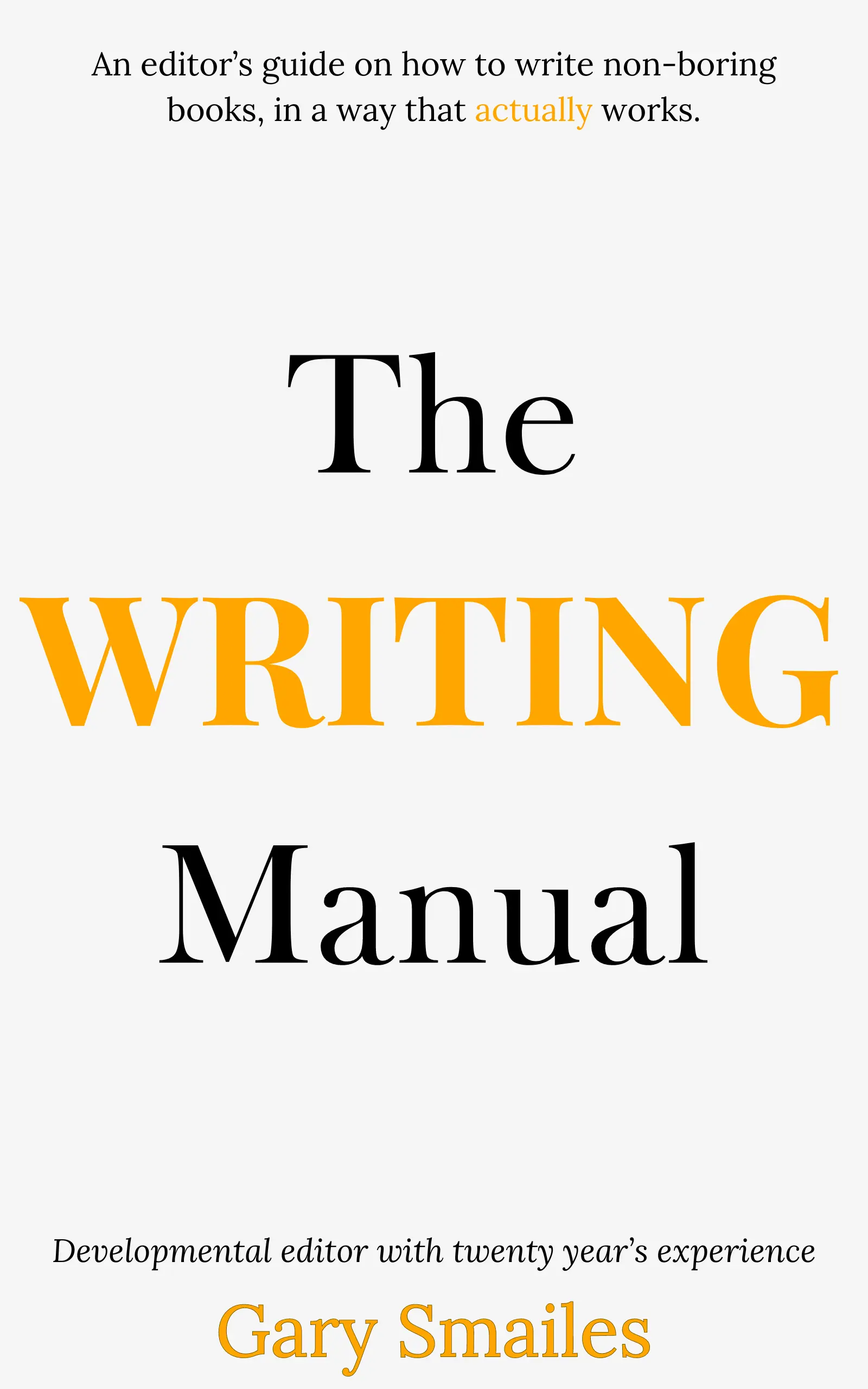
Download FREE ebook
Claim your free eBook today and join over 25,000 writers who have read and benefited from this ebook.
'It is probably one of the best books on writing I've read so far.' Miz Bent