The Difference Between Editing And Rewriting


Table of Contents
Understanding Editing vs. Rewriting
Writers often think editing and rewriting are the same beast wearing different hats. They're not. The difference between them shapes every decision you'll make about your manuscript.
Editing means taking what you've written and making it better. Picture a sculptor polishing marble that's already been carved. You're smoothing rough edges, clarifying details, strengthening what's already there. The statue doesn't change its fundamental form. Your story keeps its bones, its voice, its essential character. You might tighten dialogue, fix pacing issues, or strengthen a character's motivation. But the story you started with remains recognizably yours.
Rewriting is different. Think demolition and reconstruction. You're not polishing the existing structure. You're tearing down walls, moving the foundation, sometimes starting over with nothing but the original idea. A rewrite might mean changing your protagonist from first person to third, switching the entire story from past to present tense, or realizing your thriller works better as literary fiction.
Here's a simple test. If you're fixing sentences and paragraphs, you're editing. If you're questioning the fundamental premise of your story or completely changing how it unfolds, you're rewriting.
The key distinction lies in preservation versus transformation. Editors enhance what exists. They're like skilled mechanics fine-tuning an engine that runs but needs adjustment. Rewriters are architects who look at your foundation and say, "We need to build something entirely different here."
Both approaches serve different purposes in manuscript development. Sometimes your story needs the gentle hand of an editor who respects what you've built. Other times, it needs the bold vision of someone willing to help you tear everything down and build it better.
The tricky part? Many manuscripts need both. You might rewrite your opening chapters, then edit the rest. Or edit your way through a first pass, only to discover that deeper structural problems require a complete rewrite of the middle section.
Neither approach is superior. Each responds to what your story needs at that moment in its development. Learning to recognize which one serves your manuscript best will save you months of frustration and false starts.
When Editing Is the Right Choice
Your manuscript has good bones. The story works. Characters feel real and their motivations make sense. The plot moves from point A to point B without major detours into confusion. When you read it, you think, "This is close. This is almost there." That's when editing becomes your best friend.
Look for these signals. Your beta readers connect with the story but stumble over awkward passages. They love your protagonist but wish certain scenes moved faster. They understand the plot but get confused during chapter transitions. These are editing problems, not rewriting problems.
Consider Sarah's mystery novel. Her detective was compelling, the murder plot held together, and the reveals landed at the right moments. But her pacing dragged in the middle third. Chapters ended without hooks. Some dialogue felt stiff and formal while other conversations sparkled with personality. The story didn't need surgery. It needed skilled hands to smooth the rough patches and tighten the loose screws.
Plot structure matters here. If your story follows a logical progression and your scenes serve clear purposes, you're in editing territory. Your inciting incident works. Your characters face obstacles that make sense. Your climax delivers on the promises you made earlier. You're not questioning whether events should happen. You're asking how to make them happen better.
Character development offers another clue. Your characters feel like real people with believable motivations. Readers care about what happens to them. But maybe your protagonist's growth feels rushed in places or too subtle in others. Maybe your supporting characters need more distinctive voices. These are refinement issues, not fundamental problems.
Writing quality becomes the clearest indicator. You read a paragraph and think, "I know what I meant to say here, but it's not quite right." Your sentences work but lack punch. Your descriptions convey information without creating atmosphere. Your dialogue moves the plot forward but doesn't reveal character. Good writing that needs to become great writing responds beautifully to editing.
Voice preservation is crucial. When your narrative voice feels consistent and authentic, editing respects that achievement. A skilled editor won't try to make you sound like someone else. They'll help you sound more like yourself. They'll identify places where your natural voice gets muddied by overthinking or underthinking, then help you find your way back to clarity.
Here's the test. Read three random pages from your manuscript. Do they feel like they belong in the same book? Do they sound like they came from the same writer? If the answer is yes, you've got a voice worth preserving and a story worth editing.
Editing also makes sense when you're emotionally ready for refinement rather than reconstruction. You've lived with these characters and scenes long enough to feel protective of them. The thought of major changes makes you anxious rather than excited. That attachment isn't weakness. It often signals that you've created something worth keeping.
Time and energy play a role too. Editing typically moves faster than rewriting because you're working with existing material rather than creating new content. If you're facing deadlines or feeling burnt out from multiple drafts, editing offers a more manageable path forward.
The sweet spot for editing is a manuscript that makes you think, "I love this story, but I know it needs work." Not, "I love parts of this story, but most of it feels wrong." The difference matters more than you might expect.
When Rewriting Becomes Necessary
Sometimes your manuscript isn't broken in small ways. It's broken in big ways. The kind of ways that make you stare at your screen and realize that no amount of line editing will fix what's fundamentally wrong with the story you're trying to tell.
Plot holes are the obvious culprit. Not the small inconsistencies that slip through during drafting, but the gaping wounds that make readers throw books across rooms. Your detective solves the case using evidence that was never established. Your romance hinges on a misunderstanding that any reasonable person would clear up with a five-minute conversation. Your fantasy hero defeats the dark lord using powers that contradict everything you've established about magic in your world.
These aren't editing problems. These are architectural problems. You don't fix a crumbling foundation by repainting the walls.
Take Marcus, who spent two years on a thriller about corporate espionage. His protagonist was a accountant who discovers his company is laundering money. Great premise. But Marcus had his hero uncover the conspiracy in chapter three, then spend the next twenty chapters running from assassins without learning anything new or growing as a character. No amount of polishing could fix the fact that his story ended before his book did.
Character problems run deeper than dialogue tags and personality quirks. You know you need rewriting when your characters feel like chess pieces being moved around a board rather than people making believable choices. They do what the plot requires, not what their personalities and motivations would drive them to do.
Look for the warning signs. Your protagonist wants something in chapter one and something completely different in chapter ten, with no growth or change to explain the shift. Your villain exists only to create obstacles, not because they have their own goals and reasons. Your supporting characters appear when the plot needs them and vanish when it doesn't.
Sarah wrote a family drama about three sisters dealing with their mother's death. She loved the premise and the themes, but after four drafts, her beta readers still couldn't tell the sisters apart. They had different names and jobs, but they all spoke the same way, made similar choices, and reacted identically to conflict. The story needed new characters, not better descriptions of the existing ones.
Narrative voice problems are trickier to spot but devastating to ignore. Your story lurches between first and third person without reason. Your narrator sounds like a wise-cracking detective in action scenes and a Victorian poet during emotional moments. Your voice works for comedy but falls flat during drama, or vice versa.
This isn't about finding your voice. This is about discovering that the voice you've chosen doesn't serve your story. A cozy mystery told in the style of literary fiction. A romance narrated by someone who clearly dislikes both main characters. A children's book written with vocabulary that would challenge graduate students.
Multiple storylines create their own special chaos. Subplots are supposed to support and enhance your main story, not compete with it for attention. When you find yourself jumping between three different protagonists pursuing three unrelated goals, you don't have a complex narrative. You have three separate stories trying to share space in one book.
The test is simple. Remove one of your storylines completely. Does the main story still work? If yes, that subplot was probably unnecessary. If no, but removing it leaves holes you fill with exposition or coincidence, you've got structural problems that editing won't solve.
Jennifer's science fiction novel followed a space marine, a rebel hacker, and a corporate scientist across different planets and time periods. Each storyline was interesting on its own, but they only connected in the final chapter through a series of coincidences that felt forced rather than inevitable. Readers spent the entire book waiting for connections that never materialized in meaningful ways.
Sometimes the problem is simpler but more devastating. You realize you've been telling the wrong story entirely. The subplot about the protagonist's relationship with their estranged father is more interesting than the main plot about solving a murder. The comic relief character has more depth and agency than your protagonist. The world you built to support your adventure story is better suited for political intrigue.
These revelations hurt. You've invested time, energy, and emotional attachment in what you've written. But here's the truth that every working writer learns: some drafts are practice runs for the story you're actually meant to tell.
Rewriting doesn't mean failure. It means you've learned enough about your story to see what it needs to become. That's growth, not defeat.
The Developmental Editor's Role in Both Processes
A developmental editor walks into your manuscript like a doctor conducting a physical exam. They're not there to treat symptoms. They're there to diagnose what's healthy, what's sick, and what needs major surgery.
The first job is triage. Within the first few chapters, sometimes the first few pages, an experienced developmental editor knows whether they're looking at a manuscript that needs editing or one that needs rewriting. This isn't magic. It's pattern recognition built from reading hundreds of manuscripts at different stages of development.
They're looking for specific markers. Does the opening establish character, conflict, and stakes in a way that feels organic to the story? Do the characters make choices that drive the plot forward, or does the plot drag them along? Is there a narrative voice present, even if it needs refinement? These elements tell an editor whether the foundation is solid enough to build on.
Rachel brought me a historical romance set during the Civil War. The research was meticulous, the period details authentic, the writing clean. But her protagonist spent the first sixty pages reacting to events without making a single meaningful choice. The love interest appeared in chapter eight without any setup or motivation for being there. The conflict that should have driven the entire story was resolved accidentally in a throwaway scene near the end.
Beautiful writing. Wrong story structure. This manuscript needed rewriting, not editing.
Contrast that with Michael's fantasy novel about a reluctant mage. The opening dragged, the dialogue felt stilted in places, and some plot points needed better setup. But the protagonist had clear goals and made choices that created consequences. The supporting characters had their own agendas that both helped and hindered the main story. The magic system was consistent and integral to the plot. This manuscript had solid bones that needed refinement, not reconstruction.
The assessment phase determines everything that follows. Get this wrong, and you'll waste months polishing prose that should be scrapped or rebuilding structure that's already sound.
Once the diagnosis is clear, the developmental editor becomes part teacher, part therapist, part construction foreman. They don't just point out problems. They explain why something isn't working and offer specific strategies for fixing it.
For editing projects, this means detailed feedback on pacing, character arcs, and scene construction. They might suggest moving a revelation from chapter twelve to chapter eight to improve tension. They could recommend deepening a secondary character's motivation to better support the protagonist's journey. They'll identify where exposition feels forced and suggest ways to weave information more naturally into dialogue and action.
For rewriting projects, the feedback becomes more fundamental. They might recommend starting the story at a different point, changing the point of view character, or restructuring the entire plot around a different central conflict. This is where their role becomes more collaborative and more delicate.
Authors get attached to their work. Rightfully so. Every scene, every character, every clever turn of phrase represents hours of effort and creative investment. When a developmental editor says "this needs to be completely rebuilt," they're not just critiquing the work. They're asking the author to let go of something they've poured themselves into.
The skilled developmental editor knows how to deliver difficult news in ways that motivate rather than devastate. They identify what's working before they address what isn't. They explain their reasoning so the author understands the logic behind major changes. They offer alternatives rather than ultimatums.
Most importantly, they help authors see the difference between attachment and effectiveness. You might love that clever subplot about your protagonist's pet parrot, but if it's not serving the story, it needs to go. A good developmental editor helps you kill your darlings without feeling like you're killing your creativity.
Throughout major revisions, whether editing or rewriting, the developmental editor acts as a guardian of story integrity. They help authors maintain consistency in tone, character, and world-building as changes ripple through the manuscript. They catch the inevitable contradictions that arise when you move scenes, change character motivations, or restructure plot points.
They also serve as a sounding board for new ideas. When you're deep in revision, it's easy to lose perspective on whether a new scene works or a character change makes sense. The developmental editor provides the external perspective you need to evaluate changes objectively.
The balancing act between preserving author voice and improving reader experience requires both technical skill and emotional intelligence. Every author has a unique way of seeing and expressing ideas. The developmental editor's job is to help that voice become clearer and more compelling, not to replace it with their own.
This means learning to recognize the difference between voice issues and skill issues. An author who writes long, complex sentences might need help with clarity and pacing, but they don't need to become a minimalist. An author who favors quiet, character-driven stories doesn't need to add explosions to compete with thrillers. The goal is helping each author become the best version of themselves, not a carbon copy of someone else.
The developmental editor guides this process without taking it over. They ask questions that lead authors to discoveries rather than simply providing answers. They suggest experiments rather than demanding specific changes. They help authors build the skills to recognize and solve problems in future projects.
When the process works well, authors come away not just with a stronger manuscript but with a better understanding of how stories work. They learn to see their own writing more objectively and to revise more effectively. That's the difference between hiring someone to fix your current project and learning to write better books.
Making the Decision: Edit or Rewrite?
You're staring at your manuscript, and something feels wrong. Maybe your beta readers pointed out issues you hadn't seen. Maybe an agent's rejection mentioned "pacing problems" or "character development." Maybe you've been living with this story so long you've lost perspective entirely.
The question haunting you is simple but crucial: Do you need to edit this thing, or do you need to tear it down and start over?
The answer isn't always obvious, even to experienced writers. I've seen authors spend months polishing prose when their real problem was a broken plot structure. I've also watched writers throw away perfectly good manuscripts because they got overwhelmed by surface-level issues that editing could have fixed in weeks.
Start with an honest assessment of what's working. Not what you hoped would work or what you intended to work, but what's working right now on the page.
Does your opening establish who your protagonist is and what they want within the first few pages? Do the major plot points feel inevitable when they happen but surprising before they do? Do your characters make choices that create consequences, or do things happen to them without their involvement? Does each scene move the story forward in some meaningful way?
If you answered yes to most of these questions, you're probably looking at an editing situation. The foundation is there. You're building on solid ground.
Sarah's contemporary romance had all these elements. Her protagonist was clear about her goals from page one. The love interest posed a genuine obstacle to those goals, creating natural conflict. The emotional turning points happened because of character choices, not coincidence. But the pacing dragged in the middle, some dialogue felt stilted, and a few scenes needed better transitions.
Six weeks of focused editing transformed that manuscript from good to compelling. The bones were always strong. They just needed better muscle and skin.
Now consider the fundamental weaknesses. These are the problems that make readers put your book down, not the ones that make them notice your craft.
If your protagonist spends most of the story reacting to events rather than driving them, you have a structural problem that editing won't fix. If your central conflict gets resolved by accident or coincidence, you need to rebuild your plot. If readers finish your book without understanding what your main character wanted or why they should care, you're looking at a rewriting situation.
Mark brought me a science fiction novel about humanity's first contact with aliens. The writing was crisp, the world-building detailed, the scientific concepts fascinating. But the story didn't start until page 127. Everything before that was setup, backstory, and exposition disguised as action. The real protagonist didn't appear until chapter eight, and when she did, her motivation was unclear.
This wasn't a pacing problem you could fix by cutting scenes. The entire structure was built around the wrong story. We had to start over, using some of the existing material but rebuilding the narrative from the ground up.
Practical considerations matter too, though they shouldn't drive the creative decision entirely.
Timeline affects everything. If you're working toward a submission deadline or publication date, editing almost always takes less time than rewriting. A manuscript that needs extensive editing might require two to three months of focused work. A manuscript that needs rewriting could take six months to a year, depending on how much of the original material you can salvage.
Budget is a factor if you're working with professional editors. Developmental editing for a solid manuscript might cost a few thousand dollars. Guiding an author through a complete rewrite often costs significantly more because it requires more time and more rounds of feedback.
Your emotional attachment to the existing content matters more than you might think. If you love specific scenes, characters, or pieces of dialogue, but they don't serve the new structure you need, rewriting becomes an exercise in killing darlings. Some authors handle this better than others.
Jenny had written a fantasy novel with three viewpoint characters. The middle character's storyline was beautifully written but completely unnecessary to the main plot. It added 30,000 words and slowed the pacing to a crawl. She knew it needed to go, but she couldn't bring herself to cut it because those were her favorite scenes.
We spent two months trying to integrate that storyline into the main plot before she finally admitted it didn't belong. Sometimes your attachment to existing content makes rewriting more difficult than starting fresh.
The hardest question to answer honestly is whether surface changes will fix deeper problems. Authors often hope that better dialogue will mask weak character motivation, or that improved pacing will disguise plot holes.
Here's a diagnostic test: If someone explained your story's main conflict in two sentences, would it sound compelling? If your protagonist's goal and the obstacles preventing them from achieving it don't create inherent tension, no amount of line editing will make the story work.
Another test: Do the problems your beta readers or editors identified cluster around specific craft elements, or do they point to fundamental story issues? Comments about "confusing transitions" or "inconsistent tone" suggest editing needs. Comments about "I didn't understand why the character did that" or "the ending felt unsatisfying" often point to deeper structural problems.
The final consideration is whether your current draft serves as a foundation or merely a rough outline with complete sentences. Some manuscripts that need rewriting contain the seeds of a much stronger story. Others are practice runs that taught you what you wanted to write about.
There's no shame in either situation. The first draft's job is to exist, not to be perfect. Sometimes that existence reveals the real story you want to tell, which is different from the one you thought you were writing.
If you're still unsure, try this: Write a one-page summary of your story as it exists now. Then write a one-page summary of your story as you wish it existed. If the two summaries describe basically the same story with different execution, you need editing. If they describe different stories entirely, you need rewriting.
The decision ultimately comes down to whether you're fixing what you have or building what you need. Both paths lead to better books, but they require different mindsets, different timelines, and different levels of emotional resilience.
Choose the path that matches your manuscript's needs, not your preferences. Your story will be stronger for the honesty.
Working Effectively with Your Editor
The relationship between writer and editor is part collaboration, part trust exercise, and part creative therapy session. Get it right, and you'll produce work that's stronger than either of you could create alone. Get it wrong, and you'll waste time, money, and creative energy on a process that leaves everyone frustrated.
The foundation of any good editor-writer relationship is honest communication from day one. Don't pretend you're okay with feedback when you're not. Don't nod along with suggestions that make your stomach clench. And for the love of good storytelling, don't wait until the final round of revisions to mention that you hate the direction things are heading.
I once worked with a literary fiction writer who spent three weeks agreeing with my suggestions about restructuring his novel's timeline. His responses were always positive: "Great idea," "That makes perfect sense," "I see what you mean." But when he submitted the revised draft, nothing had changed. Not one scene had moved. Not one chapter had been cut.
When I asked what happened, he admitted he'd hated the idea from the start but didn't want to seem difficult. We'd wasted a month because he was afraid to disagree with me. The irony is that his instincts were right. The original structure worked better for his particular story, something I might have realized if he'd explained his concerns instead of pretending to agree.
Your editor isn't a mind reader. If you have strong feelings about a character, scene, or plot point, say so upfront. Explain why those elements matter to you. Sometimes the attachment is purely emotional, and your editor needs to help you see past it. Other times, you're protecting something essential to the story that your editor missed on the first read.
Lisa brought me a young adult fantasy manuscript with a character named Marcus who appeared in exactly three scenes. My initial feedback suggested cutting him entirely. He didn't advance the plot, didn't provide crucial information, and didn't have a clear relationship to the protagonist. Lisa's response surprised me: "Marcus stays. I'll revise everything else you suggest, but he stays."
Instead of arguing, I asked why Marcus mattered to her. She explained that he represented the protagonist's connection to her old life before the magical world intruded. He was the anchor that made her eventual choice to embrace her new destiny meaningful. Lisa was right. Marcus wasn't the problem. The problem was that his function in the story wasn't clear to readers. We kept Marcus but rewrote his scenes to make his thematic importance obvious.
Trust your editor's professional judgment, but don't abandon your creative instincts. Good editors bring years of experience reading manuscripts, understanding market expectations, and recognizing patterns that work or don't work. They've seen hundreds of stories make the same mistakes yours is making. They know which problems are cosmetic and which ones will make agents and readers put your book down.
But you know your story in ways your editor never will. You understand the emotional core you're trying to capture, the themes that matter to you, the specific reader experience you want to create. Your job isn't to defend every word you've written. It's to defend the heart of what you're trying to say.
The best collaborations happen when writers articulate their vision clearly and editors figure out how to make that vision work on the page. This requires you to think beyond individual scenes or chapters to the bigger picture of what your story is about.
David was writing a thriller about corporate espionage. My developmental feedback focused heavily on pacing issues in the middle section, where the action slowed down for three chapters of character development. His first instinct was to cut those chapters entirely and keep the plot moving. But when I asked what made his thriller different from the dozens of similar books published each year, he said it was the relationship between the protagonist and his estranged daughter.
Those three slower chapters were where that relationship got developed. Cutting them would have solved the pacing problem but destroyed the emotional core that made his story unique. Instead, we wove the character development into action scenes and found ways to advance the relationship through plot events rather than stopping the story for heart-to-heart conversations.
Understand that major revisions almost always make manuscripts stronger, even when the process feels brutal. I've never worked with a writer who regretted doing the hard work of structural revision. I've worked with plenty who regretted not doing it sooner.
The first instinct when an editor suggests big changes is often resistance. You've lived with this story for months or years. You know these characters like family members. The idea of changing fundamental elements feels like betraying your original vision.
But here's what I've learned after twenty years of editing: most manuscripts that need major revision aren't broken. They're incomplete. The story you thought you were telling is actually a first draft of the story you want to tell. The revision process is how you discover what that better story looks like.
Rachel's romance novel had a solid premise, likable characters, and emotional scenes that made me cry. But the conflict felt manufactured. The misunderstanding that kept the protagonists apart for 200 pages could have been resolved with one honest conversation. Readers would spend the entire book frustrated that the characters were being stupid.
Rachel's first response was to defend the conflict. She'd based it on a real situation from her own life. The emotions were authentic. The misunderstanding was believable. All of that was true, but it didn't make for satisfying fiction. Real life doesn't have to make narrative sense. Stories do.
We spent a month rebuilding the conflict from the ground up. The new version was harder to resolve, which made the characters' struggle more compelling. The final book was so much stronger that Rachel wondered why she'd been so attached to the original version.
View the editing process as collaborative improvement, not criticism. Your editor's job isn't to tell you what's wrong with your writing. It's to help you make your writing better. Those are different things, even though they sometimes feel the same.
When an editor points out a problem, they're not attacking your competence as a writer. They're identifying an opportunity to improve the reader's experience. When they suggest changes, they're not imposing their vision on your story. They're helping you realize your vision more effectively.
This mindset shift makes all the difference in how you receive and respond to feedback. Instead of getting defensive about what doesn't work, get curious about what could work better. Instead of protecting what you've written, focus on serving what you're trying to write.
The most successful writer-editor relationships I've seen share certain characteristics. The writer trusts the editor's expertise but maintains ownership of creative decisions. The editor respects the writer's vision but doesn't hesitate to challenge choices that undermine it. Both parties focus on the story's needs rather than their egos.
Remember that you're paying for your editor's honesty, not their approval. If you wanted someone to tell you everything was perfect, you could have asked your mother. You hired a professional because you want your manuscript to be as strong as possible. That requires hearing things you might not want to hear and considering changes you might not want to make.
The goal isn't to win arguments with your editor or to prove that your original choices were right. The goal is to end up with a book that accomplishes what you set out to accomplish, told in the most effective way possible. Sometimes that means taking your editor's advice. Sometimes it means pushing back and finding a third option neither of you had considered. Always, it means keeping the story's best interests at heart.
Frequently Asked Questions
How can I tell if my manuscript needs editing or a complete rewrite?
Look at your story's foundation. If your protagonist has clear goals, makes meaningful choices that drive the plot, and your major story beats feel inevitable, you likely need editing rather than rewriting. However, if characters spend most of the story reacting to events, your central conflict resolves by coincidence, or readers can't understand what your protagonist wants, you're facing structural problems that require rewriting.
What's the difference between developmental editing and copy editing for manuscript revision?
Developmental editing focuses on big-picture story elements like plot structure, character development, pacing, and narrative voice. Copy editing addresses grammar, punctuation, consistency, and sentence-level clarity. Think of developmental editing as architectural work on your story's foundation, whilst copy editing is the final polish that makes your prose shine.
How long does a typical manuscript rewrite take compared to editing?
Editing a manuscript with solid structure typically requires two to three months of focused work, whilst a complete rewrite can take six months to a year depending on how much original material you can salvage. The timeline varies based on the extent of changes needed and whether you're working with professional editors or revising independently.
When should I hire a developmental editor versus attempting self-revision?
Consider hiring a developmental editor when you've lost perspective on your manuscript, when beta reader feedback points to fundamental story problems you can't identify, or when you're unsure whether your manuscript needs editing or rewriting. Developmental editors provide the objective assessment and professional expertise needed to diagnose structural issues that authors often can't see in their own work.
What are the warning signs that my manuscript has plot structure problems?
Key warning signs include characters who exist only to create obstacles rather than having their own goals, protagonists who react to events instead of driving the story forward, and central conflicts that resolve through coincidence or accident. If your story's main tension could be resolved with a single honest conversation, or if subplots compete with your main story rather than supporting it, you're likely facing structural issues that require rewriting.
How do I work effectively with an editor without losing my unique writing voice?
Communicate openly about your creative vision and which elements are non-negotiable for your story's emotional core. Good editors enhance your natural voice rather than replacing it with their own. Trust their professional judgment on craft issues whilst maintaining ownership of creative decisions that define your story's heart and themes.
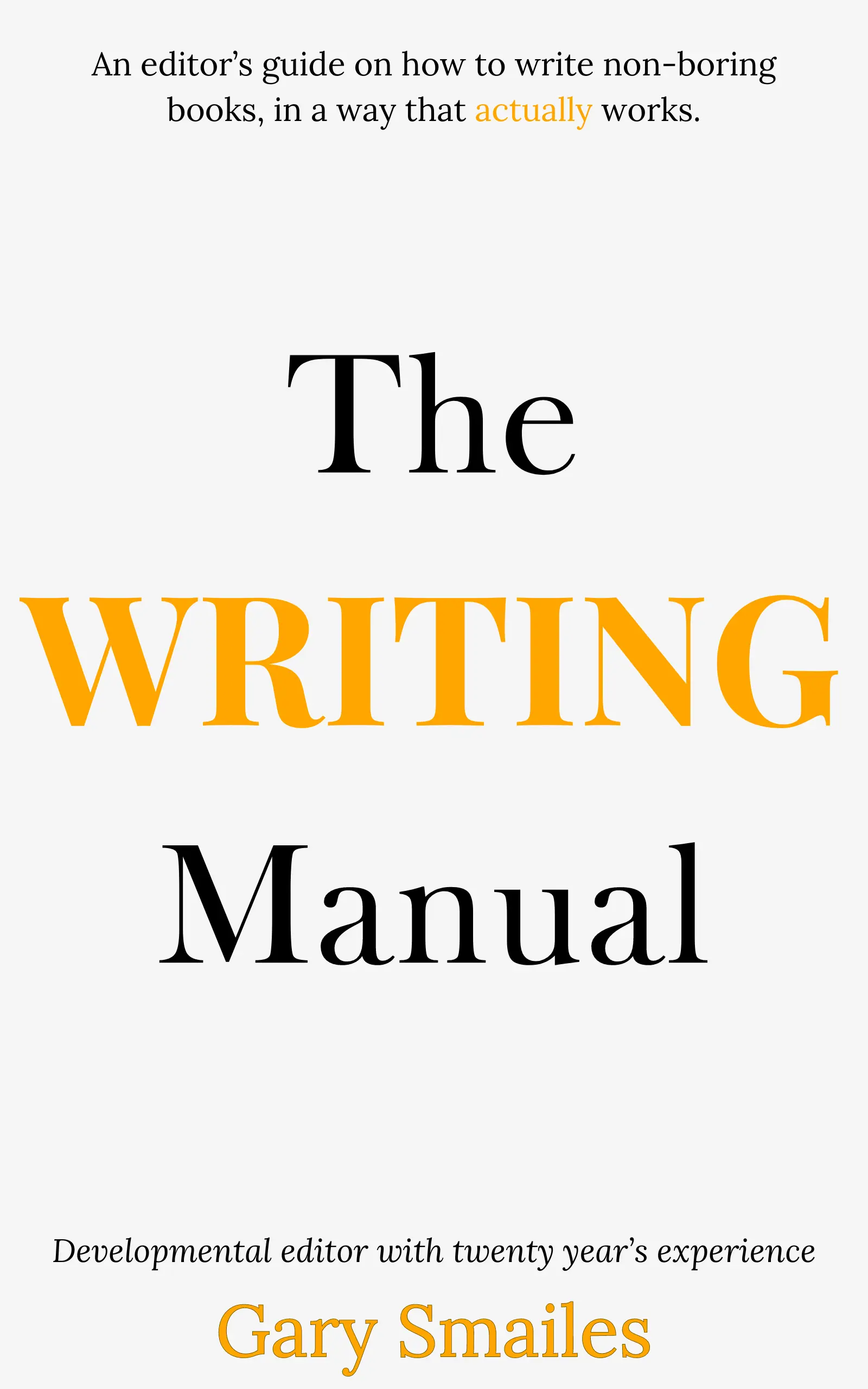
Download FREE ebook
Claim your free eBook today and join over 25,000 writers who have read and benefited from this ebook.
'It is probably one of the best books on writing I've read so far.' Miz Bent