When Should I Get A Manuscript Assessment


Table of Contents
- The Best Stage of the Writing Process to Book an Assessment
- Signs You’re Ready (And Signs You Should Wait)
- What an Assessment Helps With Most (And What It Won’t Fix)
- Timing by Goal: Self-Publishing, Querying, and Publisher Submission
- Practical Options and Budget-Friendly Paths (So You Don't Overpay)
- Frequently Asked Questions
The Best Stage of the Writing Process to Book an Assessment
Timing matters. Not in a mystical, stars-aligned way. In a money-and-sanity way.
A manuscript assessment is most useful when you’ve got enough material on the page for an assessor to diagnose the book you wrote, not the book you meant to write. It’s also most useful when you still have the energy to revise without resenting every sentence.
Here’s the sweet spot.
Finish the draft, beginning to end
A manuscript assessment needs a complete manuscript. Beginning, middle, end. Not “I’m 12 chapters in and I know where it’s going.” Not a folder of scenes. Not a detailed outline with excellent intentions.
Why? Because story problems hide in the ending.
- The ending reveals whether the protagonist’s choices add up.
- The ending shows whether the stakes were real or decorative.
- The ending tells the assessor if you paid off what you set up, or forgot about it in chapter nine.
Even nonfiction needs an ending. Your argument has to land. Your takeaway has to feel earned. If your book stops mid-thought, the assessor can only guess what the finished shape will be.
If you’re thinking, “But I want feedback so I don’t waste time,” I get it. Save early feedback for a partial critique of your opening pages. Book a full assessment when the book exists as a whole, even if it’s messy.
Messy is fine. Missing is not.
Do one self-editing pass first
Send your best current draft, not your rawest. You’re not trying to impress anyone. You’re trying to remove the noise so the assessor can see the real issues.
A solid self-edit pass means you’ve handled the obvious stuff:
- You patched the plot holes you already know about.
- You fixed continuity you can fix without help, names, ages, timelines, basic logic.
- You cleaned up readability enough so the assessor isn’t tripping over avoidable confusion on every page.
This does not mean you copyedit your own book for three weeks. It means you do a sensible sweep so the assessment focuses on structure, pacing, character, argument, and reader experience.
Here’s a quick test. If you’re still leaving notes in the manuscript like “ADD FIGHT SCENE HERE” or “RESEARCH THIS LATER,” you’re not ready for a full assessment. If the notes are minor, like “check gun model” or “verify street name,” you’re fine.
Another test. If you already know chapter one is in the wrong POV, or the antagonist disappears for 150 pages, fix it first. Don’t pay someone to tell you what you already know.
Book the assessment before you pay for heavy editing
This is the part where writers burn money.
If you line edit a manuscript with a shaky structure, you’re polishing scenes you might cut. If you copyedit too early, you’ll pay twice once you rewrite. If you hire a developmental editor before you know what’s broken, you might end up in an expensive, exhausting process when what you needed was a clear diagnosis and a revision plan.
Think of assessment as a decision point.
- Is the story shape working?
- Where does the reader lose interest?
- What are the top three problems holding the book back?
- What should you revise first so later editing is worth the cost?
An assessment does not replace other editing. It tells you whether you should spend on it yet.
Ideal checkpoints: pick the one that matches your goal
There are three common moments when a manuscript assessment earns its keep. None of them require perfection. They require a draft you’re ready to look at honestly.
Post-first draft: direction and triage
This is the “tell me what I’ve got” stage.
A post-first-draft assessment is useful when you’ve finished the book and you’re staring at it thinking, “I have no idea what to fix first.”
Expect big-picture feedback. Expect the assessor to circle the main structural and pacing issues, and to flag missing setup, uneven tension, unclear motivation, or a weak throughline.
What you get here is triage. You learn what’s urgent. You stop revising random chapters out of guilt.
This works best for writers who revise by instinct and need a plan.
Post-second draft: higher-quality, more actionable feedback
This is often the best value stage.
By draft two, you’ve usually dealt with the obvious mess. You’ve made major choices. The book has a clearer spine. That means the assessor can go deeper and be more specific.
Instead of “the middle sags,” you’re more likely to get “scenes 14 to 19 repeat the same conflict, and the protagonist’s goal goes soft after the midpoint.”
Instead of “the ending feels rushed,” you’re more likely to get “the final decision happens off-page, so the climax lacks force.”
A second-draft assessment gives you cleaner marching orders. You’ll still revise hard, but you’ll revise with fewer false starts.
Pre-query or pre-submission: reduce avoidable rejection
If you’re querying agents, pitching, submitting to a publisher, or entering competitions, an assessment is a smart final structural check.
This stage is less about teaching you what story structure is, and more about removing the problems strangers reject fast:
- an opening that takes too long to declare its genre
- a protagonist goal readers cannot track
- stakes that stay vague
- a plot that runs on coincidence
- a premise that does not match the pages
You’re also looking for positioning help. Is your word count within range for your category. Does the book deliver what the pitch promises. Are you writing the book agents think you’re writing based on page one.
If you’re on a deadline, be honest about what you can revise. An assessment a week before you query is a waste. You need enough time afterward to do the real work.
A simple way to choose your moment
Ask yourself three questions:
- Do I have a full draft with an ending I’m willing to stand behind for now?
- Have I done one pass to fix what I already know is broken?
- Am I willing to revise significantly based on what I learn?
If the answer is yes across the board, you’re at the right stage. If one answer is no, your next step is not an assessment yet. It’s finishing, tightening, or making time to revise so the feedback has somewhere to go.
Signs You’re Ready (And Signs You Should Wait)
Most writers don’t book an assessment too late. They book it too early, then feel bruised when the feedback sounds like, “Finish the book and revise it.”
So let’s save you the bruise.
Read the signs below like you’d read road signs in bad weather. You’re not aiming for perfection. You’re aiming for visibility. You want the assessor to see the manuscript you wrote, not fight through fog and loose pages.
You’re ready when you can summarise the book in 2–3 sentences
If you can’t explain your premise, genre, and target reader without a long throat-clearing preamble, you’re still finding the story.
Try this quick test. Set a timer for one minute and write two sentences:
- Who is the main character and what do they want?
- What stands in the way, and what happens if they fail?
Now add one line for genre and reader:
“This is a psychological thriller for readers who like X and Y.”
If you freeze, or you start listing “and then” plot points for ten minutes, pause on the assessment. An assessor can help you sharpen a pitch, sure. They can’t give you a stable diagnosis if the book’s identity is still shifting under your feet.
A good summary does not need fancy language. It needs clean decisions.
- What kind of book is this?
- What promise are you making to the reader?
- What experience should they expect?
If you can answer those, you’re in business.
You’re ready when the manuscript is structurally whole, even if messy
“Whole” is the key word. Not polished. Not pretty. Whole.
For fiction, whole means you have:
- an opening that launches a problem
- a middle where choices and consequences build
- an ending where the central problem resolves, even if you plan to redo the last third later
For nonfiction, whole means:
- a clear throughline, not a stack of chapters
- a beginning that sets up the promise and the reader’s problem
- an ending that delivers a takeaway, not a fade-out
Messy drafts are fine. Incoherent drafts are expensive.
Here’s what I mean. If your ending is placeholder text, or you wrote three possible endings and none feels like the book, the assessor will spend half the report hedging. You’ll get a lot of “depending on what you decide.” That’s polite, and also useless.
If your ending exists, even if it’s clunky, the assessor can say, “This choice undercuts the theme,” or “This ending fits the genre but the setup is missing.” Now you have something you can revise.
One more readiness check: the manuscript should match itself. If chapter one is a slow family drama and chapter twelve turns into a heist story with a new narrator, you’re still in the exploration stage. Exploration is healthy. It’s also not the moment to pay for professional diagnosis.
You’re ready when you’ve done basic consistency checks
This part sounds boring, and it is. It’s also one of the kindest things you can do for your future self.
Before you send pages to an assessor, make sure the manuscript does not trip over avoidable continuity issues. You want feedback on story and structure, not a report clogged with “wait, which sister is this?” notes.
Do a quick pass for:
- Names: spelling, nicknames, who calls whom what
- Timeline: days of the week, ages, travel time, seasons, pregnancy timelines, school terms
- POV approach: whose head are we in, how often you switch, whether the switch is clear on the page
- Place logic: where characters are in a scene, where objects are, what they can see or hear
You don’t need a spreadsheet, unless you love spreadsheets. A simple list in your notes app works.
A fast exercise: pick five random chapters and check the first page of each. Do you know where you are, whose perspective you’re in, and what the scene goal is? If those basics wobble, fix them before assessment. You’ll get better feedback because the assessor won’t waste energy orienting themselves.
You should wait when large sections are missing or you’re still finding the ending
If you have “Chapter 23: TBD” and it’s not a small gap, wait.
An assessment is not a brainstorming session. It’s evaluation of what exists on the page. If big sections are missing, the assessor either guesses, or tells you to finish. Neither is the best use of your money.
Same goes for the ending. If you’re still discovering what the book is trying to say, finish the draft first. You don’t need to love the ending. You need to commit to one version so someone can respond to it.
A practical compromise: finish the draft quickly with a blunt ending. No flourishes. No perfection. Get the characters to the final decision. Then revise once. Then book the assessment.
You should wait when you want sentence-level polish
A manuscript assessment is not line editing. If you’re hoping for:
- grammar fixes
- smoother sentences
- better word choice
- stronger paragraph flow
you’re shopping in the wrong aisle.
A good assessor will comment on writing style where it affects clarity and pacing. They might point out patterns, overwritten openings, dialogue that reads flat, repetition, confusing pronouns. They are not going to mark up every page.
If your main pain is “my writing sounds awkward,” you want line editing, a copyedit, or a smaller sample edit of a few pages. Or, if budget is tight, swap chapters with a sharp-eyed critique partner and ask them to flag sentences they had to reread.
Book an assessment when you’re ready to hear about structure, not commas.
You should wait when you want the assessor to tell you what to write
This is common, so let’s say it plainly.
If you haven’t revised at all and you want someone to point to the screen and say, “Write a chase scene here, add a better villain there, cut this character, and your book is fixed,” you’re asking for a different service.
Assessments work best when you’ve made your own choices first. Then the assessor evaluates those choices and tells you where the manuscript delivers, where it wobbles, and what to tackle first.
You should bring a draft you own. Not a draft you’re outsourcing.
If you want guidance earlier, look for coaching, a smaller critique, or a developmental editor who offers planning support. Or finish the draft and do one revision so you’re not handing over a half-built house and asking someone to comment on the curtains.
A useful middle ground: partial assessment for the opening
If you’re early, there’s a smart, budget-friendlier option. Get a partial assessment or critique of the first 3,000 to 10,000 words.
This helps with the stuff writers struggle to judge on their own:
- Does the opening hook work, or does it stall?
- Do we know the genre fast enough?
- Is the voice consistent, or does it shift?
- Are you starting in the right place?
- Are you delivering the book’s promise on page one?
A partial critique will not solve your plot. It will tell you whether your doorway into the book is strong, and whether readers will step through.
If you’re writing toward querying, this is especially useful. Agents and editors often decide fast. If your opening pages are unclear, the rest of the manuscript does not get a chance.
So here’s your rule of thumb. Full assessment when the book is whole. Partial critique when the book is still in motion, but you want to make sure your first pages are doing their job.
What an Assessment Helps With Most (And What It Won’t Fix)
A manuscript assessment is a skilled reader with a clipboard. Not a fairy godmother. Not a cleaner with a mop. Think of it as a diagnostic scan. You hand over the whole book, the assessor tells you what’s working, what’s not, and what to do first so you stop wasting time on the wrong fixes.
If you pick the right moment to get one, the report becomes your revision plan. If you pick the wrong moment, you pay for someone to tell you what you already knew in your gut.
Let’s get clear on what an assessment does best, and where it stops.
Big-picture diagnosis: structure, pacing, stakes, arc, theme, clarity
This is the core value. A good assessor reads like an editor. They track cause and effect. They notice what the story promises, and whether the pages pay up.
Here are the problems assessments spot fast.
Plot structure. Not “you need three acts” lecture stuff. Practical stuff. Where the story starts too early. Where the midpoint fails to turn the screw. Where the climax solves the wrong problem. Where the ending lands, but the setup never earned it.
Example: You open with a childhood prologue, then chapter two jumps to the real story. An assessor will tell you what you suspect. The prologue delays momentum and repeats information later. Cut it or make it pull real weight.
Pacing. Pacing is not speed. Pacing is pressure. An assessment points out where the pressure drops and why.
- too much scene setup before anything changes
- long stretches where characters talk around the conflict
- backstory placed where it breaks tension
- action scenes with no consequences afterward
You’ll often get notes like, “Chapters 7 to 10 repeat the same emotional beat,” or “Every scene ends with a question, so the questions stop working.”
Stakes. Many drafts have stakes in the writer’s head, not on the page. An assessor will flag vague stakes, delayed stakes, or stakes that feel theoretical.
If your character says, “This matters,” but nothing bad happens when they fail, you’ve got a problem. Assessments call it.
Character arc. This is where the report earns its keep. A good assessor separates “interesting character” from “character who drives the story.”
They’ll look for things like:
- Does the protagonist make active choices, or get dragged through events?
- Is the internal problem tied to the external plot, or glued on?
- Do secondary characters exist as people, or as tools?
- Are motivations stable, or rewritten each chapter to fit the scene?
If your protagonist’s big change arrives in the final ten pages with no groundwork, expect to hear about it.
Theme and narrative clarity. Theme sounds lofty. In practice, it’s what the book keeps returning to. An assessment will tell you when your story argues with itself.
Example: You want a redemption story, but you keep rewarding the character for bad behaviour. Or you’re writing a “found family” novel, but the group barely shares scenes together. The assessor helps you line up what you say the book is about with what the book spends time doing.
Clarity. This includes confusion caused by time jumps, POV switches, missing context, muddy goals, and scenes where the reader has no idea what the character is trying to achieve.
Clarity notes often look simple on paper. They save manuscripts.
Reader experience: where interest drops, where confusion hits, where tension spikes
Writers are too close to their own work. You know who the stranger is in chapter one because you invented them. A fresh professional reader does not.
An assessment maps the reading experience. You’ll get comments like:
- “I stopped trusting the narrator here.”
- “This reveal arrives before we care.”
- “I was confused about where the scene takes place.”
- “This was the first moment I felt real danger.”
- “The romance arc disappears for five chapters.”
Those notes matter because they describe what a reader feels, not what you intended.
One of the most useful things an assessor can do is point out the gap between intention and effect.
You wrote a slow burn romance. The report says the leads have one meaningful interaction in the first third. Slow burn is fine. No burn is not.
You wrote a mystery. The report says the clues are either too hidden or too obvious, and the detective solves things off-page. Now you know why early readers said, “I didn’t get it,” or worse, “I didn’t care.”
Genre alignment: meeting expectations and comparable titles
Genre is a promise. Readers bring expectations. Agents and editors bring them too.
Assessments are good at spotting when the book is drifting between shelves.
- A “thriller” with no escalating threat until halfway through.
- A “rom-com” where the tone stays bleak and the couple barely shares page time.
- A “fantasy epic” with gorgeous world notes but a thin plot engine.
- “Upmarket fiction” written like a memoir, then marketed like a crime novel.
A solid assessor will also point you toward comparable titles. Not as homework for you to feel guilty about, but as a positioning tool. Comps help you understand pace, tone, length, and reader appetite.
If you’re aiming for a particular market, this part of an assessment can prevent months of revision in the wrong direction.
Revision priorities: a roadmap of what to fix first
This is the part writers don’t expect to love. They expect feedback. They get triage.
A strong assessment report does not hand you a pile of opinions. It gives you an order of operations.
Because revision has a sequence. If you fix the sentences before you fix the structure, you polish scenes you later cut. If you tweak dialogue while the stakes are unclear, you end up with charming conversations about nothing.
A good roadmap often looks like:
- Solve the structural issue in the middle where the plot stalls.
- Strengthen the protagonist’s goal and urgency in the first three chapters.
- Rebuild the antagonist pressure so each win costs something.
- Then tighten scene work, then line-level work.
That order saves time, money, and morale.
What an assessment won’t do: grammar, punctuation, line-by-line style
If you want your assessor to fix commas, you want a copyeditor. Different job, different focus.
Most assessment reports will mention recurring line-level issues. Wordiness. Repeated phrases. Clunky exposition. Dialogue tags everywhere. You might get a paragraph of examples. You will not get every sentence repaired.
And you shouldn’t want that at this stage. If the report tells you to cut 20,000 words and restructure the final act, line edits now are wasted effort.
What it won’t do: rewrite your book or coach you scene by scene for months
A manuscript assessment is usually a single pass with a report, sometimes with brief margin notes or a short call. It’s not ongoing developmental editing. It’s not a writing partnership.
So if you’re hoping for:
- “Here’s how to rewrite every scene in chapter 12”
- multiple rounds of back-and-forth as you revise
- detailed beat-by-beat planning with you
You’re describing coaching or developmental editing. Those services cost more because the editor is spending more time inside the manuscript with you.
An assessment is still valuable, even if you want deeper support later. It helps you decide whether deeper support is worth paying for, and where to focus it.
What it won’t do: guarantee representation or publication
No assessment, no editor, no course, no checklist guarantees an agent, a book deal, prize listings, glowing reviews, or a six-figure launch.
What an assessment does is remove avoidable problems and sharpen your choices. It raises the quality of the manuscript and the clarity of its pitch. It helps you submit a book that looks intentional, coherent, and suited to its audience.
That’s not a guarantee. It’s something better. It’s control over the work you put into the world.
Timing by Goal: Self-Publishing, Querying, and Publisher Submission
Timing advice gets fuzzy because writers ask one question and mean three.
- When do I want feedback?
- When do I want to spend money?
- When do I want to stop fiddling and ship the book?
Your goal decides the best moment to book an assessment. The same report lands differently if you’re two months from a release date versus two weeks from querying.
Let’s sort it by path.
If you’re self-publishing
Self-publishing makes you the publisher. Which means you pay for every stage, and you live with the consequences of paying in the wrong order.
So here’s the clean sequence.
Assessment first. Then editing. Then packaging.
Why? Because a manuscript assessment tells you whether the book works as a book. Line editing and copyediting make sentences cleaner. Cover design and formatting make the product look professional. None of those fix a sagging middle, a fuzzy premise, or an ending that does not pay off what the opening promised.
I’ve watched writers spend good money on a gorgeous cover and a tight copyedit, then realise they need to cut five chapters and rewrite the final act. Now they have a pretty version of a draft they no longer want. Painful.
Use an assessment to answer two big questions before you spend on polish:
- Is the structure sound? Does the plot move, do the stakes rise, does the ending satisfy the setup?
- Does the book promise match the market? If you’re selling a cosy mystery, does the tone stay cosy? If you’re selling romantasy, does the romance carry its weight on the page?
Here’s a quick gut-check exercise before you book.
- Write your back cover copy in 150 to 200 words.
- Now look at your manuscript. Do the first three chapters deliver what the copy promises?
If the answer is “sort of,” an assessment is a smart spend. You are buying a course correction before you pay for surface work.
Also, watch your calendar. If you have a release date, book early enough to revise properly. Structural revisions take time. So do your feelings about them.
If you’re querying agents
Querying has its own special torture. You send pages into the void, you get form rejections, and you start changing random things because change feels like progress.
An assessment is most useful here when your draft is stable and you’ve already done your part.
Meaning:
- you’ve finished at least one full revision pass
- you’ve addressed obvious issues you already know about
- you’ve had beta readers or critique partners react to the full manuscript, and you’ve made the changes you agree with
Then you book the assessment to find the blind spots, the ones you cannot see because you built the house.
This is the sweet spot for three common situations.
1) You’re getting form rejections.
Form rejections do not diagnose anything. They mean “no.” An assessment can tell you what the pages look like to a skilled reader. Weak hook, slow start, unclear genre signal, stakes arriving late, voice flattening under exposition, any of the usual suspects.
2) You’re getting “not right for my list” responses.
Sometimes that means taste. Often it means positioning. Your novel reads like one genre but is pitched as another. Or the opening pages do not match the promise of the query. An assessor who understands your category will call this out.
3) You’re stuck in revision loops.
You keep tinkering with scenes, you keep swapping chapter order, you keep changing the first line like the first line is the problem. A good assessment report gives you an order of operations, so your next revision has a clear target.
Two practical tips for query-focused timing:
- Do not book an assessment when you secretly want permission to stop. You will hate the report.
- Do not book an assessment two weeks before you plan to query. You want time to revise, then time to cool off, then time to proof and re-check continuity. Rushed revisions create new problems.
If you’re submitting to publishers or competitions
Publisher submissions and competitions share one brutal truth. Readers decide fast.
An editor reading submissions is not settling in for a cosy evening. A judge with a longlist is not reading with patience for throat-clearing openings. They want to know, early, what sort of book this is and whether it delivers.
This is where an assessment earns its fee by focusing your attention on three areas.
The hook and early clarity.
Do we know who the protagonist is, what they want, what stands in the way, and why now? If your opening is stylish but vague, you will lose people.
Synopsis-ready structure.
A strong submission needs a synopsis that does not collapse into “and then, and then.” If your plot has missing turns, unclear causality, or a climax that does not solve the central problem, the synopsis exposes it. An assessment helps you fix the story so the synopsis becomes simpler to write.
The opening chapters as a product sample.
Competitions and publishers often ask for a partial. Even when they request the full, the first pages do the heavy lifting. An assessment can flag where you’re delaying the inciting incident, overloading backstory, or hiding the genre signal.
One more thing. If you’re submitting to a specific prize, imprint, or open call, read their previous selections. If your book sits far outside their taste, no assessment will change that. What it will do is help you present your work with clarity, so you submit to the right places instead of guessing.
If it’s a series
Series timing trips up a lot of writers because Book 1 has two jobs:
- tell a satisfying story with an ending
- leave room for more
Many early series drafts lean too hard on job two. You get set-up, threads, mysteries, lore, a hint of a villain, and then the book ends right when the story was about to start. Readers feel cheated. So do agents and editors.
Book an assessment for a series once Book 1 stands on its own.
Here’s what “stands on its own” looks like on the page:
- the main external conflict is introduced, escalated, and resolved, even if a larger threat remains
- the protagonist changes in a way the reader can point to
- the ending answers the big question the opening raised, even if a new question appears
A good assessor will also look at your series threads and tell you if they are doing useful work or cluttering the narrative. Teasers should feel like promise, not homework.
Quick test: if a reader finishes Book 1 and says, “Wait, that’s it?” you have a structure problem. If they finish and say, “I need the next one,” you’re in business.
Pick your timing based on what you’re trying to protect.
- Self-publishing: protect your budget, book before polish.
- Querying: protect your chances, book after betas and revision, before a wide submission.
- Publishers and competitions: protect your opening and structure, book early enough to rewrite.
- Series: protect reader satisfaction, book when Book 1 finishes a full meal, not an appetiser.
Practical Options and Budget-Friendly Paths (So You Don't Overpay)
Writers love two things. A bargain and a shortcut. Publishing offers neither.
Still, you do not need to throw money at every service in the hope something sticks. The trick is scope. Buy the right level of feedback at the right moment, then use it properly.
Choose the right scope
A manuscript assessment sits in the "big-picture" lane. Think structure, pacing, character arc, clarity, and genre fit. The main question is simple. Do you need a book-level diagnosis, or do you need to test one specific pressure point?
Full manuscript assessment: when you need the whole map
A full assessment makes sense when:
- you have a complete draft and you suspect the issues are structural
- you keep revising scene-by-scene but the story still feels flat
- you are close to querying, submitting, or paying for editing and you want to stop guessing
A decent full assessment should leave you with a clear revision plan. Not "tighten the pacing," but "chapters 6 to 10 stall because the protagonist has no active goal, so the tension drops. Move the discovery from chapter 11 to chapter 7, then cut the travel sequence."
That sort of specificity saves money later. You pay once for diagnosis instead of paying twice for editing on a manuscript you will rewrite.
Partial assessment: when you need a targeted test
A partial assessment is the sensible option when the budget is tight or the draft is not ready for whole-book analysis.
Common uses:
- Opening pages: Are you hooking the reader, signalling genre, and introducing stakes early enough?
- Pacing check: Does the middle drag, or do scenes repeat the same beat?
- Market fit: Does the voice and premise match the category you plan to sell in?
Partial assessments work best when you ask a focused question. "Do my first three chapters make a reader want chapter four?" is a good question. "Is my book good?" is not.
Here's a practical approach if you're unsure which to choose. If you are still changing the ending, book partial. If the ending is set and the problem is the path to get there, book full.
Combine feedback intelligently
You do not need a single magical source of truth. You need layers of feedback, each doing its own job.
Beta readers: reader reaction
Beta readers tell you what a normal engaged reader feels.
Where they got bored. Where they stayed up too late reading. Which character annoyed them. Where they got confused.
This is gold, and it costs you coffee and gratitude.
The catch is pattern recognition. One beta reader hates your protagonist, another loves them. Fine. Look for repeats. If four readers say chapter five drags, chapter five drags.
Manuscript assessment: professional diagnosis
An assessor reads like an editor. They connect your reader problems to story causes.
A beta says, "I got lost around the midpoint." An assessor says, "The midpoint shifts point of view and introduces new stakes without grounding, so the reader loses the through-line."
One is a symptom report. The other is a diagnosis with treatment.
Assessment first, then heavier services if needed
If your plan includes developmental editing, line editing, or copyediting, an assessment often saves you from paying for the wrong thing.
Example I see too often: a writer buys line editing because the prose feels clunky. The editor improves the prose. The story still does not work, because the protagonist has no clear goal. Now the writer needs a structural rewrite, which means much of the line edit becomes waste.
Flip the order. Assessment first. Fix the story. Then pay someone to polish the sentences you plan to keep.
Questions to ask an assessor before booking
Writers sometimes choose an assessor the way they choose takeout. Quick scan, quick order, hope for the best.
Ask a few direct questions. You are hiring a professional. They should be able to answer without fuss.
What deliverables are included?
Get specifics, in writing.
- How long is the report, roughly?
- Do you get chapter-by-chapter notes, margin comments, or both?
- Do you get a call or Q and A, and how long is it?
- Will the feedback include a revision plan, or only observations?
A three-page report and a twenty-page report are both called "an assessment" in the wild. One is a sketch, one is a working document. Know what you are paying for.
What genres do you specialise in?
Genre knowledge is not optional. Expectations differ.
A romance assessor should talk about the relationship arc and the payoff. A thriller assessor should talk about escalation and reveals. A fantasy assessor should understand how worldbuilding interacts with pace.
Ask what they assess most often, and what they avoid. A good professional knows their lane.
What's your typical turnaround?
Turnaround affects your planning more than you think.
If you are aiming to query in eight weeks and the assessor's queue is six weeks, you will be revising under pressure. Pressure makes writers do strange things, like rewriting the first chapter twelve times and never fixing the ending.
Also ask whether they offer rush options, and what rush costs. Decide upfront whether speed is worth the surcharge.
Will you comment on market positioning and comparable titles?
Not every assessor does market guidance, and not every writer needs it. If you are self-publishing, querying, or writing in a fast-moving category, market feedback helps.
What you want here is grounded commentary:
- Does the manuscript read like the genre you plan to pitch?
- Who is the target reader?
- Where might it sit on a shelf, online or in a shop?
- Which recent titles feel comparable in tone and promise?
If they offer comps, ask what they base them on. Reading widely in the category matters more than having a hot take.
How to plan your revision timeline
Most writers schedule the assessment and forget the messy part. Revision.
A report lands, you feel a burst of energy, then you hit the hard section where you need to cut scenes you like and rebuild the spine of the story. This takes longer than you hope.
A workable timeline looks like this:
- Assessment booked and delivered
- One week to read, cool off, and sort notes
- A revision plan you can follow without daily re-deciding
- Draft revision time, measured in weeks or months depending on scope
- A clean-up pass, continuity, character names, timeline, point of view rules
- Then line edit or copyedit, once the book is stable
If you have a deadline, build in slack. You want time to rewrite, then time to re-read with fresh eyes. Fresh eyes catch the new plot holes your rewrite introduced.
Frequently Asked Questions
When is the best stage to book a manuscript assessment?
Book a manuscript assessment once you have a complete draft — beginning, middle and end — and you’ve done at least one sensible self‑edit pass. The assessor needs the whole shape to diagnose problems like a weak midpoint, unresolved stakes or an ending that doesn’t pay off what you set up.
If you’re still writing big sections or experimenting with multiple endings, wait and either finish a blunt version or request a partial assessment of the opening instead.
What are the signs I’m ready — and signs I should wait?
You’re ready if you can summarise the book in two or three sentences (MC, want, cost), the manuscript is structurally whole even if messy, and you’ve fixed obvious continuity issues. That lets the assessor focus on structure, pacing and reader experience rather than basics.
Wait if large sections are missing, the ending is undecided, or you primarily want sentence‑level polish — those needs call for finishing the draft or booking line editing/copyediting instead.
Should I book a full manuscript assessment or a partial assessment?
Choose a full manuscript assessment when you have a finished draft and suspect structural or pacing issues across the book. A full assessment gives a global diagnosis and a revision plan. Choose a partial assessment — for example, the first 3,000–10,000 words — when your draft is still in motion but you need targeted feedback on hook, genre signal or opening‑page clarity.
Partial assessments are budget‑friendly and excellent for pre‑query checks; full assessments are better value if you want a map for a major revision.
How should I prepare before sending my manuscript to an assessor?
Prepare a one‑page project brief that states the genre/subgenre, approximate word count, two comparable titles, target reader and your specific concerns or goals. Do a quick sweep to fix obvious continuity errors and remove placeholder notes so the assessor sees the real problems, not scaffolding or unfinished scenes.
If you want specific attention, say so upfront — for example, "Please focus on the series‑starter duties of Book 1" or "Check whether the inciting incident lands by page 10." Clear briefing improves the value of a full manuscript assessment.
What will a manuscript assessment actually help me fix — and what won’t it fix?
An assessment diagnoses big‑picture issues: plot structure, pacing, stakes, character arcs, point‑of‑view problems and genre alignment, and it delivers revision priorities so you know what to tackle first. It maps reader experience and points to the leverage points for meaningful change.
It will not copyedit every line, rewrite scenes for you, or guarantee publication. Use the assessment to decide whether to invest in developmental editing, line editing or copyediting afterwards.
How do I choose and vet the right assessor without overpaying?
Prioritise an assessor with genre experience, clear process and sample reports or testimonials that describe concrete fixes. Ask direct questions about deliverables (report length, chapter‑by‑chapter notes, follow‑up call), turnaround and whether they provide market positioning and comparable titles.
If budget is tight, combine beta readers for broad reader reaction with a targeted partial assessment; if you plan heavier editing, buy the assessment first to avoid paying for edits on a manuscript you’ll later restructure.
What’s the best way to use the assessment report once I receive it?
Read the report once without annotating, cool off, then extract action items into three buckets: Must fix (structural issues), Should fix (strong improvements) and Optional experiments. Look for repeated notes — those are the high‑impact problems — and create a short ordered revision plan so you fix the engine before you polish the paintwork.
If something in the report is unclear, use the assessor’s follow‑up window or Q&A to ask one‑sentence clarification questions so you leave the exchange with concrete next steps rather than guessing at intent.
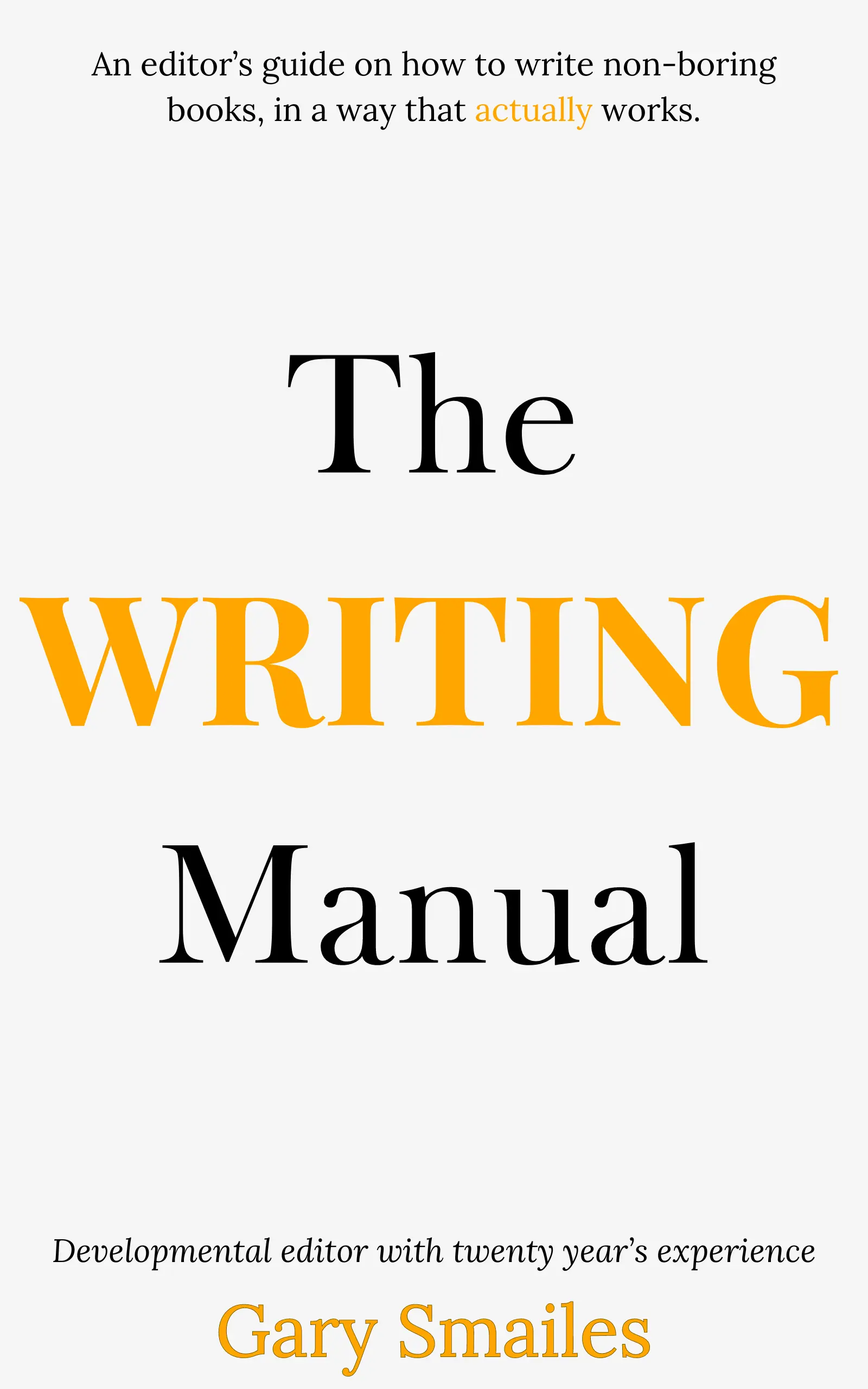
Download FREE ebook
Claim your free eBook today and join over 25,000 writers who have read and benefited from this ebook.
'It is probably one of the best books on writing I've read so far.' Miz Bent