Editing Your Own Book: The Top Ten Book Editing Tips

Table of Contents
- Set Yourself Up for a Strong Self-Edit (Before You Touch a Sentence)
- Do a Big-Picture Pass First (Structure, Plot, and Character)
- Strengthen Every Scene (Purpose, Tension, and Momentum)
- Line-Level Revision (Clarity, Voice, and Readability)
- Copy-Editing Checks (Consistency, Grammar, and Continuity)
- Proof-Style Passes and Quality Control (Your “Top Ten” Toolkit)
- Frequently Asked Questions
Set Yourself Up for a Strong Self-Edit (Before You Touch a Sentence)
The fastest way to ruin a self-edit is to start editing.
I know. You finished the draft, you feel the heat coming off it, and your fingers want to fix the first clunky line on page one. Resist. If you start tinkering too soon, you will polish sentences in scenes you later cut. You will solve the wrong problems. You will also convince yourself you are “editing” when you are doing the safer, smaller job of rearranging commas.
A strong self-edit starts before you touch a sentence. Your job first is to get distance, change your view, and make a plan. Then you edit.
Step one: put distance between drafting and editing
Distance gives you honesty. Without it, you read what you meant to write, not what’s on the page.
How much distance? Enough so you stop defending the draft.
For some writers, that’s a week. For others, it’s a month. If you are on deadline, take what you can get. Even three days helps.
While you wait, do something useful that does not involve rewriting chapter one for the ninth time.
- Write a short summary of your story from memory. One paragraph. No peeking. When you compare it to the manuscript later, you’ll see what your brain thinks the book is about.
- Make a list of your known problems. “Middle sags.” “Romance arc feels rushed.” “Too many side characters.” Get them out of your head and onto paper.
- Read one or two top books in your genre. Not to copy, to reset your sense of pacing and reader expectations.
Distance also protects your confidence. When you return with fresh eyes, you’ll notice issues more quickly and you’ll fix them faster. You will still have feelings. You will also have traction.
Step two: switch the format so the manuscript looks unfamiliar
Your brain loves familiar things. Familiar is efficient. Familiar is also blind.
When you change the format, you force yourself to read, not skim. You start catching missing words, repeated beats, and the places where your attention drifts. Those are the spots your future reader will feel too.
Pick one or two of these and commit:
- Print it. Yes, paper. Double-spaced. Wide margins. A pen you like. You will notice pacing and repetition because you can see the page as a physical object. Bonus: you will stop “fixing” by rewriting the same line ten ways, because ink makes you choose.
- Send it to an e-reader. Kindle, Kobo, whatever you use. Your book starts to look like a book, and problems with dialogue and paragraphing pop.
- Change the font and spacing. Put it in a plain font you never write in. Bump the line spacing. Make the page look like someone else wrote it.
- Use text-to-speech. This is the closest thing to having another person in the room reading your draft back to you. Clunky rhythm becomes obvious. Unclear sentences become painful. You will also catch the “I had no idea I repeated that word eight times” problem.
One caution: do not start fixing as you switch formats. Read and mark. That’s it. Your only job is to see.
A simple rule: if you’re changing words while you’re trying to diagnose the book, you’re putting out fires in the dark.
Step three: make a simple editing plan you will follow
Self-editing gets overwhelming because people treat it like one huge job called EDIT. That’s like saying, “Today I will clean my entire house.” You’ll spend three hours reorganizing a drawer and then eat cereal for dinner.
You want passes. Separate passes. One job per pass.
Here’s a clean, sane order:
- Big-picture pass: structure, plot, character arcs, pacing, theme, point of view choices. You are allowed to cut, move, and rewrite. You are not allowed to obsess over wordsmithing.
- Scene-level pass: scene purpose, tension, cause and effect, entrances and exits, repetition, missing steps. You are shaping the reading experience.
- Line-level pass: clarity, voice, rhythm, sentence flow, dialogue trim, removing clutter. This is where you earn your prose.
- Proof-style pass: consistency, typos, formatting, continuity, punctuation, final clean-up. This is where you stop breaking things.
Decide up front how many passes you’ll do. Then set targets, because time expands to fill the panic.
Targets should be concrete and slightly dull:
- Chapters per week: “Three chapters per week for the big-picture pass.”
- Time blocks: “One hour Monday to Friday, two hours Saturday.”
- Deadlines: “Big-picture pass done by the 20th.” Put it on a calendar, not in your head.
And build in slack. Your plan should survive a bad day, a sick kid, a work deadline, or your own resistance. If the plan collapses after one missed session, it wasn’t a plan. It was a fantasy.
A trick I give writers who struggle with follow-through: schedule editing like meetings and keep a short log.
Date. Start time. End time. What you did. One sentence.
You will hate this for two days. Then you’ll feel oddly proud of yourself, because you are treating your book like work.
The one-page “book promise” (your editing compass)
Before you start changing anything, write a one-page promise to the reader. This is not marketing copy. This is your private alignment document, the thing you check when you’re tempted to add a witty scene that does nothing for the story.
Keep it to a page. If you can’t, you don’t yet know what your book is.
Include:
- Genre and subgenre: “Cozy mystery with a romance subplot.” “Epic fantasy with political intrigue.” Be specific.
- Theme: What the story keeps circling. Not a slogan. A sentence. “Power costs more than you think.” “Love survives shame.” Pick one.
- Core conflict: Who wants what, what stands in the way, and what happens if they fail.
- Ideal reader: The person who will finish the book and immediately want another. What do they read? What pace do they expect? What do they come for?
Here’s a quick template. Fill in the blanks and keep moving.
- This is a [genre/subgenre] about [protagonist] who [goal] but [obstacle/antagonist] so [stakes].
- The reader should feel: [tone and emotional experience].
- The story promises: [key elements, for example “a slow-burn romance,” “a fair-play mystery,” “found family,” “a hard magic system,” “a twist ending”].
- The ending must deliver: [what resolution looks like].
Now use the promise while you edit. Every time you face a revision choice, ask two questions:
- Does this change strengthen the promise, or distract from it?
- If I cut this, does the book get clearer or weaker?
If you do this work up front, your self-edit stops being a messy fight with the manuscript. You stop chasing every sentence like a loose sock in the laundry. You start making decisions with a compass.
Then, when you finally do touch a sentence, you’ll be fixing the right sentences in the right book.
Do a Big-Picture Pass First (Structure, Plot, and Character)
If you start your edit by polishing sentences, you’re doing housework while the roof leaks.
Big-picture work feels rude because it asks you to question scenes you worked hard to write. Too bad. This pass saves you weeks. Fix the story first, then make the prose shine. Otherwise you’ll spend a happy afternoon tweaking dialogue in chapter six, then cut chapter six on Tuesday.
The goal here is simple: make sure the book delivers what the reader came for, in the order and at the pace they expect.
Start with the opening: stakes, voice, and genre expectations
Your opening does three jobs. Introduce the main problem. Show the reader what kind of experience they’re in for. Earn trust.
If the first chapters drift, the reader starts negotiating. “I’ll give it ten more pages.” You don’t want a reader negotiating. You want a reader leaning in.
Ask yourself, early and without mercy:
- Do we meet the right character first? If the story belongs to Mara, why are we spending thirty pages with her uncle buying rope?
- Do we understand what matters to the protagonist? Not their backstory, their want. What are they chasing, avoiding, protecting?
- Do we feel the stakes? Stakes do not need explosions. Stakes need consequence. If the protagonist fails, what changes?
- Does the voice match the genre? A thriller opening with a slow, reflective chapter about childhood summers is a promise mismatch. So is a romance that spends ten pages on tax law before the love interest shows up.
A quick test: write down, in one sentence, what the reader learns in the first chapter about (1) who we’re following, (2) what the problem is, and (3) what tone they should expect. If you can’t do it, the opening is foggy.
Fog is the enemy. Clarity sells the book.
Check plot turns: cause, effect, and rising pressure
Most plot problems are not about ideas. They’re about logic and pressure.
Readers will follow you through dragons, time travel, and magical schools, as long as events feel connected. They want cause and effect. One choice leads to a consequence, which forces the next choice.
So look at your major turns and ask:
- Why does this happen now?
- Who makes it happen?
- What does it cost?
- What new problem does it create?
If a twist arrives because you need a twist, readers feel the hand of the author. If the antagonist appears because you forgot to include them earlier, readers feel cheated. If the hero survives because luck, readers stop worrying.
Pressure should rise. The obstacles should tighten. The options should shrink.
Here’s a small diagnostic I use in editorial letters. Take five major events in your book and write “because” between them.
- Event A happens because…
- Event B happens because…
- Event C happens because…
If you find yourself writing “because the plot needed it,” you’ve found a weak joint. Strengthen it by adding a decision, a mistake, a reveal, a betrayal, a deadline. Something with a human hand on it.
Make character goals and obstacles plain, then track the internal arc
Plot runs on character. If your protagonist has no clear goal, scenes become a series of things happening near them.
During this pass, you’re looking for three lines that stay steady from beginning to end.
- What the protagonist wants.
- What stops them.
- How they change.
You do not need to state these on the page like a résumé, but you need to know them, and the reader needs to feel them.
A clean way to check is to write a “goal line” for the protagonist at three points: early, middle, late.
- Early: “I want X.”
- Middle: “I still want X, but now it costs Y.”
- Late: “I want X, and I’m willing to risk Z to get it.”
If your middle line has nothing new, your book may lack escalation. If the late line does not demand a tougher choice, your ending may feel soft.
Now the internal arc. The internal arc is not “learns confidence” floating in a void. It must clash with the external problem.
If your character is afraid of abandonment, the plot should force them to risk being left. If they’re addicted to control, the plot should force them into uncertainty. If they believe they are unlovable, the story should push them toward love and make them earn their way through it.
One practical question: what belief does your protagonist start with that the story punishes, and what belief do they end with that the story rewards?
If you can’t answer, your arc might be random, or happening off-screen, or being carried by side characters.
Diagnose pacing, especially the middle
The middle is where good drafts go to nap.
The common symptom: lots of competent scenes, not enough change. People talk, travel, worry, research, remember. The story stays in place.
Pacing is not speed. Pacing is momentum. You want the reader to feel the story moving forward, even in quiet scenes.
Look for these middle-of-the-book warning signs:
- Repeated beats. The protagonist has the same argument three times with three different people.
- Passive problem solving. Characters wait for information instead of forcing it.
- Too many “meanwhile” scenes. Cutaways that do not raise stakes or reveal key pressure.
- Setup without payoff. New subplots arrive late and never matter.
- Long stretches without a decision. Scenes end with feelings, not choices.
A simple fix is to make sure the protagonist is doing more than reacting. Put them in motion. Make them choose. Make those choices cost.
Also check your scene order. Sometimes the book has all the right parts, in the wrong sequence. If your most gripping event happens at the 60 percent mark, ask why it’s not earlier. If your revelations arrive after the reader guessed them, move them up or sharpen them.
Does the ending resolve the main promise?
A satisfying ending does two things. It resolves the central conflict, and it pays off the promise you made in the opening chapters.
If you wrote a mystery, the ending needs an answer and a fair sense of “of course.” If you wrote a romance, the relationship resolution matters more than the villain. If you wrote epic fantasy, the ending needs a meaningful cost, not a tidy win with no bruises.
Ask:
- Does the climax force the protagonist to use what they’ve learned?
- Do we see the consequences of the big choices?
- Does the final note match the tone of the book?
- Are major threads tied off, or intentionally left open for a sequel?
If readers finish and feel you changed the rules in the last act, they won’t follow you to the next book.
Actionable tip: build a reverse outline and hunt for scenes that don’t change anything
A reverse outline is a post-draft outline. You build it from the manuscript you wrote, not the one you planned.
Open a fresh document or grab a spreadsheet. Make one line per chapter, or one line per scene if you want the deluxe version. For each, write:
- What happens (one sentence).
- Whose point of view.
- What changes by the end. New information, a decision, a setback, a shift in relationship, a raised stake.
- How it connects to the next scene. Cause and effect, or at least a clean lead.
You’re looking for patterns, and patterns do not lie.
Flag anything with these traits:
- The scene ends where it started.
- The same information appears elsewhere.
- The scene exists to explain backstory.
- The scene exists because you like it.
- The protagonist wants nothing in the scene.
- You could cut the scene and the story still makes sense.
When you find a scene that doesn’t change anything, you have three options.
- Cut it.
- Combine it with another scene doing similar work.
- Rewrite it so something changes, a decision, a loss, a reveal, a point of no return.
This is where your book gets leaner and stronger in a hurry. Sentence-level work will feel easier afterward, because you’ll be working on scenes that deserve the attention.
And yes, it stings to cut pages you enjoyed writing. Keep a “graveyard” file and paste them there. Your future self will feel less like a murderer, and more like an editor. Which, for the next stretch, is your job.
Strengthen Every Scene (Purpose, Tension, and Momentum)
Most manuscripts don’t fail because the writer lacks talent. They fail because the scenes drift. A scene starts, people talk, someone thinks about the past, everybody goes home. Nothing changes, so the reader feels their attention being spent with no return.
Your job in a scene-level edit is blunt: make each scene earn the space it takes up.
Here’s the standard I use when I’m editing clients. If I finish a scene and I can’t answer, “So what changed?” I mark it. Not because the writing is bad, but because the scene is not doing enough work.
A scene must change something, or it’s a pause disguised as story
Change is the engine. Change can be loud, a fight, a kiss, a body on the floor. Change can be quiet, a promise made, a lie told, a piece of information revealed.
What matters is movement. Start state, end state. Different.
Try this quick check. Take any scene and write two sentences:
- At the start, the protagonist believes or wants ______.
- At the end, the protagonist believes or wants ______.
If the blanks match, you have a problem. Either the scene needs a sharper turn, or the scene is in the wrong place, or you do not need the scene.
Another check, even simpler. Circle the moment where the scene turns. The turn is when something happens that makes the rest of the scene inevitable. A new fact drops. A decision locks in. A plan fails. Someone shows up who should not be there.
If you cannot find the turn, the scene is often throat-clearing. The reader is waiting for the story to start, and you are making tea.
Put the conflict on the page
A lot of writers confuse “tension” with “something dramatic.” Tension is cheaper than drama and more useful. Tension is two wants in the same space.
- Your character wants to ask for help and wants to look competent.
- Your character wants to tell the truth and wants to keep the peace.
- Your character wants the promotion and wants to stay loyal to a friend.
Notice what I did not list. Backstory. Reflection. Explanation.
Backstory and reflection belong in a scene only when they sharpen pressure in the present. If they relieve pressure, they slow the book.
A practical way to test this is to highlight the lines in a scene where characters want something from each other. If you end up highlighting almost nothing, the scene is likely doing a lot of informing and not much colliding.
Here’s a common offender: the “two characters share information” scene. One character tells another what the reader needs to know. Everybody nods. End scene.
Fix it by making the information exchange cost something.
- One character withholds a key detail.
- The wrong character overhears.
- The truth forces a decision immediately, not later.
- The info arrives too late to prevent damage.
- The information is a weapon, not a handout.
Now the scene has teeth.
Momentum lives in the sequence of choices
Momentum is not speed. Momentum is consequence. The reader turns pages because one thing leads to the next and the character cannot go back to the old situation.
If your scenes feel sluggish, look for places where choices do not land.
You’ll see patterns like these:
- A character debates for three pages, then does what they were going to do anyway.
- A character makes a choice, then the story ignores it until chapters later.
- A character faces a problem, then someone else solves it.
- A scene ends with “We’ll figure it out tomorrow.”
Those endings kill momentum because they promise delay.
Instead, aim for scenes where choices close doors.
A small rewrite move with big results: end the scene one beat later. Writers often cut away right after the talk ends, right after the deal is made, right after the kiss. Add the consequence beat.
Show the flinch. The text from the antagonist. The friend who saw. The new piece of risk sliding onto the table.
One extra beat often turns a “fine” scene into a scene the reader remembers.
End with a hook, not a fade-out
A hook does not mean a cliffhanger in every chapter. A hook means the reader feels a forward pull.
Strong scene endings often do one of these:
- A new question opens. “If she was with me all night, who was in my apartment?”
- A decision is made. “I’m going to the station, and I’m going alone.”
- A consequence lands. The deal is off. The money is gone. The ally is furious.
- A plan forms. Clear next action, clear risk.
- A truth shifts the meaning of what came before. The mentor was lying. The map is wrong.
Weak endings often do this instead:
- Characters agree to meet later.
- A character goes to sleep.
- A character thinks about what happened without acting.
- The scene ends on a summary sentence.
If you have a lot of scenes ending with people leaving rooms, you’re not alone. I see it all the time. Leaving a room is not an ending. An ending is a turn.
The Goal / Conflict / Outcome label, your best editing friend
Here’s the actionable tip, and I want you to use it like a tool, not a theory.
For every scene, write three short labels at the top of the page or in a spreadsheet:
Goal: What does the viewpoint character want in this scene, right now?
Conflict: What stops them, on the page? A person, a rule, a fear, a ticking clock.
Outcome: How does the scene end in a way that changes the situation?
Keep the labels plain. No poetry. No theme. You’re doing engineering.
Example:
- Goal: Get Lena to admit she took the files.
- Conflict: Lena denies it, and she has leverage, she knows about the affair.
- Outcome: She won’t confess, but she slips and reveals where the files are hidden.
Now you know what the scene is doing. You also know what to cut.
What to do when a scene fails the test
You’ll find scenes with:
- No clear goal. The character is “hanging out,” “thinking,” “catching up.”
- Weak conflict. Everyone agrees, or the obstacle is vague.
- No outcome. The scene ends with the same information and emotional temperature it started with.
When you hit one, you have options.
- Sharpen the goal. Replace “talk to my sister” with “get my sister to lend me the car tonight.”
- Make the conflict active. Put another want in the room. Give someone a reason to resist.
- Force an outcome. End with a decision, a loss, a reveal, a new complication.
- Combine scenes. If two scenes do half a job each, merge them and make one scene do a full job.
- Cut. Yes, cut. If the story runs fine without the scene, you have your answer.
A small warning from experience. Writers often defend low-function scenes by saying, “But it shows character.”
Good. Keep the character. Lose the scene shape. Work the character moment into a scene with pressure, or add pressure to the character moment. Character shines brighter under constraint anyway.
A five-minute scene triage you can do today
Pick one chapter you suspect drags. Do the Goal / Conflict / Outcome labels for each scene in that chapter. Then mark any scene where the outcome is “no change,” “more explanation,” or “they agree to do something later.”
Now choose one fix per flagged scene. One. Don’t try to solve the book in an afternoon.
You’ll feel the difference fast. Not in your mood, editing rarely improves moods. In the read. The chapter will move. The reader will stop skimming. And you’ll have fewer pages to line-edit later, which is the sort of practical joy writers deserve.
Line-Level Revision (Clarity, Voice, and Readability)
Line-level revision is where writers get tempted to fuss with commas while the roof is on fire. So let's set the rule upfront. Do this after your big story problems are fixed. After scenes earn their place. Then you get to make the pages read clean and sharp.
This pass is not about sounding "writerly." It's about making every sentence do its job without tripping the reader. Your voice stays. The clutter goes.
Tighten overwriting without stripping your personality
Overwriting usually comes from a good instinct. You want the reader to get it. So you explain, and then you explain the explanation.
Here are three places to look first.
1) Filler starts and soft landings
Writers pad the beginning of sentences the way people clear their throats before speaking.
- "She began to walk toward the door."
- "He started to feel angry."
- "There was a knock at the window."
Try the cleaner versions:
- "She walked to the door."
- "Anger rose."
- "Someone knocked at the window."
Same meaning. Less drag.
2) Repeated beats
A beat is a small action that breaks up dialogue or shows emotion. Beats are great. Too many beats feel like a character who cannot stop adjusting their cuffs.
Watch for sequences like:
"He sighed. He looked away. He rubbed his forehead. He sighed again."
Pick one beat, the one with the most edge, and cut the rest. Or replace three generic beats with one specific one.
3) Redundant explanations
This one hurts because the extra lines often sound fine.
Example:
"'I'm leaving,' she said. She felt hurt by what he'd done, and she didn't think she could stay."
If the hurt is already on the page through the dialogue and situation, the second sentence often repeats what the reader understood. Your reader likes to feel competent. Let them.
A quick self-test: underline the sentence in a paragraph that carries the point. Then see what else is repeating the same point in a quieter voice. Cut the quieter voice.
Upgrade verbs and nouns, stop leaning on "is" and "was"
Weak verbs are not a moral failure. They are a habit. They show up when you drafted fast, which you should.
Now you revise.
Look for patterns like these:
- "He was angry."
- "She was going to the store."
- "There was a loud sound."
- "He got up and went over."
The fix is not "use big words." The fix is specificity.
Try:
- "He clenched the phone until his knuckles hurt."
- "She cut across the lot toward the store."
- "Something slammed upstairs."
- "He stood, crossed to the window."
Notice the shift. The sentence shows motion, sound, pressure. You did not decorate, you clarified.
Here's a small exercise I give writers. Take one page of your manuscript and circle every form of "to be" (is, was, were). You will not remove all of them. You are not on a crusade. You are hunting for the ones propping up vague sentences. Replace a handful with stronger verbs or a more concrete noun. Then stop before you turn your prose into a fitness routine.
Telling versus showing, pick your moments like a pro
"Telling" gets treated like a sin. It isn't. Telling is a tool. You use it for speed, for transitions, for information the reader needs without a full scene.
The issue is lazy telling. The kind that steals the reader's experience.
Compare:
- "Nina was nervous about the interview."
- "Nina tapped her heel against the chair leg, checked the time, then checked it again."
The second line gives the reader a way to feel the nerves without a label. And it gives you texture.
Try this practical method. When you see an emotion label in your draft (angry, scared, thrilled, embarrassed), ask one question: What would a camera catch? Then write one line of action or dialogue that carries the emotion. One line is often enough.
Also, beware of the tell-show trap where you do both:
"He was furious. 'Get out,' he yelled, slamming the door."
The word "furious" is doing nothing now. Cut it and let the slam earn its keep.
Dialogue: fewer speeches, more pressure
Dialogue is where line edits pay off fast. Readers hear dialogue. They notice when it rambles, when voices blend, when every line explains.
Two big fixes carry most of the weight.
1) Cut the speech before it gets comfortable
Most dialogue runs long because the writer is being polite. Real people interrupt, dodge, push, test. Fiction does not need the whole conversational runway.
Look for lines where a character restates their point in a second sentence. Keep the sharper one.
Example:
"I told you I'm not going. I don't want to go, and I'm not going to change my mind."
Try:
"I'm not going."
Then let the other character react. Reaction is where the scene lives.
2) Add subtext by letting characters not say the thing
If your characters say exactly what they mean all the time, the dialogue reads like meeting notes.
Give them a reason to angle their words.
- They want something.
- They fear a consequence.
- They are lying.
- They are protecting someone.
- They need to save face.
A quick tweak: replace one direct line with an indirect one.
Direct: "Are you cheating on me?"
Indirect: "Whose jacket is that?"
Now the reader leans in.
Voices should not sound like siblings
If you removed the dialogue tags, would you still know who is speaking? You do not need a gimmick for each character. You need patterns.
One character uses short sentences. One talks in questions. One avoids contractions. One swears. One speaks with precision. You build this through revision by noticing sameness and adjusting a few lines per scene.
The "highlight pass" you should steal
This is the easiest way to catch your habits without guessing.
Pick a chapter. Make a copy so you feel brave.
Now highlight:
- Repeated words and pet phrases you lean on
- Dialogue tags beyond "said" and "asked"
- Filter words like "saw," "felt," "noticed," "realized," "heard," "watched"
- Common hedges and throat-clearing phrases,
Copy-Editing Checks (Consistency, Grammar, and Continuity)
Copy-editing is the part of self-editing where you stop being an artist and start being the manager of a small, unruly warehouse. Everything needs a label. Everything needs to be in the right place. And if you let one box slide, three more boxes fall over behind it.
This is also the pass most likely to bruise your ego, because the mistakes are petty. A missing comma. A name spelled two ways. A character’s eyes changing color mid-book. The good news is those “petty” issues add up to trust. When the page looks professional, readers relax. Agents and editors relax. Beta readers stop tripping over noise and start responding to the story.
Copy-editing is about two things: correctness and consistency. You do not need perfection. You need a clean, steady system.
Consistency checks: the stuff readers catch fast
Readers are generous about big things. They forgive a slow chapter if they care about the characters. They do not forgive “Micheal” on page 30 and “Michael” on page 31. That reads like you do not care.
Build your consistency pass around three lists: people, places, and rules.
Character names, details, and the slow drift problem
Names are the obvious one, but details drift too.
- Name: “Jon” becomes “John.”
- Age: a 42-year-old turns 44 without a birthday.
- Backstory: “I never went to college” turns into “I studied engineering.”
- Physical markers: a scar jumps cheeks, a limp disappears, a tattoo moves.
You will not spot these while reading for pleasure. You need a method.
Try this: make a simple character roster in a document or spreadsheet. Nothing fancy.
For each main character, note:
- Full name and nicknames
- Age at the start of the story
- Key physical identifiers you mention on the page
- Relationships, job title, and any “never/always” facts (never drinks, always carries a knife, allergic to peanuts)
Now, when you see a detail in the manuscript, check it against the roster. If the manuscript is right, update the roster. If the roster is right, fix the manuscript. The point is to stop guessing.
Timeline and continuity: where errors multiply
Continuity errors breed in travel scenes, injury scenes, and any story with time pressure. Also in books where a character drinks a lot of coffee, because writers love refilling mugs.
Common continuity traps:
- Travel time. A three-hour drive becomes forty minutes because you needed the next scene.
- Healing time. A broken rib stops hurting when the plot gets busy.
- Weather and light. A sunrise happens twice in one day.
- Props. A gun, key, letter, or phone appears when the character lost it earlier.
- Money. Characters buy dinner with cash they do not have.
Do a “timeline pass” where you track days and nights in the margin. Write Day 1, Day 2, Day 3 as you go. Add quick notes like “Tuesday morning” or “2 hours later.” If you find a gap, you found a fixable problem.
A small trick I like: search for time words, then sanity-check the surrounding pages.
Search terms: morning, night, noon, later, suddenly, a week, tomorrow, yesterday, minutes, hours.
You will catch a lot.
Worldbuilding rules: pick them, then obey them
If you write fantasy, sci-fi, historical, or anything with a specialized setting, your “rules” need a home.
Rules include:
- Magic costs and limits
- Technology constraints
- Social customs and titles
- Measurement systems and currency
- How fast news travels
- What counts as taboo, illegal, sacred
Your readers do not want a rulebook. They want coherence. If your magic needs blood on page 50, it cannot run on polite intention on page 220.
Write down the rule the first time you state it on the page, with the chapter number. When you revise later scenes, you have something to check against besides your memory, which lies for fun.
House style: spelling, hyphenation, caps, and numbers
This is where you decide what “consistent” looks like. Publishing houses have style guides. You are your own house now. Congratulations. Try not to unionize against yourself.
UK vs US spelling, and other regional choices
Pick a spelling system and stick to it. If your narrator uses US spelling, do not let “favour” and “colour” wander in unless a character is texting in their own dialect and you mean it.
Also decide:
- Single quotes or double quotes (depending on your market)
- Oxford comma or not (pick one, stay loyal)
- How you handle honorifics and titles (Dr., Doctor, Prof., Professor)
Make the choice once. Write it down. Move on.
Hyphenation: the silent credibility test
Hyphenation is the place where consistency matters more than “right.”
Examples:
- “email” vs “e-mail”
- “website” vs “web site”
- “pickup” vs “pick-up” vs “pick up” (noun, adjective, verb)
- “time line” vs “timeline”
- “well-being” vs “wellbeing”
Choose one form for your manuscript and enforce it. Readers notice wobble even if they cannot explain why it bugs them.
Quick workflow: decide your preferred form, then use search to find the variants and fix them in batches.
Capitalisation: stop random shouting
Capital letters signal importance and specificity. Random caps look like uncertainty.
Be consistent with:
- Job titles: “the president” vs “the President”
- Institutions: “the department” vs “the Department”
- Named places: “the river” vs “the River Wythe”
- Fantasy terms: “the Order,” “the order,” “the Academy,” “academy”
If the capital letter marks a formal name in your story world, capitalize it. If it is a generic label, keep it lower case. Then stick with your choice.
Numbers: decide the rules your pages follow
Numbers are where manuscripts get messy because you write fast and switch between “six” and “6” without thinking.
Pick a rule set. A common approach for fiction in many markets is:
- Spell out one through nine
- Use numerals for 10 and up
- Use numerals for measurements, dates, times (depending on your style)
Then watch for consistency in:
- Ages (“sixteen” vs “16”)
- Money (“twenty dollars” vs “$20”)
- Time (“three o’clock” vs “3:00”)
- Units (“five miles” vs “5 miles”)
The aim is a page that looks intentional.
Formatting consistency: the stuff you stop seeing
Formatting errors are sneaky because your brain edits them out. Readers do not.
Here’s what to standardize.
Chapter headings and scene breaks
Pick one scene-break marker and use it the same way every time. Three asterisks. A blank line. A symbol. Whatever you choose, be consistent.
Also check:
- Chapter numbers (Chapter 1 vs One)
- Placement and spacing of headings
- Whether chapters start on a new page (important for print formatting later)
Italics, thoughts, and emphasis
Decide how you present:
- Internal thoughts (italics, or plain text with “he thought” kept minimal)
- Foreign words
- Text messages and emails
- Emphasis (italics used sparingly, not every other paragraph)
If you italicize thoughts in chapter one and switch to free indirect style later, do it on purpose, not by accident.
Dialogue punctuation and paragraphing (a quick sanity check)
This section sits between copy-editing and proofreading, but it belongs here because it affects readability.
Make sure:
- Each new speaker starts a new paragraph
- Dialogue punctuation follows your chosen style
- You are consistent with ellipses and dashes (and yes, you can pick a style and apply it, even if punctuation feels like a food fight)
If you are unsure on punctuation rules, mark the spots and look them up in one sitting. Do not stop mid-scene to argue with a comma.
Start a mini style sheet, the tool professionals use
A style sheet sounds formal. It is a simple document where you park decisions so you stop re-deciding them.
Open a document called “Style Sheet” and add headings like:
Spelling and punctuation
- US spelling
- Oxford comma: yes
- “okay” not “ok”
- “email” not “e-mail”
- Numbers: spell out one through nine
Characters
- Marisol Vega (goes by Mari)
- Detective Alan Price (always “Price” in narration)
- The cat: Mr. Bingley (with a period)
Places and terms
- West Harbor (two words? one word? decide)
- The Glassline (capitalized)
- “the Council” capitalized, “the council” when generic
Timeline notes
- Story begins Monday, March 3
- Hospital stay: two nights
- Road trip: 6 hours, leaves at 7 a.m., arrives early afternoon
Update the style sheet as you edit. Not at the end when you are tired and want to pretend the book is done.
A clean copy-edit routine you can repeat
If you want a workable workflow, try this order:
- Consistency sweep (names, places, key terms)
- Timeline pass (days, travel, injuries, props)
- House style pass (spelling, hyphens, caps, numbers)
- Formatting pass (scene breaks, italics, headings)
- Grammar and punctuation cleanup
Do it in passes because your brain misses less when it has one job.
Copy-editing is the point where your manuscript stops looking like a draft and starts looking like a book. The story does not change here. The reader’s confidence does. That confidence buys you patience, attention, and goodwill, which is about as close to magic as publishing gets.
Proof-Style Passes and Quality Control (Your “Top Ten” Toolkit)
A proof-style pass is where you stop rewriting and start checking. No more “Maybe I should rethink chapter twelve.” Put the big tools away. You’re here to catch the stray nails before someone steps on them.
This part rewards small attention. It also punishes mood editing, where you wander through the manuscript fixing whatever annoys you in the moment. You want short, focused passes with a single target each time. Think of it as ten quick inspections, not one heroic slog.
Here’s a toolkit you can run in a weekend if you’re disciplined, or spread across a couple of weeks if you’re sane.
1) Read aloud, or let a robot do it
Your eyes are trained to see what you meant. Your ear is less forgiving.
Read a chapter aloud and you’ll catch:
- missing words (“she went to store”)
- doubled words (“the the”)
- clunky rhythm in long sentences
- dialogue that sounds like a speech, not a person
If reading aloud makes you feel self-conscious, use text-to-speech. Many writers prefer the cold, flat voice because it refuses to perform your prose. When the robot stumbles, you know the sentence is working too hard.
Mini-exercise: pick five pages. Read them aloud. Mark every spot where you hesitate, breathe in the wrong place, or lose the thread. Those marks are your edit list.
2) Edit in short passes, one issue at a time
Trying to fix plot, voice, commas, and formatting in one go is how you end up “editing” for six months and still missing typos.
Make passes like:
- Pass for repeated words
- Pass for dialogue punctuation
- Pass for timeline checks
- Pass for formatting
Your brain likes one job. Give it one job.
A practical approach: keep a sticky note (digital or paper) with the current pass written on it. If you catch something outside the pass, highlight it and move on. You can chase it later.
3) Search for crutches and clean them up with intent
Writers lean on certain words when drafting fast. You do not need to purge them from the language. You need to make sure they earn their place.
Start with search, not reading. Use Find and scan each hit.
Common crutches:
- “just”
- “really”
- “that”
- “suddenly”
- “started to” / “began to”
- “seemed” / “appeared”
Also search for filter words, where the narration reports a character’s senses instead of giving the moment straight:
- “saw”
- “felt”
- “noticed”
- “heard”
- “realized”
- “thought”
Example:
She noticed the door was open.
Often stronger:
The door stood open.
You are not banning “noticed.” Sometimes the noticing is the point. You are removing the filler use, where the word pads the sentence and softens impact.
4) Check dialogue punctuation and paragraphing rules
This is the easiest way to make your pages look professional fast.
Two rules carry most of the load:
- New speaker, new paragraph.
- Dialogue tags and action beats are different things.
Example:
Correct:
“I’m leaving,” Mara said.
Jonas grabbed his coat. “Fine.”
Incorrect paragraphing mashes speakers together and forces the reader to reread to figure out who spoke. If a beta reader tells you they “got confused” in dialogue scenes, this is often why.
Also check your punctuation patterns:
- Commas inside closing quotation marks (US style) or per your chosen style
- Consistent use of ellipses and spaced ellipses (pick one style)
- Consistent use of italics for emphasis, if you use them at all
If punctuation rules make your eyes glaze over, choose a reliable reference once and stick to it. The goal is consistency across the book.
5) Do a continuity pass with a timeline and a prop list
Continuity errors are not “small.” They yank readers out of the story.
Run a pass where you track:
- dates and days of the week
- travel time
- injuries and recovery
- weather
- who knows what, and when
- important objects: keys, guns, letters, phones, rings, passports
A quick method: create a two-column note.
Left column: chapter or scene number.
Right column: day/time, location, and any continuity-sensitive facts.
You will spot problems like:
- a character reading a letter before receiving it
- a storm happening on two consecutive “first nights”
- a missing phone returning from the dead
Fixing this is unglamorous. Readers remember it anyway.
6) Tighten scene and chapter openings, cut throat-clearing
Drafts warm up. Finished books start when something is already happening.
Look for openings that:
- repeat the previous scene’s last beat
- recap what the reader already knows
- show characters waking up, driving, arriving, thinking, or “getting ready” without pressure
A simple test: highlight the first three paragraphs of each scene. Ask, “Where does the scene turn?” Often the answer is paragraph four.
Example of throat-clearing:
Jenna stared out the window, thinking about what happened yesterday. She took a sip of coffee and tried to calm down.
Get to the point:
The email subject line read: We need to talk. Today.
Start later. The reader will keep up.
7) Strengthen endings with a turn, a question, or a consequence
Endings are where momentum lives. You do not need a cliffhanger every time. You do need a reason to keep reading.
Check the last paragraph of every scene. If it ends on:
- a flat statement
- a character going to sleep
- “They ate dinner”
- a vague emotion without an action
Push it one step.
Try one of these moves:
- new information lands
- a decision is made
- a plan fails
- a small consequence appears
- a question is raised and not answered yet
Mini-exercise: rewrite three scene endings by adding one sentence. Only one. Make it a turn, not a summary.
8) Run a consistency sweep for names, descriptors, terms, and formatting
You did a style sheet earlier. Now you enforce it.
Search and verify:
- character names and nicknames
- place names
- invented terms, spells, tech, organizations
- title capitalization and honorifics (Dr., Doctor)
- recurring descriptors (eye color, rank, job titles)
Also check formatting:
- scene breaks look identical
- chapter headings follow one pattern
- italics are used consistently for thoughts or emphasis
- numbers follow your chosen rule
This pass is fast if you keep a list of “book-specific landmines.” Your own manuscript will tell you what these are. The first time you notice “West Harbor” spelled two ways, write both variants down and search for them later.
9) Use beta readers, but give them a job
“Tell me what you think” gets you polite notes and vague praise. You want useful information.
Give beta readers targeted questions. Here are a few that work:
- Where did you feel tempted to skim?
- Where were you confused about who was where, or who knew what?
- Which character felt inconsistent, and where?
- What scene did you love most, and why?
- Did any dialogue feel stiff or too long?
- Were there any repeated words or phrases you kept noticing?
Ask them to flag pages, not general feelings. “The middle dragged” is hard to fix. “Chapters 14 to 16 felt slow” is workable.
One more rule: do not argue with feedback. Say thanks, take notes, decide later.
10) Do a final proof after formatting, because layout changes reveal errors
Proofreading before formatting is like cleaning a house while movers are still carrying boxes through the hall. You’ll still do it, and you’ll still find new mess later.
Once your manuscript is laid out as print pages or an EPUB/PDF:
- you’ll spot widows and orphans (lonely lines at page tops or bottoms)
- weird spacing and line breaks
- missing italics
- repeated words your eye skipped in a Word document
- typos hiding at page turns
Print it if you can. Paper changes how you read. If printing is not practical, read on an e-reader or tablet. The format shift matters.
A clean final-proof routine:
- read slowly, one page at a time
- use a ruler or your finger to keep your place
- mark fixes, then apply them in one batch
- after applying fixes, re-check the pages you touched
Proof-style passes are where you earn trust. Not praise, trust. The reader stops noticing the writing and starts living in the story. That’s the goal. The rest is you, a checklist, and the stubborn willingness to look again.
Frequently Asked Questions
When should I start a self-edit — right away or wait after finishing the draft?
Wait long enough to gain honest distance—often a week or a month depending on deadlines—so you read what’s actually on the page, not what you remember writing. Use that gap to do low‑effort prep: write a one‑paragraph story summary from memory, list known problems, and read a couple of top books in your genre.
What order should I follow for self-edit passes?
Do separate, focused passes: 1) big‑picture pass for structure, plot and character arcs, 2) scene‑level pass for purpose and tension, 3) line‑level pass for clarity and voice, and 4) proof‑style pass for formatting, continuity and typos. Treat the big‑picture pass for structure as the roof repair before you polish the trim.
What is a one‑page "book promise" and how do I use it during editing?
A one‑page book promise is your private compass: genre/subgenre, single‑sentence theme, core conflict, ideal reader and the emotional experience you promise. Keep it visible while you edit and ask for every cut or addition, “Does this strengthen the promise, or distract from it?”
How do I use a reverse outline to find scenes that don’t change anything?
Create a line‑by‑line outline from your manuscript: one sentence per chapter or scene noting what happens, whose point of view, and what changes. When a scene ends where it began, flag it — then cut, combine, or rewrite so each scene earns its place. This reverse outline to find scenes that don’t change is fast and revealing.
How can I make every scene earn its space? Is there a simple test?
Label each scene with Goal / Conflict / Outcome: what the viewpoint character wants, what stops them on the page, and how the scene ends differently. If the outcome is “no change,” the scene fails the test — sharpen the goal, add active conflict, or force a consequence so momentum lives in the sequence of choices.
When should I copy‑edit and when should I proofread — before or after formatting?
Copy‑editing (consistency, grammar and continuity) belongs once the manuscript is stable but before final formatting; it produces a style sheet and resolves timeline or name discrepancies. Proofreading comes after formatting — always proof after formatting — because layout and conversion often introduce or reveal typos, spacing oddities and pagination issues.
How should I use beta readers so their feedback is useful, not vague?
Give beta readers a clear brief and targeted questions (e.g. “Where did you feel tempted to skim?” “Which character felt inconsistent?” “Which chapters dragged?”) and ask them to flag page numbers. Treat their responses as data: look for patterns across readers rather than overreacting to single comments.
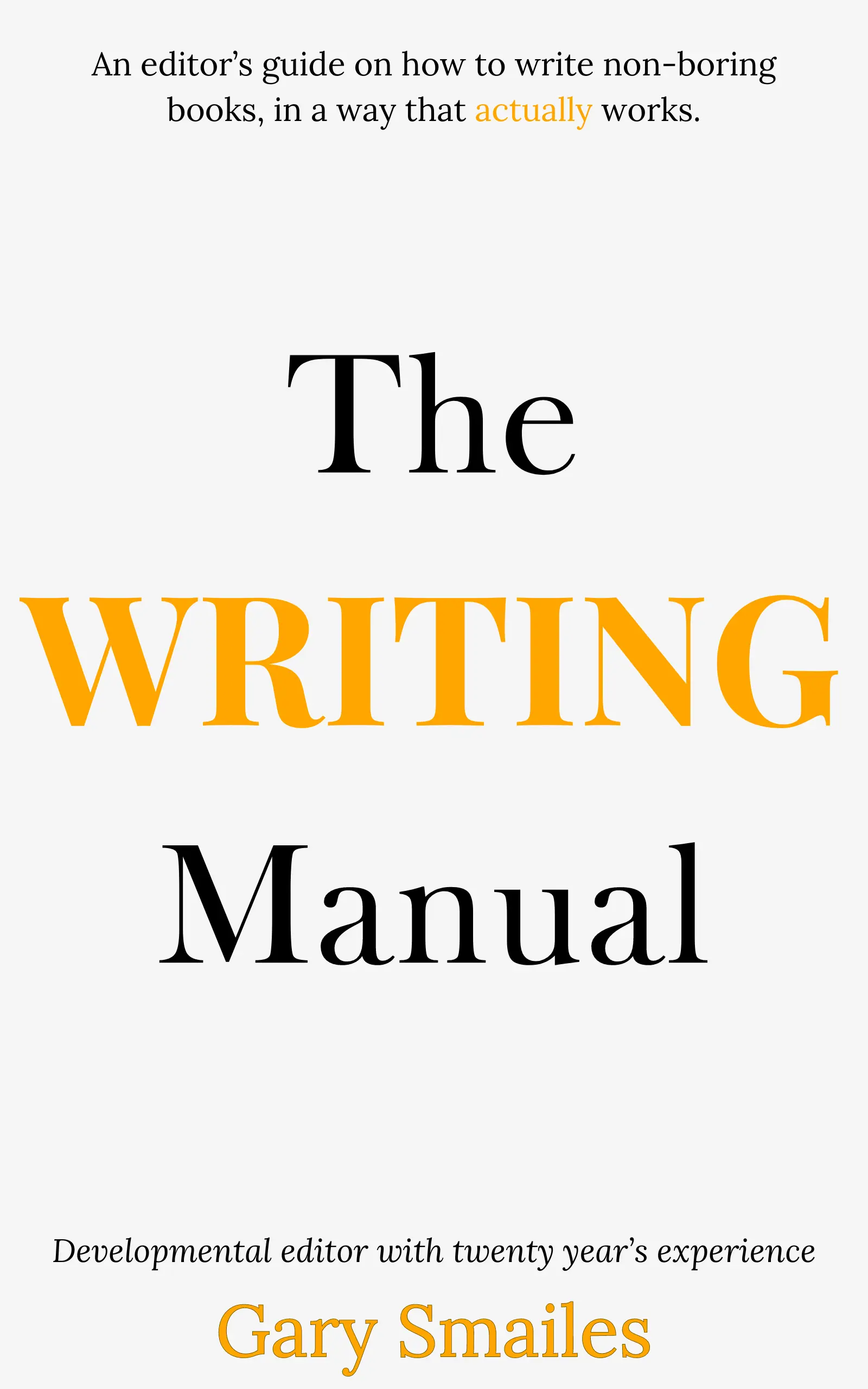
Download FREE ebook
Claim your free eBook today and join over 25,000 writers who have read and benefited from this ebook.
'It is probably one of the best books on writing I've read so far.' Miz Bent