Best Editing Tips For First Time Novelists


Table of Contents
Essential Self-Editing Fundamentals
Distance transforms everything. Step away from your manuscript for at least four weeks before you begin editing. Six weeks is better. Two months is ideal.
This waiting period feels counterproductive. You're eager to polish your work and get it into readers' hands. But editing your novel immediately after finishing the first draft is like trying to proofread your own love letters. You know what you meant to say, so you'll see what you intended rather than what you actually wrote.
During this break, your brain forgets the specific word choices and sentence constructions. When you return to the manuscript, you'll read it with fresh eyes. Plot holes become obvious. Character inconsistencies jump off the page. Scenes that felt brilliant during writing reveal themselves as unnecessary tangents.
Use this time productively. Read novels in your genre. Study how published authors handle similar story elements. Take notes on techniques that work well. This reading builds your editorial instincts and provides models for improvement.
When you finally return to your manuscript, read it aloud from beginning to end. Yes, the entire thing. This takes commitment, but it reveals problems no other method catches.
Your mouth and ears catch what your eyes miss. Awkward phrasing becomes obvious when you stumble over sentences. Dialogue that looked natural on the page sounds stilted when spoken. Run-on sentences leave you breathless. Repetitive word choices become glaringly apparent.
Reading aloud also reveals rhythm problems. Good prose has a musical quality. Sentences vary in length and structure. Short, punchy sentences create tension. Longer, flowing sentences provide breathing room. When you read aloud, monotonous rhythm becomes painfully obvious.
Pay special attention to dialogue during this read-through. Each character should have a distinct voice. If you find yourself adjusting your tone and cadence for different speakers, your character voices are working. If all dialogue sounds the same in your mouth, you need to develop stronger individual voices.
Don't try to fix problems during this first read-through. Mark problematic passages and keep reading. The goal is to experience your story as readers will, without getting bogged down in line-by-line corrections.
After completing your read-through, resist the urge to dive in and fix everything at once. Successful editing requires multiple focused passes, each targeting specific elements. Trying to fix plot, character, dialogue, and grammar simultaneously overwhelms your attention and guarantees you'll miss problems.
Start with the biggest issues first. If your plot has major structural problems, fix those before worrying about comma placement. A perfectly punctuated scene that serves no story purpose still needs to be cut.
Create a editing schedule that addresses different elements in logical order. Begin with story structure and plot development. Move to character consistency and development. Then focus on scene-level issues like pacing and tension. Finally, address prose quality and mechanical errors.
Each pass serves a specific purpose. During your plot pass, ignore grammar mistakes and awkward sentences. During your character pass, don't get sidetracked by beautiful descriptions that need cutting. This focused approach prevents important issues from getting lost in the editing shuffle.
Develop a personal style sheet before you begin serious editing. This document tracks the specific choices you make about character names, place names, terminology, and formatting conventions. Your style sheet becomes your consistency bible.
Record character details: full names, nicknames, physical descriptions, ages, occupations. Note setting details: place names, geographical features, climate, technology level. Document terminology: how you handle contractions, numbers, technical terms, made-up words.
Fantasy and science fiction writers need extensive style sheets. Track your world-building rules, magic systems, alien species, and invented technologies. Note how you handle apostrophes in made-up names. Record the specific spelling of invented places and terms.
Historical fiction requires careful attention to period-appropriate language and technology. Your style sheet should note which modern terms you avoid and which historical terms you use consistently.
Even contemporary fiction benefits from style sheets. Do you write "okay," "OK," or "o.kay"? Do you use "toward" or "towards"? These choices don't matter individually, but inconsistency distracts readers.
Update your style sheet throughout the editing process. When you make character or setting decisions, record them immediately. This prevents contradictions that creep in during revision.
Editing software provides valuable support but shouldn't replace careful human editing. Programs like Grammarly, ProWritingAid, and Hemingway Editor catch common grammar mistakes, identify overused words, and suggest style improvements.
These tools excel at finding patterns human editors miss. They'll identify your tendency to overuse certain words, flag passive voice constructions, and catch missing commas. They're particularly helpful for writers whose grammar skills need strengthening.
However, editing software makes mistakes. Grammar checkers don't understand context or creative language choices. They'll flag intentional sentence fragments and stylistic devices as errors. They miss homophone errors like "there" versus "their" when both are grammatically correct.
Use these tools as editing assistants, not editing replacements. Run your manuscript through grammar checkers to catch obvious errors, but don't accept every suggestion blindly. Trust your judgment about style and voice issues.
Some writers find editing software overwhelming. The programs flag hundreds of "problems" that aren't actually problems. If this happens to you, adjust the software settings to focus on genuine errors rather than style preferences.
Word processing programs also provide useful editing features. Track Changes shows your revision history and lets you accept or reject specific edits. Comments allow you to leave notes about problem areas without disrupting the text. Find and Replace helps maintain consistency across your manuscript.
Learn to use these built-in tools effectively. They'll save time and prevent editing mistakes that happen when you make changes manually.
Reading your work in different formats reveals different problems. Print a chapter and edit it on paper. Change your document font and spacing. Read on different devices. Each format shift tricks your brain into seeing the text differently.
Some writers prefer editing on paper because it slows down their reading pace. Others find computer editing more efficient because changes are easier to implement. Experiment to find your preferred method.
Take regular breaks during editing sessions. Fatigue reduces your ability to spot problems. Fresh eyes catch issues that tired eyes miss. If you find yourself making the same types of corrections repeatedly, step away from the manuscript.
Keep a notebook during editing to record recurring problems. Do you consistently misuse certain punctuation marks? Do you have favorite words that appear too frequently? Identifying these patterns helps you become a more effective self-editor.
Remember that editing is rewriting, not just correcting. Effective editing might require cutting beloved scenes, combining characters, or restructuring plot elements. Stay focused on what serves the story best, even when it means sacrificing beautiful prose that doesn't advance your narrative.
The goal of self-editing is to prepare your manuscript for additional feedback, whether from beta readers, critique groups, or professional editors. Self-editing doesn't replace these other perspectives, but it ensures your manuscript receives the best possible response when others read it.
Structural and Plot Development Review
Every chapter must earn its place in your novel. This sounds harsh, but it's the most important truth about structural editing. If a chapter doesn't advance your plot or develop your characters, it weakens your story.
Start by creating a chapter-by-chapter outline of your finished draft. Write one sentence summarizing what happens in each chapter. Then write a second sentence explaining why this chapter matters to the overall story. If you struggle with that second sentence, you've found a problem area.
Look for chapters that exist solely to show off your research or beautiful writing. Historical novelists often fall into this trap, including lengthy passages about period details that fascinate them but bore readers. Fantasy writers create elaborate world-building scenes that don't advance the story. Contemporary fiction writers indulge in character introspection that goes nowhere.
These scenes feel important while you're writing because you're discovering your world and characters. But readers experience them differently. They want forward momentum. They want to know what happens next.
Consider a chapter where your protagonist visits a museum to learn about local history. The information feels relevant to your mystery plot, and you researched every detail carefully. But does your character make any decisions in this chapter? Do relationships change? Does the mystery advance? If your character learns the same information through dialogue with another character, the museum scene becomes unnecessary.
Scene elimination requires ruthless honesty. You'll need to cut scenes you love. Professional editors call this "killing your darlings." The phrase exists because every writer faces this challenge.
Create a simple test for each scene: Does this scene change something? If your protagonist enters the scene wanting one thing and leaves wanting something different, the scene probably serves a purpose. If nothing changes except the location or time of day, consider cutting or combining it with a more essential scene.
Plot holes reveal themselves during structural editing if you know what to look for. The most common problems involve character knowledge and timeline inconsistencies.
Track what each character knows and when they learn it. Your detective hero discovers the murder weapon in chapter twelve but acts suspicious of the wrong person in chapter fifteen. Your romantic heroine learns about her love interest's past in chapter eight but seems surprised by the same information in chapter twenty.
These errors happen because you, the writer, know everything about your story. While writing, you forget that characters only know what they've experienced within the novel. Create character knowledge charts if necessary. List what each major character knows at the end of each chapter.
Timeline problems plague first novels because writers lose track of time while drafting. Your story takes place over three days, but your characters seem to have accomplished a week's worth of activities. Your protagonist's injury heals too quickly. The school year ends in March.
Map out your story timeline day by day. Note when characters travel between locations and how long journeys take. Account for sleeping, eating, and other daily necessities. If your timeline doesn't work in reality, it won't work for readers.
Character motivation consistency requires careful attention. People act for reasons, and those reasons must remain clear throughout your story. Your shy, anxious protagonist suddenly becomes bold and confrontational without explanation. Your villain's scheme seems brilliant in early chapters but depends on luck and stupidity later.
Review each character's motivations at the beginning of your story. What do they want? What do they fear? How do these desires and fears drive their actions? Then trace how these motivations evolve throughout the novel.
Characters should change during your story, but change must feel logical and earned. Your cowardly character becomes brave, but only after facing increasingly difficult challenges that build their confidence. Your selfish character learns generosity, but through experiences that teach them the value of caring for others.
Look for moments where characters act inconsistently with established personalities. These moments usually signal deeper problems with character development or plot construction.
Pacing evaluation feels subjective, but concrete techniques help identify problems. Print your manuscript and use different colored highlighters to mark action scenes, dialogue passages, internal reflection, and description. Step back and look at the pattern.
Sections dominated by one color signal pacing issues. Too much blue (internal reflection) creates stagnation. Too much red (action) becomes exhausting. Effective pacing alternates between different types of scenes and content.
Analyze scene length objectively. Short scenes create urgency and momentum. Long scenes allow for deeper character development and complex plot developments. But be cautious about extremes. A string of two-page scenes feels choppy and superficial. A twenty-page scene without breaks may lose readers.
Count dialogue-to-narrative ratios in different sections. Dialogue generally moves faster than narrative description. Heavy dialogue sections feel quick-paced. Heavy narrative sections slow the pace. Neither approach is wrong, but you should make conscious choices about pacing rather than falling into accidental patterns.
Examine tension levels throughout your novel. Tension doesn't require explosions or arguments. Any unanswered question creates tension. Will the protagonist get the job? Will the couple resolve their conflict? Will the detective solve the case?
Each scene should contain some form of tension, even quiet scenes. Your characters might face external conflicts (arguments with other characters) or internal conflicts (difficult decisions). They might worry about future events or struggle with past mistakes.
Scenes without tension feel flat and unnecessary. If your characters sit around discussing topics without any underlying conflict or concern, readers lose interest. Add stakes to every scene. Give characters something to want, fear, or struggle with.
Your opening chapter carries enormous weight. It must introduce your protagonist, establish the story world, hint at the central conflict, and hook readers' attention. Many first novels fail because their opening chapters try to accomplish too much or too little.
Common opening chapter mistakes include starting too early in the story timeline, beginning with extensive backstory, or opening with a dream sequence. Readers want to meet your protagonist dealing with the story's central problem, not learning about their childhood or waking up from nightmares.
Evaluate your opening chapter critically. Does it start at a moment of change or conflict? Do readers understand what your protagonist wants? Is the writing engaging from the first paragraph?
Test your opening with the "page five rule." If a reader can't identify your protagonist's main goal and the story's central conflict by page five, your opening needs work.
Your ending requires equal attention. Satisfying resolutions answer the questions your story raised while staying true to your characters and themes. Readers should feel emotionally satisfied, even if the ending isn't traditionally happy.
Common ending problems include introducing new information in the final chapters, resolving conflicts too easily, or leaving major questions unanswered. Your climax should feel inevitable but not predictable. The resolution should emerge from your protagonist's growth and choices throughout the story.
Check for "deus ex machina" solutions where outside forces or coincidences resolve your story's conflicts. Your protagonist should drive the story's resolution through their own actions and decisions.
Review how your subplots conclude. Every significant story thread should receive appropriate closure. Minor loose ends add realism, but major unanswered questions frustrate readers.
Consider your story's emotional arc alongside its plot arc. How do your characters feel at the beginning versus the end? What have they learned? How have they grown? The best endings provide both plot resolution and emotional satisfaction.
Structural editing often reveals that your real story starts in chapter three or that your climax needs additional setup. These discoveries might require significant rewriting, but addressing structural problems saves time in later editing stages.
Don't rush through structural editing to reach line-level revisions. A beautifully written scene in the wrong place will still get cut. A perfectly punctuated chapter that doesn't advance your story weakens your novel. Focus on story structure first, then make the surviving scenes shine.
Character Consistency and Development
Your readers will notice character inconsistencies faster than you will. They're meeting these people for the first time, paying attention to every detail you provide. You've lived with these characters for months or years, making it easy to forget what you've already told readers about them.
Create a character bible before you start editing. This sounds tedious, but it saves hours of searching through your manuscript later. Open a new document and list every character who speaks or influences the plot. For each character, record their physical description, personality traits, background details, and any unique speech patterns.
Don't trust your memory. Search your manuscript for each character's name and compile their details as you find them. You'll discover contradictions immediately. Sarah has brown eyes in chapter two and green eyes in chapter fifteen. Tom grew up in Chicago in chapter five but mentions his childhood in Denver in chapter twenty-three.
These errors happen because characters evolve while you write. You change your mind about details, forget earlier decisions, or add information without checking consistency. First-time novelists especially struggle with this because they discover their characters during the writing process.
Pay special attention to physical descriptions. Readers form mental images based on your first descriptions, then feel jarred by contradictions. If you describe someone as tall and lanky early in the story, don't have them squeeze into small spaces later without acknowledging their height.
Age consistency trips up many writers. Your college student character orders wine at dinner. Your high school protagonist drives alone in a state where the legal age is eighteen. Your elderly character uses technology or references events that don't match their generation.
Calculate birthdates for your characters and stick to them. If your story takes place in 2023 and your character graduated college in 1995, they're around fifty years old. Their cultural references, technology comfort level, and life experiences should reflect this age.
Character actions must align with established personalities. Your shy character suddenly becomes the life of the party without explanation. Your honest character lies repeatedly without internal conflict. Your cautious character makes impulsive decisions that contradict their nature.
This doesn't mean characters cannot change. Character growth drives compelling stories. But change must feel earned and logical. Your shy character might become more outgoing after facing challenges that build their confidence. Show this progression through specific scenes and internal reflection.
Look for moments where characters act inconsistently for plot convenience. Your normally intelligent character makes obvious mistakes because the plot requires it. Your competent character becomes helpless because you need another character to rescue them. These moments break readers' trust in your storytelling.
Review each character's motivations and goals. What drives them? What do they want most? How do they pursue these goals? Characters should act consistently with their established desires and fears, even when facing new situations.
Your villain deserves special attention. Many first novels feature antagonists who act evil for no clear reason. Effective villains believe they're right. They have goals that make sense from their perspective. They use methods consistent with their personality and background.
Backstory dumps destroy character development momentum. New writers often introduce characters with lengthy paragraphs explaining their history, personality, and motivations. This feels efficient but creates boring exposition that stops the story.
Instead, reveal character information gradually through actions, dialogue, and brief references. Let readers discover your characters the way they would meet real people, learning details over time through observation and conversation.
Watch for redundant character introductions. You introduce a character in chapter three with their job title, personality, and relationship to the protagonist. Then you reintroduce them in chapter seven with similar information because you forgot about the earlier introduction. Readers notice these repetitions and feel insulted.
Search your manuscript for character names and review their introductions. Mark the first significant mention of each character. Subsequent appearances should refer to them naturally without repeating introductory information.
Character voice consistency challenges many first-time novelists. Each character should speak distinctively based on their background, education, age, and personality. Your characters shouldn't all sound like you or like each other.
Read your dialogue aloud, covering the dialogue tags. Are you able to identify who's speaking based on word choice, sentence structure, and speech patterns? If not, your character voices need work.
Consider each character's background when writing their dialogue. Your character who dropped out of high school speaks differently from your character with a graduate degree. Your teenage character uses different slang and references than your middle-aged character. Your character from the rural South has different speech patterns than your character from urban New England.
Avoid stereotypical dialect unless you have deep familiarity with the speech patterns you're representing. Focus instead on vocabulary choices, sentence length, and formality level to distinguish characters.
Your protagonist's internal voice should remain consistent throughout the story. If you're writing in first person or close third person, the narrative voice reflects your protagonist's personality, education, and worldview. Your intellectual character's thoughts should sound intellectual. Your street-smart character's thoughts should reflect their background.
Watch for places where the narrative voice shifts toward your own voice rather than the character's. This happens most often during emotional or philosophical moments when writers express their own thoughts through characters.
Character relationships require consistency tracking. How do characters feel about each other? How do these feelings change throughout the story? Your characters should interact consistently with established relationship dynamics.
If two characters dislike each other in early chapters, they shouldn't suddenly act friendly without explanation. If characters are close friends, they shouldn't act like strangers when convenient for the plot. Relationship changes should feel organic and justified by story events.
Track character knowledge carefully. What does each character know about other characters, past events, and current situations? Characters shouldn't forget important information or suddenly know things they haven't learned.
Your detective character learns a crucial clue in chapter ten but doesn't act on this information until chapter eighteen. Your romantic heroine discovers her love interest's secret but continues trusting them without internal conflict. These inconsistencies frustrate readers who pay attention to story details.
Create knowledge charts for complex plots. List what each major character knows at key story points. This prevents characters from acting on information they shouldn't have or ignoring information they should remember.
Minor character consistency matters too. Your coffee shop owner shouldn't change personality between appearances. Your protagonist's coworker shouldn't shift from helpful to hostile without explanation. Even characters with small roles should feel like real people with consistent traits.
Name consistency extends beyond spelling. Watch for characters whose names change naturally throughout the story. A character might be "Detective Morrison" in professional scenes but "Lisa" in personal scenes. Make sure these transitions feel natural and don't confuse readers about identity.
Nickname usage should follow logical patterns. If your character goes by "Mike" with friends but "Michael" with family, establish this pattern early and maintain it consistently. Don't have the same person calling them different names without reason.
Character flaws add realism but must remain consistent. Your perfectionist character should struggle with imperfection throughout the story. Your impatient character should show impatience in various situations. Flaws that disappear and reappear randomly feel artificial.
Similarly, character strengths should appear consistently. Your brave character shouldn't become cowardly when the plot needs vulnerability, unless this change serves character development. Your intelligent character shouldn't make stupid decisions without good reasons.
Check for Mary Sue or Gary Stu tendencies in your protagonist. These characters are too perfect, too talented, or too beloved by everyone they meet. Real people have flaws, make mistakes, and face genuine challenges. Perfect characters bore readers because they have no room to grow.
Review your protagonist's skills and talents. Do they excel at everything they attempt? Do other characters constantly praise them? Do they solve problems too easily? If so, add realistic limitations, failures, and character flaws.
Character growth arcs require careful tracking from beginning to end. How does your protagonist change throughout the story? What do they learn? What internal obstacles do they overcome? This growth should feel gradual and earned rather than sudden and miraculous.
Map your character's emotional journey alongside the plot. Your character might start angry and end at peace, but this transition should include believable steps. They might experience denial, bargaining, sadness, and acceptance before reaching resolution.
Supporting characters nee
Prose Quality and Style Improvements
Your first draft focused on getting the story down. Now you need to make every sentence earn its place. Good prose doesn't call attention to itself. It disappears, letting readers fall into your story world without stumbling over clunky sentences or boring word choices.
Start with your adverbs. Search your manuscript for words ending in "-ly" and question each one. Most adverbs signal weak verb choices. "She walked quickly" becomes "She hurried." "He spoke angrily" becomes "He snapped." "The door closed loudly" becomes "The door slammed."
Some adverbs add necessary information. "She whispered softly" is redundant, but "She whispered harshly" tells us something specific about tone. "He moved carefully" might be the exact image you want if carefulness matters to the scene.
Watch for adverbs that qualify emotions. "She was somewhat angry" or "He felt slightly confused" weaken the impact. Either your character is angry or they're not. Either they're confused or they're clear. Qualifying words like "somewhat," "rather," "quite," and "fairly" drain energy from your prose.
Your sentences need variety to maintain reader interest. Read a page of your manuscript aloud. Do all your sentences sound similar? Do they start the same way? Do they follow the same rhythm?
Mix sentence lengths deliberately. Short sentences create urgency. They punch hard. They wake readers up. Longer sentences let you develop complex ideas, paint detailed scenes, and create a flowing rhythm that draws readers deeper into your story world.
Vary your sentence beginnings. Too many sentences starting with "He" or "She" create a monotonous rhythm. Start some sentences with dependent clauses, prepositional phrases, or adverbs. "Before she opened the door" instead of "She hesitated before opening the door."
Fragment sentences work in fiction when used deliberately. For emphasis. For character voice. For dramatic effect. But use them sparingly. Too many fragments make your prose feel choppy and uncontrolled.
Question words disappear into background noise through overuse. "Nice," "good," "bad," "pretty," "very," "really," and "things" tell readers nothing specific. Your "nice house" could be anything from a tidy cottage to a sprawling mansion. Your "good meal" might be home cooking or fine dining.
Replace generic words with specific ones. "Vehicle" becomes "sedan," "pickup truck," or "motorcycle." "Building" becomes "warehouse," "cottage," or "skyscraper." "Animal" becomes "tabby cat," "German shepherd," or "cardinal."
Specific words create clearer images and stronger emotional responses. "She felt sad" tells us nothing about the type or intensity of sadness. "She felt hollow" or "She felt crushed" or "She felt melancholy" gives readers precise emotional information.
Look for opportunities to combine weak words into stronger alternatives. "Very big" becomes "huge," "enormous," or "massive." "Really tired" becomes "exhausted" or "drained." "Pretty scary" becomes "terrifying" or "unsettling."
Business writing habits sneak into fiction and create wordy, formal prose. Cut phrases like "in order to" (use "to"), "due to the fact that" (use "because"), and "at this point in time" (use "now"). Your fiction should sound natural, not like a corporate memo.
Redundant phrases waste words without adding meaning. "Past history," "future plans," "close proximity," and "unexpected surprise" contain built-in redundancy. History is always past. Plans are always future. Proximity is always close. Surprises are always unexpected.
Watch for phrases that repeat the same idea in different words. "She thought in her mind" (where else would she think?). "He saw with his eyes" (how else would he see?). "They whispered quietly" (whispering is already quiet).
Showing emotions through actions and dialogue creates stronger reader connections than telling emotions directly. "She was furious" tells us information. "She slammed her coffee mug on the table, splattering brown liquid across her paperwork" shows us fury through specific actions.
Body language reveals character emotions naturally. Clenched fists suggest anger or determination. Crossed arms indicate defensiveness or cold. Fidgeting hands show nervousness or impatience. Avoid overused gestures like eye-rolling, hair-flipping, or shoulder-shrugging unless they fit specific characters.
Dialogue carries emotional weight more effectively than exposition. Compare "Tom was excited about the promotion" with Tom's dialogue: "I got the job! Senior partner, corner office, the whole package!" The dialogue shows excitement while revealing character voice and advancing plot.
Internal thoughts reveal emotions without stating them directly. Instead of "Sarah felt guilty about lying to her mother," show her thoughts: "Mom trusted her completely. The lie sat in Sarah's stomach like spoiled milk."
Physical sensations convey emotions powerfully. Fear tightens throats and churns stomachs. Embarrassment heats cheeks and makes palms sweat. Love creates chest flutters and wobbly knees. These sensations feel more immediate than emotional labels.
Character actions should reflect emotional states without obvious explanation. Your grieving character might organize closets obsessively or stop showering regularly. Your anxious character might check locks repeatedly or avoid phone calls. Let readers deduce emotions from behavior patterns.
Cut filter words that create distance between readers and characters. "She saw," "he heard," "they felt," "she noticed," and "he thought" put readers outside the character's experience instead of inside it.
Compare "She saw the red car speeding toward her" with "The red car sped toward her." The second version puts readers directly into the scene instead of watching the character observe the scene.
"He felt the cold wind" becomes "Cold wind bit his face." "She heard footsteps" becomes "Footsteps echoed in the hallway." Remove the filter and drop readers into immediate experience.
Point of view affects filter word usage. In first person, "I saw" and "I heard" often work naturally because they reflect how people think and speak. In third person, especially close third person, filters usually create unnecessary distance.
Weak verbs paired with prepositional phrases often hide stronger verb choices. "He moved across the room" becomes "He crossed the room." "She went up the stairs" becomes "She climbed the stairs." "They put the books on the shelf" becomes "They shelved the books."
Action verbs energize prose more than linking verbs. "The storm was violent" becomes "The storm raged." "The music was loud" becomes "The music blared." "His expression was angry" becomes "He glared" or "He scowled."
Passive voice has its place in fiction but often weakens prose. "The door was opened by Sarah" becomes "Sarah opened the door." "Mistakes were made" becomes "He made mistakes." Active voice creates more direct, energetic sentences.
Sometimes passive voice serves specific purposes. It can hide the actor when mystery matters: "The window had been broken." It can emphasize the recipient of action: "The award was given to deserving students." Use passive voice deliberately, not accidentally.
Word choice affects pace and mood. Short, sharp words quicken pace. Longer, flowing words slow it down. "She ran" moves faster than "She proceeded rapidly." "He stopped" feels more abrupt than "He came to a halt."
Match your word choices to scene requirements. Action scenes need short, punchy words. Romantic scenes benefit from softer, more lyrical language. Tense scenes require sharp, specific words. Peaceful scenes allow longer, flowing descriptions.
Read your prose aloud to catch awkward phrasings your eyes might miss. Your ear will catch rhythm problems, tongue twisters, and unintentional rhymes or repetitions. If you stumble while reading, your readers will too.
Pay attention to sound patterns in your prose. Too many words with similar sounds create unintentional tongue twisters. "She saw several small, silver sculptures" is hard to say smoothly. Vary your sounds for better flow.
Sentence rhythm matters as much as individual word choices
Common First Novel Mistakes to Address
First novels carry predictable problems. The good news? Once you recognize these patterns, you fix them everywhere they appear. Think of this as debugging your manuscript. You're not a bad writer for making these mistakes. You're a new writer learning the craft.
Excessive exposition kills forward momentum. You want readers to understand your world and characters, so you explain everything. The problem? Readers want story, not background reports.
Watch for paragraphs that start with phrases like "Five years ago" or "Back when Sarah was in college" or "The town had been founded in 1847." These signal backstory dumps that yank readers out of present action. Your opening chapters are especially vulnerable to this problem.
Here's the test: remove any paragraph of backstory and see if the scene still works. If it does, you probably don't need that information yet. If the scene breaks without the backstory, weave that information into dialogue or character thoughts instead of stopping everything for a history lesson.
Consider this backstory dump: "The old Victorian house had belonged to the Morrison family for three generations. Sarah's grandfather built it in 1923 after returning from the war. Her father grew up there, and now Sarah was raising her own children in the same rooms where she'd played as a child."
Here's the same information woven naturally into action: "Sarah ran her hand along the banister her grandfather had carved, the wood smooth from three generations of Morrison hands. The house held too many memories. Her children's laughter echoed in the same rooms where she'd hidden from thunderstorms as a girl."
Backstory works best in small doses scattered throughout your narrative. Readers don't need complete character histories upfront. They need enough information to understand what's happening now.
Head-hopping confuses readers and weakens emotional connection. Point of view determines which character's thoughts and feelings readers experience. Jumping between different characters' perspectives within the same scene creates confusion and distance.
In third person limited, stick with one character's viewpoint per scene. If you're in Sarah's head, readers know what Sarah thinks and feels. They don't know what Tom thinks unless Sarah observes his behavior or he tells her directly.
Here's head-hopping: "Sarah worried about the meeting. She didn't want to disappoint her boss. Tom watched her fidget with her papers and wondered why she seemed so nervous. He thought she was overreacting, as usual."
Here's the same scene from Sarah's consistent viewpoint: "Sarah worried about the meeting. She didn't want to disappoint her boss. Tom watched her fidget with her papers, his expression unreadable. Was he annoyed by her nervousness? He probably thought she was overreacting again."
If you need multiple viewpoints, switch between scenes or chapters, not within scenes. Signal viewpoint changes with clear breaks like extra line spaces or chapter divisions.
First person eliminates head-hopping naturally because you're locked into one character's perspective. Third person omniscient allows access to multiple characters' thoughts but requires careful handling to avoid confusion.
Dialogue tags multiply like weeds in first novels. "She said," "he replied," "she answered," "he responded" appear after every line of dialogue. Most dialogue tags are unnecessary. Context and speech patterns usually identify speakers.
Here's over-tagged dialogue:
"I'm late for work," Sarah said.
"You're always late," Tom replied.
"That's not true," she responded defensively.
"It happened yesterday too," he pointed out.
Here's the same exchange with minimal tags:
"I'm late for work." Sarah grabbed her keys from the counter.
"You're always late."
"That's not true." She spun around, cheeks flushing.
"It happened yesterday too."
Action beats replace dialogue tags while adding movement and emotion to scenes. Instead of "she said angrily," show anger through action: "She slammed her coffee mug down, brown liquid sloshing onto the table."
Use dialogue tags when speaker identity isn't clear, when you want to control pacing, or when the tag adds information about tone. "Help me," he whispered. "Get out," she snarled. The tags tell us how the words are spoken.
Avoid fancy dialogue tags like "she hissed," "he growled," or "she purred" unless your characters are snakes, dogs, or cats. People say, ask, whisper, shout, and occasionally snap or mutter. That's about it.
Info-dumping front-loads your story with background information instead of revealing details naturally through action and dialogue. First-time novelists often feel obligated to explain everything immediately.
Info-dumps often appear as long paragraphs of world-building, character background, or technical explanation. Fantasy novels dump magic systems. Science fiction novels dump technology. Historical novels dump period details. Contemporary novels dump character backstories.
The fix involves spreading essential information throughout your story instead of concentrating it in dense paragraphs. Let readers discover your world through character experiences rather than author explanation.
Instead of explaining your magic system in a prologue, show your protagonist struggling with a spell that won't work. Instead of describing your fictional city's entire history, reveal details as characters move through different neighborhoods.
Dialogue works perfectly for delivering information naturally. Characters explain things to each other, argue about details, or share memories. Information delivered through character interaction feels organic instead of forced.
"You know magic doesn't work that way," Elena said. "Healing spells require physical contact." This line teaches readers about magic rules while advancing plot and revealing character knowledge.
Internal thoughts also deliver information naturally. "Sarah remembered her mother's warning about the old cemetery. Local kids claimed it was haunted, but Sarah knew the real danger came from unstable ground that could give way underfoot."
Filtering words create unnecessary distance between readers and characters. Words like "saw," "heard," "felt," "noticed," "realized," and "thought" put readers outside character experience instead of inside it.
"She saw the red car speeding toward her" puts readers in observer position. "The red car sped toward her" drops readers directly into the character's experience. The difference seems small, but it adds up throughout your manuscript.
"He heard footsteps in the hallway" becomes "Footsteps echoed in the hallway." "She felt the cold wind" becomes "Cold wind stung her cheeks." "Tom noticed the broken window" becomes "The broken window gaped like a mouth."
Filtering works differently depending on point of view. First person uses natural filters because people think in terms of "I saw" and "I heard." Third person limited benefits from fewer filters because readers are already inside the character's perspective.
Some filters add necessary information. "She thought" distinguishes internal thoughts from dialogue or narration. "He remembered" signals a shift to past events. Use filters when they clarify meaning or prevent confusion.
Character motivation inconsistencies plague first novels. Characters act according to plot requirements instead of established personalities. Your shy character suddenly becomes bold when the plot needs them to confront the villain. Your careful character makes impulsive decisions because you need them in a specific location.
Track character motivations throughout your story. Does each major decision align with established personality traits and goals? If not, either change the character action or set up motivation that justifies the behavior.
Sarah has been established as cautious and analytical. If she needs to rush into a dangerous situation, give her motivation that overrides caution. Her child is in danger. Her best friend needs help. She has information that nobody else possesses.
Character growth allows personality changes, but changes need logical progression. Your shy character becomes confident through specific experiences that build courage. Your selfish character learns empathy through events that open their perspective.
Timeline errors create confusion and break reader trust. Characters age inconsistently. Seasons change randomly. Events happen in impossible sequences. Historical details contradict each other.
Create a timeline document that tracks major events, character ages, and time passage. Note seasonal changes, holidays, and specific dates if they matter to your story. Check travel times between locations. Make sure characters have enough time to complete their actions.
Weather an
Building an Effective Editing Schedule
Editing without a plan leads to overwhelm and half-finished revisions. You need structure. You need boundaries. Most importantly, you need to resist the urge to fix everything at once.
Start with distance. Put your finished draft away for at least four weeks. Six weeks is better. Two months is ideal. This isn't procrastination. This is professional practice.
The writer brain and the editor brain operate differently. Writer brain creates, connects, and flows forward. Editor brain analyzes, cuts, and restructures. When you finish a draft, writer brain dominates. Everything feels brilliant because you remember the intention behind every scene.
Time creates objectivity. After weeks away from your manuscript, you'll read with fresh eyes. Plot holes become obvious. Weak scenes reveal themselves. Characters who felt complex during writing appear flat on the page. This clarity is worth the wait.
Use the break productively. Read novels in your genre. Notice how published authors handle dialogue, pacing, and character development. Take notes on techniques that work. Your subconscious will process these lessons while your manuscript sits untouched.
Write something else during the break. Short stories, journal entries, or notes for your next novel. Keep your writing muscles active without touching the completed draft. Some writers start their next novel immediately. This approach works if you have the discipline to avoid comparing projects.
When you return to editing, treat each day like a focused work session. Set specific, achievable goals. "Edit three chapters today" works better than "work on my novel." Vague goals lead to scattered effort and minimal progress.
Editing marathons burn you out. Your judgment deteriorates after three hours of intensive revision. You start making changes for the sake of change rather than improvement. Better to edit consistently for shorter periods than sporadically for long stretches.
Try the 90-minute rule. Edit for 90 minutes, then take a real break. Walk outside. Do something physical. Let your brain process what you've learned. Return refreshed for another session if you have time and energy.
Track your daily progress. Keep a simple log: date, pages edited, problems identified, solutions implemented. This record helps you maintain momentum and provides motivation when editing feels endless.
Set weekly goals instead of daily ones if your schedule varies. "Edit five chapters this week" allows flexibility while maintaining progress. Some days you'll edit one chapter. Other days you'll tackle three. The weekly target keeps you accountable without creating daily pressure.
Structure your editing in phases, starting with big-picture issues. Fix plot problems before worrying about word choice. Strengthen character development before polishing dialogue. Address pacing issues before cutting redundant phrases.
This order matters. If you delete a character during structural editing, you've wasted time polishing their dialogue. If you restructure scenes, you'll need to revise transitions anyway. Start big, then zoom in.
Your first editing pass should focus on story structure. Does your plot make sense? Do events follow logically? Are character motivations clear and consistent? Does each scene advance the story or develop character? This pass often involves major cuts, additions, and rearrangements.
Read your entire manuscript during the structural pass. Don't stop to fix sentence-level problems. Make notes about weak areas, but keep reading. You need to see the whole story before you start major surgery.
Character consistency comes next. Track your main characters through the entire story. Do they speak consistently? Do their actions align with established personalities? Do they grow and change in believable ways? This pass often reveals character threads that need strengthening or cutting.
Create character sheets during this pass. Note physical descriptions, personality traits, speech patterns, and personal history for each major character. Check these details against your manuscript. Inconsistencies stand out clearly when you have reference documents.
Your dialogue pass focuses exclusively on spoken words. Read all dialogue aloud. Does each character have a distinct voice? Do conversations feel natural? Do characters reveal information organically? This pass often involves extensive rewriting of conversations that sound stilted or artificial.
Pacing deserves its own editing pass. Look at scene length, chapter breaks, and tension levels. Do action scenes move quickly enough? Do quiet scenes provide necessary breathing room? Does tension build appropriately toward climactic moments? This pass involves rearranging, cutting, or expanding scenes.
Prose quality comes last. This is where you cut adverbs, strengthen verbs, and eliminate redundant phrases. This is where you vary sentence length and improve word choice. This is the pass most new writers want to start with, but it's the least important structurally.
The prose pass requires different energy than structural editing. You're polishing rather than rebuilding. Many writers find prose editing more satisfying because progress is measurable and immediate. But prose editing won't save a structurally flawed story.
Grammar and punctuation deserve a separate pass after prose editing. Use software tools like Grammarly or ProWritingAid to catch obvious errors, but don't rely on them entirely. Read carefully for mistakes these tools miss: wrong words that are spelled correctly, missing words, unclear pronoun references.
Consider multiple rounds of each editing pass. Your first structural pass might reveal problems that require a second structural pass. Your first character pass might uncover inconsistencies that need additional work. Don't assume one pass through each element is sufficient.
Beta readers provide perspective you lose after multiple editing passes. Choose readers who understand your genre and give honest feedback. Brief them on what kind of feedback you want: general story reactions, character believability, pacing issues, or confusion about plot points.
Give beta readers specific questions. "What did you think?" generates useless feedback. "Did the ending feel satisfying?" or "Which character did you connect with most?" produces actionable responses. Create a simple questionnaire covering your main concerns.
Allow time for beta reader feedback in your editing schedule. Readers need at least two weeks to read and respond thoughtfully. Don't ask for rush jobs unless you're facing a deadline. Quality feedback takes time.
Critique groups provide ongoing editing support and motivation. Look for groups focused on your genre with members at similar experience levels. Online groups work if local options don't exist. The key is regular, constructive feedback from people who understand your goals.
Prepare critique group submissions carefully. Follow group guidelines about length, format, and submission deadlines. Provide context if you're submitting a middle chapter. Ask specific questions about areas where you want feedback.
Give thoughtful critique to other members. Good critique partners balance encouragement with honest assessment. Point out strengths as well as weaknesses. Explain why something doesn't work instead of just identifying problems.
Professional editing comes after you've done everything yourself. Developmental editing helps with story structure and character development. Copy editors fix grammar, punctuation, and style issues. Proofreaders catch final errors before publication. Each type of editing serves a different purpose.
Budget for professional editing if you plan to self-publish or submit to agents. Professional editors catch problems you miss after multiple self-editing passes. They provide objective assessment of your story's strengths and weaknesses. Consider this an investment in your book's success.
Research editors carefully. Ask for references from other authors. Request sample edits before committing to full projects. Understand what type of editing you need and find editors who specialize in that area.
Build flexibility into your editing timeline. Everything takes longer than expected. You'll discover problems that require additional passes. Beta readers might suggest major changes. Professional editors will identify issues you didn't anticipate.
Plan for at least three months of editing time after completing your first draft. Complex novels or major structural problems might require six months or more. Rushing the editing process produces subpar results and wastes the effort you put into writing.
Remember that editing is rewriting. Successful editing often involves cutting favorite scenes, combining characters, or restructuring entire plot threads. Stay focused on making your story the best it can be, not preserving every word you originally wrote.
Document major changes as you make them. Keep deleted scenes in a separate file in case you want to revisit them later. Track character name changes, timeline adjustments, and plot modifications. This documentation prevents confusion during later editing passes.
Celebrate editing milestones. Completing a structural pass is an accomplishment.
Frequently Asked Questions
How long should I wait before editing my first draft?
Wait at least four weeks before beginning self-editing, though six to eight weeks is ideal. This distance allows you to read your manuscript with fresh eyes, spotting plot holes and character inconsistencies that familiarity masks. During this break, read novels in your genre and work on other writing projects to keep your skills sharp whilst your manuscript rests.
Should I fix grammar and typos during my first self-editing pass?
No, focus on structural issues first. Address plot problems, character consistency, and pacing before worrying about prose quality or grammar errors. If you spend time perfecting sentences in scenes you later cut during structural editing, you've wasted effort. Save grammar and punctuation fixes for your final editing passes after all content changes are complete.
What's the most effective way to catch character inconsistencies?
Create a character bible listing physical descriptions, personality traits, background details, and speech patterns for each character. Search your manuscript for each character's name and compile details as they appear, checking for contradictions. Pay special attention to ages, physical descriptions, and personality traits that must remain consistent throughout your story unless character growth justifies changes.
How can I tell if my opening chapter is working?
Apply the "page five rule": readers should understand your protagonist's main goal and the story's central conflict by page five. Your opening should start at a moment of change or conflict, introduce your protagonist dealing with the story's main problem, and avoid extensive backstory or dream sequences. If your real story doesn't begin until chapter three, consider restructuring your opening.
When should I show my manuscript to beta readers?
Share your manuscript with beta readers after you've completed structural editing and addressed major plot and character issues. Beta readers should receive a relatively polished draft where you've solved fundamental storytelling problems. Their feedback will focus on reader experience rather than obvious craft issues you should handle yourself through self-editing.
How many editing passes does a typical first novel need?
Most first novels require at least five focused editing passes: structural editing, character consistency, dialogue refinement, pacing review, and prose polishing. Each pass may need multiple rounds depending on your manuscript's condition. Complex novels or significant structural problems may require additional passes. Plan for three to six months of editing time after completing your first draft.
Can editing software replace careful human self-editing?
Editing software helps catch grammar errors and identifies overused words, but it cannot evaluate story structure, character development, or pacing issues. Tools like Grammarly and ProWritingAid work best as editing assistants, not replacements for human judgment. They miss context-dependent errors and may suggest changes that damage your prose style or character voice.
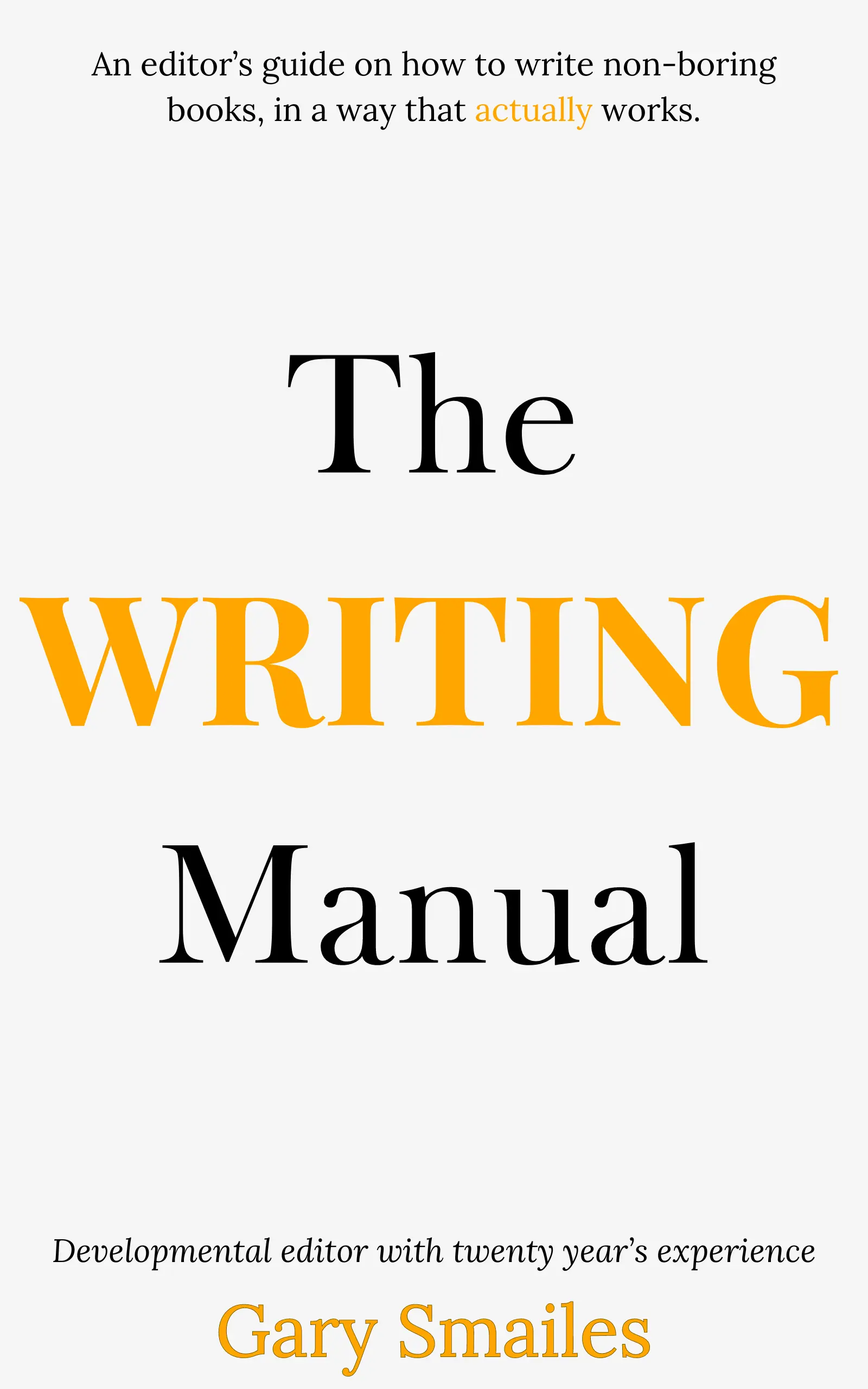
Download FREE ebook
Claim your free eBook today and join over 25,000 writers who have read and benefited from this ebook.
'It is probably one of the best books on writing I've read so far.' Miz Bent