Best Developmental Editing Examples To Learn From


Table of Contents
- What Makes a Developmental Edit Worth Studying
- Fiction Examples: Structural Fixes That Change the Story
- Narrative Nonfiction & Memoir Examples: Finding the Spine
- Prescriptive Nonfiction & Book Proposal Examples: Clarifying Market Fit
- How to Learn from These Examples: Methods, Metrics, and Tools
- Frequently Asked Questions
What Makes a Developmental Edit Worth Studying
Some developmental edits teach more than a semester with a hard-nosed mentor. Others read like a weather report, cloudy, chance of revisions. You want the first kind. Here is how to spot a keeper and learn from every page.
Big-picture focus, not grammar
A worthy developmental pass steers the whole ship. Grammar and word choice matter later. This stage asks bigger questions.
- Structure. Does the opening launch the central problem before interest slips. Does the middle escalate. Does the ending pay off the setup.
- Stakes. What goes wrong if the goal fails. Where does risk rise.
- Character arcs or argument spine. Who changes and how. Or, in nonfiction, which idea holds the book together.
- Chapter flow. Does each section earn a place. Do chapters hand off cleanly.
- Reader promise. What result will a reader walk away with.
- Market positioning. Which shelf. Which neighbor titles. Why this approach now.
Quick test. Read the first page of the letter. If commas, word choice, and pet peeves show up before structure and stakes, walk away.
Mini-exercise:
- Write one sentence that names the reader promise. For example, This book helps first-time managers hold hard conversations without losing trust.
- Circle the chapters that deliver on that promise. Cross out any chapter that does not serve the promise.
Hallmarks of excellence
Strong edits share the same bones.
- A clear editorial letter. Three to eight pages. Tone, honest and calm.
- Prioritized issues, labeled by importance. Must, Should, Optional. No grab bag.
- Evidence. Page numbers. Scene references. Quotes that show the problem.
- Concrete revision paths. Prompts, sample lines, or a suggested order of operations.
Example of a weak note:
- Tighten the opening.
Example of a strong note:
- The inciting incident lands on page 47. Readers meet the core problem on page 9, then wait. Move the break-in scene to within the first 25 to 30 pages. Consider opening on the alley chase, then fold the coffee shop banter into a shorter beat on page 6.
Turn vague into useful:
- Original: The middle drags.
- Upgrade: Act II introduces three subplots in chapters 12 to 16. None raise the price of failure. Pick one subplot to keep, merge the others, and seed a midpoint reversal that forces a new plan by chapter 17.
Respect for voice
The best feedback preserves voice while raising clarity and stakes. No bulldozing. Options over orders.
- Offer choice. Try A, B, or C. A, move the letter from mother to the midpoint. B, keep the letter early, but frame with a question that sets up the revelation. C, cut the letter and let the memory surface in dialogue.
- Guard originality. Name what feels singular. Rhythm, humor, tough love. Then protect those strengths during restructuring.
- Target patterns, not line-by-line swaps. Point to habits that blur meaning, like hedge words or filter verbs, then show one or two examples.
A line note should sound like this:
- The voice turns cool here. Up to now, the narrator speaks in plain verbs and short lines. This paragraph shifts to abstractions. Keep the cadence from chapter 2.
Measurable outcomes
Great edits set targets. Numbers reduce debate and guide effort.
- Fiction
- Inciting incident within 30 pages.
- One point of view per scene.
- Midpoint reversal by the halfway mark.
- Combine two side characters with the same function.
- Narrative nonfiction or memoir
- One controlling idea stated by page 5.
- One scene per chapter that advances transformation.
- Research in service of conflict, not stand-alone info-dumps.
- Prescriptive nonfiction
- Hook in the first two sentences of the overview.
- Six current comp titles from the last five to seven years.
- TOC trimmed from 22 to 16 chapters, grouped into parts.
Score your draft with a short checklist. Green for met, yellow for close, red for miss. Then prioritize reds before polishing sentences.
Deliverables worth seeking
A study-worthy edit arrives with a small package of tools, not a heap of vague notes.
- Editorial letter. A roadmap that frames goals, priorities, and success metrics.
- Margin notes. Comments in the manuscript where decisions live.
- Revision roadmap. A sequence, structure first, clarity next, line polish last.
- Follow-up call. Thirty to forty-five minutes to confirm trade-offs and set dates.
During the call, ask for one sentence on project positioning. Same shelf as X, different promise in Y. Ask for the top three Must items. Ask for one quick win, due this week, to build momentum.
Mini-exercise:
- Pull the last editorial letter you received. Highlight every sentence with a number in it. Count. Now highlight every sentence with a page or scene reference. Count again. Fewer than five in each group suggests thin guidance. Ask for sharper targets, or write your own using the examples above.
A developmental edit worth studying gives you a map, a compass, and a timebox. You leave with choices, not orders. You know what to do on Monday morning. And the work gets better, page by page.
Fiction Examples: Structural Fixes That Change the Story
Structure decides whether a reader turns the next page. Fix these five spots and your draft gains heat fast.
Move the inciting incident earlier
Readers enter for the problem, not a tour of the setting. If setup runs the show for 70 pages, tension falls and faith wobbles. Drop the first real disruption by page 25 to 30 in a standard-length novel. Shorter book, sooner trouble.
Before:
- Chapter 1 to 6 cover morning routines, a commute, and office banter.
- The break-in at the lab shows up on page 72.
After:
- Open on the break-in, or on the morning after with evidence missing by page 20.
- Backfill one or two key normal-world beats in tight scenes.
Quick checks:
- Write one sentence naming the story problem. Put the event that triggers it on your plot board within the first tenth of the book.
- Print the first 40 pages. Highlight the first irreversible shift in pink. If you run out of highlighter, move it forward.
Turn a reactive hero into an active agent
A hero who waits for trouble feels flat. Give a goal on page 1, then force choices. External goal plus internal need. Every scene poses a decision with a price. Action flows from intent.
Before:
- Scene after scene, the teen hero gets dragged along by friends.
- The plot moves, the hero does not.
After:
- Goal stated on page 3. Win the robotics scholarship, or repeat senior year.
- Chapter 2. The teacher offers backup if the hero drops the band. The hero refuses and chooses a riskier plan.
Scene checklist:
- What does the hero want in this scene.
- What blocks that aim.
- What choice closes one door while opening another.
- What fresh risk hits because of that choice.
If a scene lacks a choice, fold it into the one before, or give it teeth.
Fix head-hopping with one point of view per scene
Multiple minds inside one scene blur feeling. Pick one lens. Stay close. Let other characters show their inner storm through action, dialogue, and tells, not direct thought.
Before:
- She thinks the cop is lying. The cop wonders if she knows. The boyfriend panics about rent.
- The result, mush.
After:
- Choose her POV. We hear her thought. We watch the cop press his pen into the pad until the paper hollows. We catch the boyfriend tapping out rent math on his phone under the table.
Technique tips:
- Use sensory detail linked to the POV character. Heat on the neck. The taste of metal. A memory flashing in one line.
- Replace “he knew, she realized, they thought” with the thought itself. Cleaner. Stronger.
- If you need the boyfriend’s inner life, cut to a new scene with his lens, or hold it for a later turn.
Mini-exercise:
- Take one messy scene. Bold every sentence that enters a different skull. Rewrite in one POV. Keep a few tells from others, but no thoughts.
Repair a saggy middle with a midpoint reversal
Act II stalls when scenes stack without a hinge. The midpoint is the hinge. Drop a revelation or cost that flips the plan. After this beat, the story purpose shifts, sometimes inverts. Fresh stakes, fresh fuel.
Before:
- Chapters 12 to 18 chase clues with no bite.
- The hero collects keys, codes, and rumors. Stakes stay flat.
After:
- Midpoint. The ally is the leak. Or the prize damages a loved one. Or the map points home, not out.
- The plan breaks. A new plan forms. The hero pays more for each step.
Ways to build the reversal:
- Take what the hero believes, then prove the inverse.
- Take what the hero wants, then show the hidden price.
- Tie the beat to the controlling theme, so payoff lands later with force.
Two-sentence drill:
- Before midpoint, finish this line. My plan is working because ______.
- After midpoint, finish this line. My plan ruins the thing I wanted most because ______.
Align action and emotion in the climax
A big fight without an inner turn feels empty. An inner monologue without hard action feels thin. The climax works when the external win or loss and the inner truth hit in the same run of pages. One sequence. One cost. One choice.
Before:
- The heist lands on page 290. The apology to the sister shows up on page 310.
- Energy dies between them.
After:
- During the heist, the hero refuses to leave the partner behind, which risks prison and ends the solo-wolf lie. The apology happens in the vault while alarms scream.
- Action peak and emotional choice line up.
Tactics:
- Carry a symbol from page 1 into the final sequence. The old key. The scar. The broken watch. Use it at the moment of truth.
- Echo one early line in the climax, now with new meaning.
- Strip side business. Give the lead five minutes where no one else can solve the problem.
Final pass checklist for your ending:
- Does the external plot hit its high point.
- Does the inner question get answered by a choice, not a speech.
- Do both things land inside one continuous sequence.
Put it to work this week
Pick one fix. Set a clear target. For example, inciting incident by page 28. Or one POV per scene. Or midpoint by 50 percent of word count.
Then run this loop:
- Mark the current state with page numbers or scene cards.
- Design one change that moves the needle.
- Revise three scenes, not the whole book.
- Read aloud. Note energy and clarity.
No guesswork. No haze. Good structural edits raise stakes, tighten aim, and respect your voice. You feel momentum on the desk and on the page. Your reader feels it too.
Narrative Nonfiction & Memoir Examples: Finding the Spine
Memoir and narrative nonfiction live or die on spine. A spine holds the question, the change, and the promise to a reader. Get the spine right, pages start turning.
Choose a frame that serves the question
Chronology feels safe. Birth to now. Year by year. Safe often means dull. A linear march spreads focus across time, which blurs the central question.
A better frame works like a lens. Then and now. Summer and winter. Before diagnosis and after. The frame selects, then repeats a pattern that builds meaning.
Before:
- A memoir on recovery begins in childhood, moves to college, then work. The first relapse arrives halfway through. Stakes feel late.
- A book on a small-town factory starts with incorporation, then ownership changes, then a union vote. The worker story fades under dates.
After:
- The memoir alternates a relapse night with the early years that shaped it. Each “then” clarifies a choice in the “now.”
- The factory book runs two tracks. One worker’s layoff week, chapter by chapter, paired with a past chapter that explains how policy set up the moment.
Try this:
- Write the question in one sentence. Example. What did telling the truth cost me, and why was it worth it.
- Build two columns on index cards. Column A, present-day thread. Column B, past moments that explain the present. Sequence A1, B1, A2, B2, and so on.
- Draft one chapter in each track. Read both aloud. Note where tension dips. Adjust placement until the “now” demands each “then.”
Rules of thumb:
- If stakes live in a single high-pressure week, use a tight present thread with selective flashback.
- If stakes come from contrast, such as poverty then wealth, braid those states across chapters.
- Repeat the frame pattern. Readers trust pattern. Break it only with purpose.
Name the controlling idea and let it lead
A controlling idea is the book’s spine sentence. A claim or insight. Short. Testable. Everything serves it.
Weak version:
- “My career had ups and downs.” No energy. No argument.
Stronger version:
- “In teaching, progress comes from community, not heroics.”
- “I thought leaving home would save me. Learning to return changed me.”
Before:
- Chapters read like stand-alone essays. Each piece shines, the whole feels scattered. Takeaways fly off in different directions.
After:
- One sentence threads through every scene. Chapter goals roll up to the same idea. The reader senses purpose.
Steps to lock this in:
- Write the controlling idea on a sticky note. Keep it within sight while revising.
- For each chapter, answer two questions on a card. What is the turn. How does this advance the idea.
- If a chapter cannot answer both, combine it with another or let it go.
Quick test:
- Turn to any page. In two lines, state what the narrator wants in that moment, then name how this pushes the idea forward. If you struggle, tighten.
Balance research with scene so momentum holds
Facts without faces stall the read. Faces without facts lack weight. Research should arrive as pressure within a scene, or as reflection that reframes action.
Before:
- A chapter drops a ten-page history lesson on zoning laws. The narrator disappears. Momentum falls flat.
After:
- The narrator reaches a locked office. A posted notice cites the exact ordinance. A clerk refuses access. A child in the hall asks, “Are we losing our home.” The narrator explains the law in three lines, then picks a fight with the deadline.
Techniques that help:
- Sandwich. Scene, then a short context burst, then a new scene. Keep context tight. One to three paragraphs, then back to action.
- Tie each fact to a person, object, or choice. A statistic arrives on a chart the boss slides across the table. A quote lives in a voicemail that plays while the car idles.
- Use reflective beats as pivot points. After a heated exchange, step back for two paragraphs. Frame why this matters, then drop into the next move.
Ratios that keep flow:
- Aim for most pages in scene. Think two thirds scene, one third context and reflection.
- Keep any single context block under one page. Shorter reads stronger.
Mini-exercise:
- Pull a dense research section. Mark three facts that matter most. Write a scene where a person wants something, an obstacle brings those three facts into play, and a choice lands. Then compress the leftover context into two tight paragraphs.
State the ethical and narrative stakes
“What happened” is plot. “Why it matters” gives spine. Memoir often soft-pedals risk, which lowers engagement. Spell out consequences for self and others.
Before:
- A whistleblower story recaps meetings, leaks, fallout in the press. Risk feels background.
After:
- On page 20, the narrator names three concrete costs. Loss of license. Estrangement from a parent. A lawsuit that might take the house. Each turn tests one of those costs. The decision at the end resolves the core risk, not a side detail.
Questions to sharpen stakes:
- Who suffers if you push forward. Who suffers if you stop.
- Which belief ends if you face the truth.
- What duty to others sits in conflict with self-protection.
- What harm follows if you misremember. What harm follows if you omit names.
On-page tactics:
- Put a stakes statement early. “If I publish, I lose my job. If I stay quiet, others lose theirs.”
- Revisit the stakes at the midpoint with a surprise price. Tie this to your theme.
- Pay off both plot and ethics in one sequence near the end. A choice that costs something real, made in full view of the reader.
Care with others:
- Gain consent where possible. Mask identities with intent, not to dodge accountability, but to avoid collateral harm.
- Keep a source log. Dates. Documents. Links. A future legal read will thank you, and your confidence will show on the page.
Put the spine under stress, then test it
Once you pick a frame, state a controlling idea, braid research with scene, and name stakes, stress-test the spine.
- Reverse-outline your draft. For each chapter, note time frame, scene location, turn, and link to the controlling idea.
- Track the present thread page count. If “then” overwhelms “now,” rebalance.
- Highlight every paragraph without a person in it. Trim or tie to action.
- Read chapters 1, 5, 10, 15 in one sitting. Note where energy dips. Insert a question or choice at those points.
One last exercise for this week:
- Write a one-page synopsis from the narrator’s view. No subplots. Only the throughline. Start with the central question. End with the answer and cost. If the page wanders, the spine needs another pass.
A clean spine does not make a book safe. It makes a book strong. Frame with purpose. Lead with a clear idea. Let research carry weight inside scenes. Name what is at risk. Your story will hold. Your reader will follow.
Prescriptive Nonfiction & Book Proposal Examples: Clarifying Market Fit
Prescriptive nonfiction sells a promise. A strong proposal proves the promise fast. Who the reader is, what result they get, and how you deliver it. The edits below show where market fit tightens and why editors lean forward.
Sharpen the hook and reader promise
Before:
- “A productivity book for everyone.” No tension. No focus. No reason to buy now.
After:
- “Finish deep work in three hours a day for working parents, using a five-week plan built for split schedules.” Why now. Hybrid work broke focus.
Another upgrade:
- “Stop yo-yo dieting without white-knuckle willpower. A four-step plan for GLP-1 users to keep weight off when the injections stop.” Why now. The market changed.
Try this one-line formula:
- For [specific reader] who [clear pain], this book delivers [tangible result] in [time frame] using [method], because [why now].
Checks for your hook:
- Would a stranger know if the promise lands or fails.
- Does the method sound teachable.
- Does the clock create urgency.
- Does the audience exclude more people than it includes.
Mini-exercise:
- Write three versions of your hook with different audiences. Teens. Managers. Caregivers. Read them to two people in that group. Ask what they expect to learn by page 50. Keep the version they repeat back to you without help.
Upgrade comp titles and positioning
Comps show demand and difference. The mistake is pointing at a classic or a mega-bestseller and claiming kinship. Those books crowd everyone. Pick recent, relevant, reachable comps.
Targets:
- 5 to 8 comps from the past three to five years.
- Mix of publishers and formats. Trade, indie, audio-first if relevant.
- Same shelf, different promise statements for each.
Example entries:
- Title A by Author, 2023. Same shelf, different promise. Teaches daily sprints for freelancers. My book teaches three-hour blocks for parents with school drop-off constraints.
- Title B by Author, 2021. Same shelf, different promise. Focus on mindset only. My book pairs mindset with a weekly planning template.
Add BISAC codes:
- Pick two or three codes that match books your audience already buys. Example. Self-Help / Time Management. Business & Economics / Workplace Culture. Health & Fitness / Diet & Nutrition.
Positioning notes to include:
- Where the book sits in a store. Endcap, front table, or shelf. Name the shelf.
- Price band and trim size based on comps.
- Reader objection you answer that the comp does not touch.
Mini-exercise:
- Walk a bookstore or browse a library catalog. Fill a page with shelf labels and titles near your topic. For each, write one line on how your promise differs. If the differences sound fuzzy, revisit your hook.
Restructure the chapter outline for progression
A wall of short chapters with the same takeaway drains trust. Readers want a path, not a pile. Structure should escalate. Problem. Framework. Tools. Application. Sustainment.
Before:
- 22 chapters. Repetition of “set goals,” “stay motivated,” “find accountability.” No build. No stakes.
After:
- 16 chapters in four parts.
- Part I. The real problem. Define the cost of current habits. Map the constraints.
- Part II. The framework. Present your model. Show the levers and trade-offs.
- Part III. Tools in action. Walk through cases. One tool per chapter.
- Part IV. Sustainment. Troubleshooting, relapse plans, scale-up, and maintenance.
Example progression for a burnout book:
- Part I: The Hidden Burn Rate. Spot the leak. Calculate your weekly energy budget.
- Part II: The Three-Lever Model. Boundaries, recovery, load. How they interact.
- Part III: Field Guides. Manager version. Caregiver version. Freelancer version.
- Part IV: Keep the Gains. Quarterly review. Social support. When to seek clinical help.
TOC tests:
- Each chapter delivers a turn. A question answered or a tool applied.
- No chapter repeats a takeaway from a prior chapter.
- The final chapter teaches future use, not a victory lap.
Mini-exercise:
- Write the last sentence of each chapter in a column. Read top to bottom. You should hear an argument unfolding. If the column reads like the same sentence five times, merge or cut.
Elevate sample chapters to showcase voice and utility
Acquisitions teams read the opening pages first. Then they scan for proof your method works. Your samples need both. Voice that holds attention. Steps that give results.
Before:
- A slow essay on stress. Broad tips. No scene. No proof.
After:
- Open with a case. Name a person. Place them in a room with a problem and a clock. Show the tool in use. Close with steps, scripts, and a result the reader can repeat.
Template for a sample chapter:
- Scene. Set time, place, and the person at risk. One page or less.
- Insight. Name the principle in one sentence. Tie to the controlling idea of the book.
- Tool. Present the model or steps.
- Application. Return to the case. Walk the steps in action. Provide numbers where possible.
- Reader actions. Checklist, worksheet, or script.
- Sources. One short note on where the idea comes from. A study, a dataset, a practitioner.
Example opener:
- “Jada missed her third deadline this quarter. Her boss says one more and the client walks. By Friday she needs a plan to finish a five-hour report in two.” Then move to the tool. Then show her use of the tool. End with a repeatable checklist.
Chapter proofs to include:
- Before and after snapshots.
- Time saved, money saved, or satisfaction improved.
- Quotes from testers or clients, with permission.
Strengthen platform and marketing plan
Editors buy the book and the path to readers. Vague promises about social media sink proposals. Show reach, access, and a timeline.
Quantify platform:
- Email. 12,400 subscribers. 47 percent open rate. Weekly cadence.
- Podcast. 35,000 monthly downloads. Guest spots booked on three shows with overlapping audiences.
- Speaking. 18 paid talks last year. Average attendance 300. Two national conferences on hold for next spring.
- Partnerships. Letter of interest from a professional association with 50,000 members to share a worksheet on launch week.
- Courses or clinics. Cohort course runs twice yearly. 200 alumni. Will host a private launch Q&A.
Launch plan outline:
- Pre-launch, three months. Chapter teasers. Lead magnet tied to book promise. Collect early reviews from practitioners.
- Launch month. Podcast tour. Partner webinars. Excerpt in a high-traffic newsletter. Local events with a buy link. Targeted ads to lookalike audiences of your list.
- Post-launch, three months. Book club guide. Case study series featuring early readers. Corporate bulk offer with a training webinar.
Proof of execution:
- Budget ranges for ads and design.
- Dates on booked appearances.
- A list of ten media targets with angles for each.
- Three blurbs requested, with status.
Mini-exercise:
- Write a one-page marketing calendar. One row per week for sixteen weeks. Add four columns. Goal. Asset. Channel. Metric. Fill it in. Trim any week without a trackable outcome.
One last pass for market fit
Before you send the proposal, run five tests.
- Hook test. A stranger should repeat your one-line promise after one read.
- Comp test. Your comps cluster on a shelf and year range. Each shows difference in a single line.
- TOC test. Part titles form a path. Chapters advance that path without overlap.
- Sample test. Pages teach something in the first five minutes.
- Platform test. Numbers add up. The plan reads like a schedule, not a wish.
Clear promise. Clear path. Clear proof. That is what sells prescriptive nonfiction.
How to Learn from These Examples: Methods, Metrics, and Tools
You learn developmental editing by seeing moves, then trying them under a microscope. Read like an editor. Track cause and effect. Measure outcomes. Here is a toolkit that turns good instincts into repeatable practice.
Reverse-outline published books
Take a book that hits your shelf. Build a one-page map for it. Chapter by chapter, list purpose, turn, takeaway, pacing beat, and transition.
Simple grid:
- Chapter number and title
- Purpose: why this chapter exists
- Turn: the shift or decision by the end
- Takeaway: what changes for the reader or character
- Pacing note: scene, summary, or mixed
- Transition: how the chapter hands off to the next
Fiction example:
- Ch 3. Protagonist loses the teaching job. Turn: accepts temp work with the rival. Takeaway: loyalty will cost her. Pacing: two scenes. Transition: text from the rival at 11 p.m.
Prescriptive nonfiction example:
- Ch 2. Name the real problem with burnout. Turn: reader adopts an energy budget, not a time budget. Takeaway: hours are not the unit. Pacing: argument plus one case. Transition: worksheet preview.
Mini-exercise:
- Reverse-outline three chapters from a book in your lane. Read your grid out loud. If the turn and takeaway repeat, the author merged those beats elsewhere. Note where.
Targets:
- Purpose line under twelve words.
- One clear turn per chapter.
- A visible handoff into the next chapter.
Build a swipe file
Keep a private vault of before and after pages, editorial letters, and revision roadmaps. You are collecting moves, not templates.
Folders to set up:
- Editorial letters
- Revision memos
- Before and after scenes or chapters
- TOC trims and rebuilds
- Query hooks and one-line promises
Tag ideas:
- Midpoint reversal
- Inciting incident placement
- Agency upgrade
- Thesis thread
- Research integration
What to save from each item:
- The problem statement in the editor’s words
- A short excerpt that proves the problem
- The exact move that solved it
- Any metric attached to the fix
Five useful prompts for your notes:
- What was the promise to the reader
- Where did momentum stall
- What changed first
- What proof showed the change worked
- What would I try next time
Set a review rhythm:
- Ten minutes every Friday, one new entry logged.
- Once a month, reread five entries and pick one move to test in your draft.
Diagnose with Issue → Evidence → Impact → Fix
Turn fuzzy discomfort into something a writer can act on. Use a four-cell line.
Template:
- Issue: the problem in one sentence
- Evidence: quote or page reference
- Impact: consequence for reader experience
- Fix: specific action with a test
Fiction example:
- Issue: protagonist remains passive through Act I.
- Evidence: pages 20 to 47 show three scenes where others decide for her.
- Impact: low momentum, sympathy dips.
- Fix: give her a visible external goal by page 25, insert a decision beat at the end of each scene. Test by tracking scene goals for the next draft.
Prescriptive nonfiction example:
- Issue: research blocks slow the reader.
- Evidence: pages 68 to 75 include three pages of study summaries without a case.
- Impact: authority up, engagement down.
- Fix: move each study under a single case, link result to a choice. Test by timing a cold reader on both versions.
Memoir example:
- Issue: chronology hides the central question.
- Evidence: chapters 4 to 7 run through school years with no reflection on identity.
- Impact: meaning feels thin.
- Fix: braid present-day reflection between school scenes, one question per chapter. Test with a reverse-outline for thread continuity.
Map story and argument beats
Fiction thrives on beats. Nonfiction thrives on beats too, only named differently. Put them on one page.
Fiction map:
- Inciting incident: page target 1 to 30, visible disruption
- First threshold: choice to engage
- Midpoint reversal: new stakes or truth that reframes the goal
- Dark night: cost of failure seen in full
- Climax: choice that fuses action and internal need
- Denouement: proof of change
Nonfiction map:
- Problem: define the pain in concrete terms
- Framework: your model or method
- Case: one person or org putting the model to work
- Application: tools, scripts, checklists
- Sustainment: setbacks, maintenance, scale
Exercise:
- Write one sentence for each beat. Tape the list above your desk. When a scene or section wanders, ask which beat it feeds. If none, cut or repurpose.
Set quantifiable targets
Vague goals drift. Numbers create focus.
Starter targets:
- Hook in the first two sentences
- Inciting incident by page 30 or earlier
- Six current comp titles from the last three to five years
- TOC trimmed to 16 to 18 chapters unless your model requires more
- One turn per chapter
- Scene to summary ratio: at least 60 percent scene for narrative work
- Research integration: no section runs more than two pages without a person on the page
- One actionable takeaway per chapter for prescriptive work
Scoreboard idea:
- List each target with a box to check.
- Add a date for verification.
- Share the board with a trusted reader before you revise.
Use tools that make structure visible
Pick simple tools that surface patterns. Fancy software does not fix structure. Visibility does.
Scene cards:
- One card per scene or section
- Fields: purpose, conflict or question, turn, word count, POV or mode, day and time stamp
- Color code by plot thread or theme
Timeline spreadsheet:
- Columns: date, location, scene code, elapsed time from prior scene, continuity notes
- Flag gaps or overlaps with a highlight
POV tracker:
- Rows per scene, columns for POV character and emotional value shift
- Goal: no long droughts for a main POV unless deliberate
Readability pass:
- One pass to shorten sentences and prune throat clearing
- One pass to cut repeated takeaways
Version control:
- Save named snapshots by milestone, for example, 2025-01-Rev-A-TOC16
- Keep a change log with three bullets per revision
Run a practice loop
Editing works best in focused passes. Structure, clarity, line polish. In that order. Each pass ends with validation.
Pass 1, structure:
- Reverse-outline your own draft.
- Apply the Issue → Evidence → Impact → Fix grid to top problems.
- Hit the targets. Adjust TOC, beat map, and scene order.
Validation:
- Two beta readers for macro feedback. Give them three questions only.
- Example: where did attention drift, what felt missing, what felt out of place.
Pass 2, clarity:
- Tighten chapter purpose lines.
- Sharpen topic sentences and scene goals.
- Replace abstraction with observable behaviors.
Validation:
- One sensitivity reader or subject expert if relevant.
- A timed read on one chapter. Goal, five minutes to a usable takeaway.
Pass 3, line polish:
- Cut filler and throat clearing.
- Swap vague verbs for concrete ones.
- Read aloud for rhythm.
Validation:
- Cold reader sample. Three pages, no context. Ask what promise they heard and what they expect next.
Schedule idea:
- Two-week window per pass for a book-length draft.
- One week for feedback and adjustments.
- Rest week before the next pass.
Build these habits and examples turn into muscle memory. You start seeing fixes before they cost you months. You start measuring progress instead of hoping for it.
Frequently Asked Questions
What separates a study‑worthy developmental edit from a weak one?
A strong developmental edit prioritises big‑picture problems first: structure, stakes, the controlling idea or character arc, and market fit. It arrives as a clear editorial letter (three to eight pages) with page references, measurable targets and concrete revision paths rather than line‑level nitpicks.
Weak edits focus on grammar or vague comments. Look for evidence—page numbers, quoted passages, and suggested moves like “move inciting incident within 30 pages” or an Issue → Evidence → Impact → Fix grid—to know the edit will teach you something useful.
How should I prioritise Must, Should, Could suggestions in an editorial letter?
Use Must, Should, Could as your revision roadmap: Must items block reader trust or sales (hook placement, inciting incident, major plot holes), Should items improve flow and depth (subplot consolidation, midpoint teeth), and Could items polish voice and rhythm. Complete Musts before moving on to anything finer.
Turn each note into a task with a deadline and owner, and verify progress against measurable outcomes (for example: “inciting incident moved to page 25; test with cold reader”). That keeps revision sequential instead of scattershot.
How do I translate editorial feedback into concrete scene‑level edits?
Convert vague notes into verb‑led actions: e.g. “Move inciting incident to page 25 and seed stakes in chapters 1–3” or “Give protagonist an external goal by scene two and add a decisive choice at scene end.” Use the when‑then frame—“when X happens, Y decides Z”—for every scene to test purpose.
Keep a short decision log (Issue, Proposed Fix, Rationale) and a scene card system (purpose, conflict, turn) so you can rewrite three scenes to prove a change before reworking the whole manuscript.
What measurable targets should a developmental edit set?
Good edits include concrete, testable targets: for fiction, inciting incident within 30 pages, midpoint reversal by the halfway mark, one POV per scene; for prescriptive nonfiction, hook in the first two sentences, six current comps from the last five to seven years, TOC reduced to 16 chapters; for memoir, controlling idea stated by page five and one scene per chapter that advances transformation.
Use a simple traffic‑light checklist (Green/Yellow/Red) to score each target and prioritise red items first—this converts critique into measurable progress you can verify after each revision pass.
How can I test and strengthen the spine of a memoir or narrative nonfiction?
Start by naming the controlling idea in one sentence and choose a frame that serves that question (for example, then‑and‑now or a single high‑pressure week braided with past moments). Reverse‑outline the draft to ensure every chapter answers “how does this advance the idea?” and cut anything that does not.
Stress‑test the spine by reading chapters 1, 5, 10 and 15 in one sitting, tracking where energy dips, and rebalancing “now” and “then” threads; a one‑page synopsis from the narrator’s view is a fast way to reveal whether the spine holds.
What deliverables and communications should I confirm before hiring a developmental editor?
Agree scope up front: an editorial letter (3–8 pages) plus margin notes or letter only, turnaround dates, whether a 30–45 minute follow‑up call is included, and whether a second pass is part of the fee. Confirm file formats and naming conventions so both parties work with clear versions.
Request that the editor prioritise top three Must items in the letter and provide measurable targets and examples; this ensures the collaboration yields a usable revision roadmap you can act on immediately.
How do I learn faster from edits and build a repeatable toolkit?
Read like an editor: reverse‑outline published books, keep a swipe file of before/after scenes and editorial letters, and log editorial moves with Issue → Evidence → Impact → Fix. Test one move at a time (for example, moving the inciting incident) and measure reader responses to learn what actually changes engagement.
Use simple tools—scene cards, a POV tracker, a scene‑to‑beat map and a versioned changelog—and schedule focused passes (structure, clarity, line polish) so fixes become repeatable habits rather than one‑off guesses.
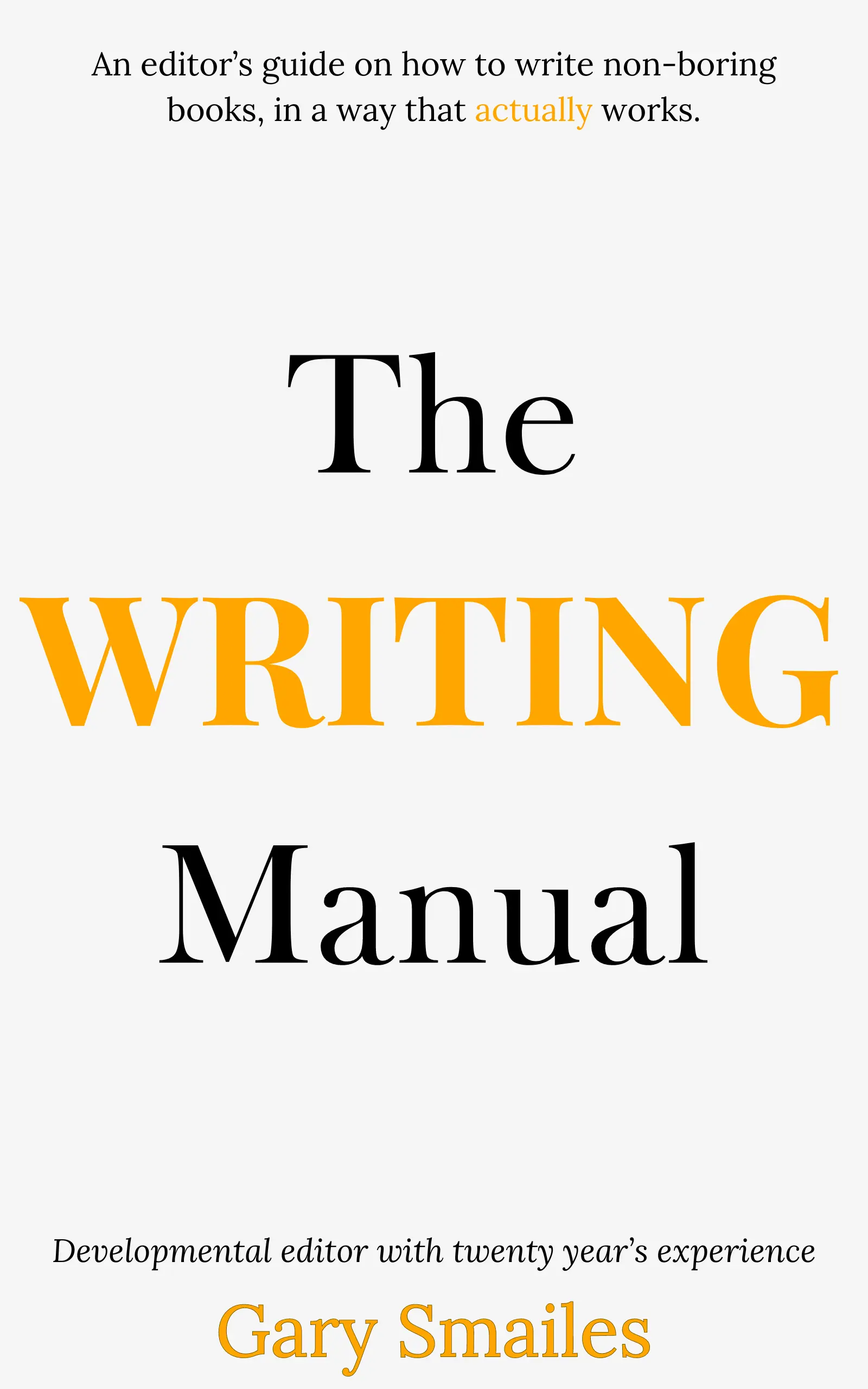
Download FREE ebook
Claim your free eBook today and join over 25,000 writers who have read and benefited from this ebook.
'It is probably one of the best books on writing I've read so far.' Miz Bent