How To Read And Apply An Editor’s Letter Effectively


Table of Contents
Read the Editor’s Letter with the Right Mindset
You open the editor’s letter and feel your shoulders climb. Normal. Breathe. Reframe the document as a roadmap for revision, not a verdict on you or your book. Editorial letters target structure, hook, and market position. Not commas. Not typos. Big levers first.
Start by naming the goal in your head. I am here to understand the plan for a stronger proposal. That sentence will keep you steady when a note stings.
Do a clean first read
Read the letter once without touching the manuscript. No fixes. No wordsmithing. Let the patterns surface.
As you read, notice recurring themes:
- Hook clarity. Does the promise sit up front or hide in paragraph three.
- Audience specificity. One reader or a crowd with mixed needs.
- Competitive titles. Fresh comps or an older list.
- TOC flow. Overlap, gaps, or a jumpy sequence.
- Platform gaps. Numbers missing, tactics vague, timelines soft.
Mini-exercise:
- Set a 15-minute timer.
- Read the letter without stopping.
- On a sticky note, write three nouns you saw more than once. Hook. Audience. Comps. Place the note on your desk. Done.
Separate praise from priorities
Editors open with strengths for a reason. Praise signals what to protect during revision. Keep those pieces intact while you fix bigger issues.
Example opener from a solid letter:
- “Your premise feels timely for first-time managers.”
- “Voice reads confident and kind.”
- “Case studies feel lived-in, not theoretical.”
Underline praise in one color. Then switch to another color for priorities. If a line reads, “The hook is strong but buried,” the praise tells you what to preserve, the priority tells you where to move it. Protection and progress, side by side.
Make a quick split list:
- Keep: premise, voice, case studies.
- Fix: hook placement, audience focus, outdated comps, overlapping chapters, fuzzy platform metrics.
Use the 24-hour rule
Distance helps you see the work, not the wound. Follow this sequence.
Step 1. Read today. No edits.
Step 2. Step away for one sleep cycle. Walk, cook, watch a game. Let your brain organize.
Step 3. Reread tomorrow with a highlighter. Mark the three to five items which matter most for an agent or acquisitions editor.
How to pick those top items:
- Will this change make the book easier to pitch in one sentence.
- Will this change clarify who buys and why.
- Will this change show where the book sits on a shelf.
- Will this change remove confusion inside the TOC.
Example priority list from a common letter:
- 1) Sharpen hook. Promise a measurable outcome in the first two sentences.
- 2) Narrow audience. Anchor on new managers in mid-size tech companies.
- 3) Update comps. Add five recent titles and one-line differences.
- 4) Merge three overlapping chapters into one framework chapter.
- 5) Quantify platform. Email list size, open rate, speaking reach, podcast downloads.
Write those on a fresh page. Tape it near your screen. Those guide the next month, not the tiny notes in your margins.
Train your brain to hear intent
Editors flag problems which block market clarity. Hear the intent behind each note.
- “The tone skews academic.” Intent: improve accessibility for the buyer.
- “Open with a scene.” Intent: lead with stakes so readers keep going.
- “Move citations to endnotes.” Intent: keep flow while preserving evidence.
- “Add recent comps.” Intent: show awareness of the shelf and signal differentiation.
When intent feels unclear, write a question for your follow-up call. Example: “You flagged Chapter 4 as slow. Is the issue order, length, or level of detail.”
A quick checklist for your second read
- Circle verbs in the letter. They point to action. Cut, move, merge, quantify, reposition.
- Box any mention of audience, comps, or TOC. These drive salability.
- Star praise which protects your voice. You will need those reminders mid-revision.
Two short examples
Before: “This proposal covers leadership for everyone.”
After: “This proposal helps first-time managers run weekly 1:1s which reduce turnover by 25 percent in 90 days.”
Before: “Chapter 4: Feedback.”
After: “Chapter 4: The 5-Step Feedback Script, with prompts and a role-play.”
See the pattern. Specific promise. Clear tool. Measurable result.
Action:
Use the 24-hour rule. Read the letter once, step away for a day, then reread and highlight the top three to five priorities an agent or acquisitions editor will care about most. Put those at the top of your revision plan. Keep your praise list nearby to guard the strengths you already have.
Decode Feedback by Proposal Component
An editor’s letter reads like a box of mixed screws. Sort first. Then build.
Map each note to the right section
Label every comment by the proposal part it touches. Write the label in the margin of the letter or add a tag in your notes.
Common buckets:
- Overview or Hook. Notes about promise, transformation, or why now.
- Target Audience. Notes about who buys, segments, or pain points.
- Market or Need. Notes about demand, data, and proof of problem.
- Competitive Titles. Notes about comps, age of comps, or shelf placement.
- Chapter Outline or TOC. Notes about order, overlap, or missing steps.
- Sample Chapters. Notes about openings, scenes, pacing, or takeaways.
- Platform and Marketing Plan. Notes about reach, tactics, or timing.
- Voice and Tone. Notes about formality, jargon, or consistency.
- Submission Formatting. Notes about spacing, fonts, pagination, or file naming.
Fast examples:
- “Your promise arrives late.” Overview or Hook.
- “Who is this for.” Target Audience.
- “Add data to show demand.” Market or Need.
- “Replace older comps.” Competitive Titles.
- “Chapter 3 repeats Chapter 2.” TOC.
- “Open with a scene.” Sample Chapters.
- “Reach numbers feel thin.” Platform.
- “Tone skews academic.” Voice and Tone.
- “Double-space and add page numbers.” Submission Formatting.
Name the problem type
Each note solves a specific problem. Naming the type clarifies the fix.
The five you will see most:
- Clarity. Reader cannot grasp the promise or takeaway. Phrases to watch for: “unclear,” “buried,” “vague.”
- Differentiation. Proposal blends with others. Watch for: “generic,” “crowded,” “what makes this different.”
- Order or Logic. Structure fights flow. Watch for: “repeats,” “out of order,” “missing step.”
- Evidence. Claims sit without support. Watch for: “need data,” “add case,” “source.”
- Credibility. Author fit or platform questions. Watch for: “why you,” “reach,” “proof of authority.”
Write the type next to each note. Clarity. Differentiation. Order. Evidence. Credibility. This shorthand keeps focus on outcomes, not ego.
Translate vague notes into clear tasks
Editors speak in outcomes. Your job is to convert outcomes into actions. Use verbs. Tie each task to a section and a problem type.
Examples:
- “Sharpen hook.” Becomes: Rewrite the overview to promise a measurable outcome in the first two sentences. Add one proof point. Section: Overview. Type: Clarity.
- “Audience too broad.” Becomes: Name one primary reader with two traits, list three places where they gather, and state one core pain point. Section: Target Audience. Type: Differentiation.
- “Thin market section.” Becomes: Add three data points with citations, each tied to the pain point. Section: Market. Type: Evidence.
- “Comps feel off.” Becomes: Replace with five titles from the last five years, add a one-line difference statement for each. Section: Competitive Titles. Type: Differentiation.
- “TOC feels baggy.” Becomes: Merge Chapters 5 and 6, front-load the main framework by Chapter 2, cap total at 15 chapters. Section: TOC. Type: Order.
- “Voice uneven.” Becomes: Convert jargon to plain language, switch to second person in examples, align tone between proposal and samples. Section: Voice and Tone. Type: Clarity.
- “Open stronger.” Becomes: Start Chapter 1 with a scene that shows the problem in action, then state the tool. Section: Sample Chapters. Type: Clarity.
- “Platform lite.” Becomes: Quantify email list, podcast downloads, speaking totals, and course enrollments. Add a three-month launch timeline with three tactics. Section: Platform. Type: Credibility.
- “Formatting issues.” Becomes: Use Times New Roman 12, double-space, add page numbers, insert contact info on the title page, export to PDF. Section: Submission Formatting. Type: Credibility.
Mini-exercise, ten minutes:
- Pick three vague lines from the letter.
- For each, write one sentence that starts with a verb and ends with a measurable target.
- File those in your task list under the right section.
Build a feedback matrix
Turn comments into a plan you can track. Use five columns: Issue, Evidence, Impact, Proposed Fix, Status.
How to fill it:
- Issue. Short name for the problem. Example: Hook buried.
- Evidence. Quote the letter and add a page number. Example: “Strong hook, but arrives in paragraph four,” p. 2.
- Impact. Why this matters for an agent or acquisitions editor. Example: Pitch gets lost in the first scan.
- Proposed Fix. The action you will take. Keep it plain and measurable. Example: Move the transformation to the first two lines of the overview. Cut to 230 words. Add one proof point.
- Status. Not started. In progress. Done.
Sample rows:
Row 1
- Issue: Hook buried
- Evidence: “Strong hook, but arrives in paragraph four,” p. 2
- Impact: First-page pitch falls flat
- Proposed Fix: Rewrite overview to lead with outcome in two sentences and add one metric
- Status: In progress
Row 2
- Issue: Audience too broad
- Evidence: “Reads like it serves everyone,” p. 1
- Impact: Positioning feels unfocused
- Proposed Fix: Define one primary reader, add two traits, and one buying trigger
- Status: Not started
Row 3
- Issue: Old comps
- Evidence: “Comps skew older than seven years,” p. 3
- Impact: Shelf awareness in doubt
- Proposed Fix: Add five comps from the last five years with one-line difference notes
- Status: Done
Set up the matrix in a doc, spreadsheet, or notes app. One row per issue. One owner. One next step.
Quick cues while decoding
- Highlight verbs in the letter. They point to action. Cut. Move. Merge. Quantify. Reorder.
- Tag every note by section and problem type. Two tags, no more.
- Rewrite every vague note as a task with a measurable target.
- Keep the matrix open while you revise. Update status as you finish items.
One more example, start to finish:
Letter line: “The TOC builds slowly and repeats feedback material.”
Decode: Section is TOC. Problem type is Order.
Task: Merge Chapters 7 and 9 into one “Feedback Sprint” chapter. Pull the 5-step script forward to Chapter 3. Cap chapter intros at two sentences. Add a one-line takeaway to each chapter entry.
Matrix entry: Issue is TOC redundancy. Evidence is the quote with page. Impact is agent fatigue during skim. Status moves to Done once the outline reflects the changes.
That is the work. Sort, name, translate, track. Repeat until the letter lives as a plan, not a bruise.
Prioritize and Create a Revision Roadmap
You have an editor's letter full of signals. Now you need order. Do first things first, save polish for last.
Triage without flinching
Sort every note into three piles. Be strict.
- Must-Do. Deal-breakers for agents. Examples:
- Hook unclear or buried.
- Audience reads broad or fuzzy.
- Old or weak comps.
- TOC lacks logic or repeats material.
- Platform numbers unproven or inflated.
- Proof missing for key claims.
- Should-Do. Strong improvements, not fatal on their own. Examples:
- Sharper chapter titles.
- Clearer transitions between sections.
- One or two new data points for depth.
- Tighter scene openings in samples.
- Nice-to-Have. Polish. Examples:
- Line edits for rhythm.
- Swapping a quote for a better one.
- Sidebars, callouts, or diagrams.
Gut check for each note: Would an agent pass if this stays as is. If yes, place it in Must-Do. If no, but it lifts clarity or authority, place it in Should-Do. If it sweetens the read, park it in Nice-to-Have.
One more rule. Structure before sentences. Fix order, promise, and proof before you touch lines.
Sequence for impact
Work through sections in a path an agent will follow on a first skim.
- Overview and Hook
- Audience and Market
- Competitive Titles
- Chapter Outline or TOC
- Sample Chapters
- Platform and Marketing Plan
- Voice and Tone
- Submission Formatting
Move only when the current step holds up to a fresh skim. No hopping around. Context shifts drain energy.
Build a calendar you will follow
Put dates on the work. Your future self will thank you.
A simple four-week sprint:
- Week 1. Hook and audience. Rewrite the overview to lead with outcome in two sentences. State why now in one line. Define one primary reader and two traits. Add three real-world indicators of demand.
- Week 2. Comps and TOC. Replace old comps with five to eight from the last five to seven years. Write a one-line difference for each. Merge overlapping chapters. Move the main framework to the front.
- Week 3. Sample chapters. Open with a scene or problem. Interleave research with steps readers can follow. End with a short checklist.
- Week 4. Platform and polish. Quantify reach. Outline a T minus 90 to T plus 90 plan with deliverables and estimated reach. Smooth voice and tone. Fix formatting.
Daily rhythm, two options:
- Two 50-minute sprints with a 10-minute break.
- One 90-minute block for deep structure. One 30-minute block for admin and tracking.
Protect one buffer day each week. Use it to catch up or to rest.
Keep a decision log
Not every note deserves a full yes. Some invite adjustment. A few will earn a no. Track those choices.
Create three columns: Accept, Modify, Decline. Add a short reason for each.
Examples:
- Accept. "Move the transformation to the first two sentences." Reason: Increases clarity on page one.
- Modify. "Cut Chapter 12." Reason: Keep material but fold into Chapter 9 to preserve case study sequence.
- Decline. "Switch to a diet-first approach." Reason: Conflicts with thesis and market positioning. Propose added sidebar on diet pitfalls instead.
This log shows thought and respect. It also sets you up for a smooth follow-up call.
Version control without chaos
Messy files burn time. Set a simple system.
- File names. Proposal_v2_2025-01-15. Proposal_v3_2025-01-22. Use dates in ISO format for clean sorting.
- Folders. 01_Original. 02_Working. 03_Agent_Ready. Move files forward as they graduate.
- A clean master. Keep one "agent-ready" copy untouched until you approve changes. Work in a duplicate.
- Tracking. A tiny spreadsheet works. Columns: File, Date, Summary of changes, Status.
Back up to the cloud. Email yourself the agent-ready copy at key milestones. Paranoid beats sorry.
A quick working example
Say your matrix lists nine issues:
- Hook buried
- Audience broad
- Old comps
- TOC repeats steps
- Flat opening scene
- Thin market data
- Platform numbers vague
- Tone shifts academic
- No page numbers
Triage:
- Must-Do. Hook buried. Audience broad. Old comps. TOC repeats steps. Thin market data. Platform numbers vague.
- Should-Do. Flat opening scene. Tone shifts academic.
- Nice-to-Have. No page numbers. Fix while exporting.
Plan:
- Week 1. Hook and audience. Move transformation to line one. Name primary reader. List two places where readers gather. Add one core pain point.
- Week 2. Comps and TOC. Replace comps. Merge Chapters 4 and 5. Add one-line takeaway to each chapter entry.
- Week 3. Market data and platform. Three citations tied to the pain point. Quantify email list, podcast downloads, and speaking. Draft the launch timeline.
- Week 4. Samples and polish. Rewrite the opening scene. Smooth tone in three flagged passages. Add page numbers and consistent headers.
Decision log:
- Accept. Replace comps.
- Modify. Keep Chapter 7 but reduce to a case study sidebar within Chapter 3.
- Decline. Remove personal story from the overview. Reason: Story signals credibility. Shorten to two lines instead.
Version plan:
- Proposal_v2_2025-02-03 after Week 1.
- Proposal_v3_2025-02-10 after Week 2.
- Proposal_v4_2025-02-17 after
Implement High-Impact Revisions (Section-by-Section)
These sections carry the most weight with agents. Work through them in this order, and push each one to a clear standard.
Overview and Hook
Lead with the outcome the reader gets. Name your unique angle in plain language. Add one sentence on urgency.
Quick test: first two sentences answer who it serves, what changes, and why now.
- Example before: "This book explores mindful productivity for busy professionals."
- Example after: "In eight weeks, busy managers adopt a 10-minute routine that cuts meeting time by 20 percent. Backed by a pilot across three teams, the method fits into real schedules."
Action steps:
- Cut the overview to 200 to 300 words.
- Put the transformation in sentence one or two.
- Add one or two proof points. Small pilot. Case study. Brief credential that signals credibility.
- Remove "throat clearing" lines. No origin story up top. Save it for later.
Mini exercise:
- Write a two-sentence promise. Add a single, concrete proof point. Read it out loud. If a stranger would know who, what, and why now, you are close.
Target Audience and Market
Pick a primary reader. Name a secondary only if needed. Describe pain points in their words.
Show where readers gather. Prove demand with real signals.
Use this template:
- Primary reader: job title or life stage.
- Pain points: three bullets using phrases readers use.
- Where they gather: two forums or newsletters, one conference, one podcast.
- Demand signals: search queries, recent headlines, conference tracks, high-engagement threads.
Example:
- Primary: new engineering managers in SaaS.
- Pain points: running one-on-ones, delivering hard feedback, building trust with remote teams.
- Where they gather: r/EngineeringManagement, LeadDev, The Manager's Handbook newsletter, Manager Tools podcast.
- Demand signals: rising search for "first 90 days manager," conference tracks on manager training, two viral threads on promotions without support.
Cut "for everyone." A book for all readers reaches none.
Competitive Titles and Positioning
List five to eight comps from the last five to seven years. Mix bestsellers with steady sellers. Explain difference in one line per comp.
Positioning line:
For [reader], unlike [Comp A] or [Comp B], this book [distinct benefit].
Example:
- Comp: The First-Time Manager, new edition. Difference: broader handbook. Your book offers a focused 8-week plan with scripts and metrics.
- Comp: Trillion Dollar Coach. Difference: stories from tech titans. Your book applies coaching habits to mid-level teams with templates.
Include likely BISAC and Amazon categories. Pick two to three precise categories rather than a vague top-level shelf.
Action steps:
- Replace outdated comps.
- Add sales tier or imprint only if public.
- Keep the tone respectful. No dunking on peers.
Chapter Outline and Structure
Show a clean sequence. Remove overlap. Put the core framework upfront.
Aim for 12 to 18 chapters for prescriptive nonfiction. Two to four sentences per chapter. Each mini-blurb needs a promise, one tool, and a takeaway.
Mini example:
- Chapter 1. The 8-Week Plan. Promise: map a simple cadence for meetings and goals. Tool: a one-page weekly scorecard. Takeaway: progress visible within seven days.
- Chapter 2. One-on-Ones Without Awkwardness. Promise: run a 25-minute meeting that drives trust. Tool: a three-question agenda. Takeaway: fewer surprises, faster support.
Action steps:
- Merge chapters that repeat ideas.
- Move case studies to sidebars when they slow the throughline.
- Label any framework early, then build on it.
Sample Chapters
Open on something readers feel. A scene, a problem, or a number that stings. Then alternate research with steps they can use today. Close with a quick summary or checklist.
Simple structure:
- Hook: 4 to 6 lines.
- Context: brief research tie-in or stake.
- Steps: three to five moves, each with an example.
- Wrap: a checklist or "try this this week."
Micro example for a wrap:
- This week:
- Run one 25-minute one-on-one using the three-question agenda.
- Track one metric in the scorecard.
- Ask your team for one friction point.
Action steps:
- Pick chapters that show voice, structure, and results.
- Double-space, paginate, and proof.
- Keep tables and figures simple and readable in Word or Google Docs.
Platform and Marketing Plan
Quantify reach. Use real numbers.
Numbers to include:
- Email list size and average open rate.
- Podcast or YouTube downloads per episode or per month.
- Social reach by platform that matters for your reader.
- Speaking, courses, cohorts, client count, or communities you run.
Lay out a realistic T minus 90 to T plus 90 timeline with deliverables and reach.
Example timeline highlights:
- T–90 to T–60. Tease concept in three newsletters. Collect questions. Confirm five podcast bookings.
- T–30. Run a free webinar for your list and two partner lists. Offer a preorder incentive, such as a worksheet bundle.
- Launch week. Guest on podcasts. Publish two op-eds or LinkedIn articles. Host a live Q&A.
- T+30 to T+90. Book clubs with three companies. Conference talk submission. Ongoing newsletter series that extends chapter tools.
Action steps:
- Collaborate and Close the Loop
- Scope of feedback you are addressing. Letter only, or letter plus margin notes.
- Materials under review next time. Full proposal or select sections.
- Turnaround time for your revision and their second look.
- Whether a second editorial letter or a revise and resubmit is included.
- Format for follow-up. Call or written notes. Time on the call. Who attends.
- Any fees for extra rounds.
- Subject: Proposal revision plan and follow-up
- Body:
Hi [Name],
Thanks for the thoughtful letter. I will revise the Overview, Audience, Comps, TOC, and two sample chapters this week.Can you confirm scope for the next pass, letter plus margin notes, and a one-time follow-up call?
Proposed timeline:
- My revision to you on [date].
- A 30 to 45 minute call on [date window].
- Your response by [date], if possible.
I will send a brief revision memo with the new draft. If anything in this plan needs adjustment, please advise.
Thanks again,
[Your name] - If I fix three items first, which raise our odds with agents the most?
- Which lists or imprints feel like a match, and why?
- Does the Overview now lead with a clear reader outcome and why now?
- Are the comps current enough for your pitch?
- Where does the TOC drag or repeat?
- What proof would help trust here, data, case studies, endorsements?
- Any tone shifts in the sample chapters that might worry a board?
- Goals for this pass, 3 minutes.
- Top three risks a board or agent will raise, 10 minutes.
- Open decisions, title, comps, chapter order, 10 minutes.
- Next steps and dates, 5 minutes.
- Header. Book title, version, date, your contact info.
- Summary. One short paragraph on progress and focus.
- Changes by section. Bullets that map to their notes.
- Data added. Numbers, case studies, endorsements, new comps.
- Items deferred. What you postponed and a quick why.
- Questions for second look. Two or three you want answered.
- Summary
I focused on clarity and proof in the Overview, Audience, Comps, and TOC. The two sample chapters now open with a scene and end with a checklist.
- Changes
- Overview. New two-sentence promise with outcome and why now. Added pilot result, 22 percent drop in meeting time across 3 teams.
- Audience. Narrowed to first-time engineering managers. Added demand signals, search trends and conference tracks.
- Comps. Replaced two older titles with 2022 and 2023 releases. One-line differentiation per title.
- TOC. Merged chapters 4 and 6. Moved the framework to chapter 1.
- Samples. Openings now show a problem in scene. Each ends with a three-step checklist.
- Data added
Newsletter list at 18,400 with a 48 percent open rate. Five speaking gigs booked Q3. Two corporate pilots underway.
- Deferred
Endnotes and a third case study. Planned for next pass after agent feedback.
- Questions
Does the new hook feel bold enough for Big 5 lists focused on management? Are the comps tight for tech and business lists? Any drag in chapters 2 and 3?
- Acknowledge the goal.
- Share a brief reason.
- Offer a solution that hits the same goal.
- I see the need to broaden beyond tech. My platform and case studies live in SaaS, which supports stronger comps and endorsements. Proposal, narrow to tech managers. Marketing plan, a partner path into cross-industry podcasts.
- You flagged chapter order as busy. If we move stories later, we lose momentum. Proposal, keep the framework in chapter 1, then interleave one story per chapter and move long case studies to sidebars.
- Accept. Move hook to sentence one.
- Modify. Narrow comps to 6, keep one older anchor due to strong sales history.
- Decline. Remove research review chapter. Rationale, overlaps with appendix and slows flow.
- Agent name and agency
- Interests or lists
- Why they fit
- Materials requested
- Date sent
- Status and response date
- Next step and follow-up date
- Notes on feedback
- Open with the two-sentence outcome and why now.
- Drop one proof point.
- Add one positioning line with comps.
- Include platform numbers that matter.
- Close with a short bio line that signals authority.
- Send the revision on the agreed date with the memo attached.
- Confirm receipt and the date for feedback or the call.
- After the call, send a two-line recap with dates and owners.
- Share submission progress in one update, short and clear, once per milestone.
- Scope, timeline, and second-look terms confirmed in writing.
- Targeted questions prepared, with two options where helpful.
- Call scheduled and run to a tight agenda.
- One-page revision memo sent with the draft.
- Professional pushback logged with alternatives and reasons.
- Query tailored per agent, tracker up to date, follow-ups on calendar.
- Editor updated at key points, not every ripple.
The letter starts a conversation. Treat the editor as a partner, not a judge. Set terms, ask for the signal you need, then close cleanly with a memo and a clear date.
Set expectations early
Confirm scope, deliverables, and timelines in writing. You want no surprises.
What to confirm:
Quick email script:
Ask sharp questions
Aim for the lever that moves agents. Keep the list short and concrete.
Use questions like:
Bring two options when you ask. Editors respond well to choices.
Run a tight follow-up call
Treat the call like a short working session.
Simple agenda:
End with a spoken summary. Then send a two-line recap email with dates.
Write a brief revision memo
Your memo saves the editor time and helps them advocate for you. Keep it to one page.
Structure:
Sample memo:
Attach the memo as a PDF. Name files clearly, for example, Proposal_v2_2025-01-18 and Memo_v2_2025-01-18.
Push back without burning bridges
Disagree with grace and evidence. Propose an alternative that meets the goal.
Use a simple frame:
Scripts:
Keep emotion out. Keep the mission in view. Editors want a stronger book and a smoother pitch.
Track decisions in a short log:
Track submissions like a pro
Once you and the editor agree, move to outreach. Tailor the query and follow each guideline to the letter.
Set up a simple tracker:
Tailor the query:
Follow each instruction on file type, sample length, and subject line. No extras unless requested.
Close the loop
Keep the editor in the loop without flooding them.
If a pass arrives with notes, log the feedback. Look for patterns with your editor. Adjust the next version with shared priorities.
Quick checklist
Editors remember writers who make collaboration simple, precise, and kind. Be that writer.
Frequently Asked Questions
How do I read an editor’s letter without taking it personally?
Use the 24‑hour rule: read the letter once without editing, step away for a sleep cycle, then reread with a highlighter to surface recurring themes. Start by telling yourself the goal — "I am here to understand the revision roadmap" — so notes read as instructions, not judgement.
Underline praise in one colour and priorities in another so you protect strengths (voice, case studies) while targeting big levers like the hook, audience specificity and TOC logic.
Which items should I prioritise from an editorial letter?
Pick three to five Must‑Do items that improve pitchability: will the change let you explain the book in one sentence, clarify who buys it and why, show shelf placement, or fix TOC confusion? Those are higher‑value than sentence‑level tweaks.
Narrow choices by asking: "Will this change make the book easier to pitch in a single sentence?" If yes, it’s a Must‑Do; otherwise it can wait until structure is resolved.
How do I turn vague notes into concrete revision tasks?
Translate each vague instruction into a verb + measurable target. For example, "Sharpen hook" becomes "Rewrite the overview to 200–300 words with the one‑sentence promise in the first two lines and add one proof point." Attach a due date and owner to every task.
Tag tasks by section—Overview, Audience, Comps, TOC, Samples, Platform—so you always know which part of the proposal you’re fixing and why (clarity, differentiation, order, evidence or credibility).
What is a decision log and how should I use it?
A decision log records every editorial suggestion and your response: Accept, Modify or Decline, with a one‑line rationale. It demonstrates thoughtfulness, shows where you kept the core thesis, and speeds follow‑up conversations with editors or agents.
Share the log before your call or with your resubmission so the editor can see which changes you adopted, which you adapted and which you deferred, avoiding repeated back‑and‑forth on obvious items.
What does a practical four‑week revision roadmap look like?
Week 1: Hook and Audience — rewrite the overview to lead with the measurable promise and define a primary reader. Week 2: Comps and TOC — replace outdated comps and merge overlapping chapters, moving the core framework forward. Week 3: Sample Chapters and Evidence — open samples with scenes and add three market data points with citations. Week 4: Platform and Polish — quantify reach with dated numbers, draft a T‑minus‑90 to T‑plus‑90 launch timeline, then clean formatting and file names.
Work in focused sprints (two 50‑minute blocks or one 90‑minute deep block) and protect a weekly buffer day for catch‑up or rest.
How should I prepare for the follow‑up call with my editor?
Send your decision log and 3–5 targeted questions 24 hours before the call so the session is a working meeting, not a reread. Ask which three fixes most improve acquisition odds, which imprints fit the book, and whether the new hook reads bold enough for Big‑5 lists.
Run a tight agenda on the call (3‑minute goals, 10‑minute top risks, 10‑minute open decisions, 5‑minute next steps), end with a spoken summary and follow up with a two‑line recap email and dates.
When is it appropriate to push back and how do I do it professionally?
Push back when a suggestion would undermine your core thesis, credibility or category fit. Use a three‑part frame: acknowledge the goal, give a concise rationale, and offer a practicable alternative that achieves the same aim (for example, move a long case study to a sidebar rather than removing it).
Keep tone neutral, back objections with brief evidence, and log the choice in your decision log so the editor sees you’re solving the same problem, not resisting change.
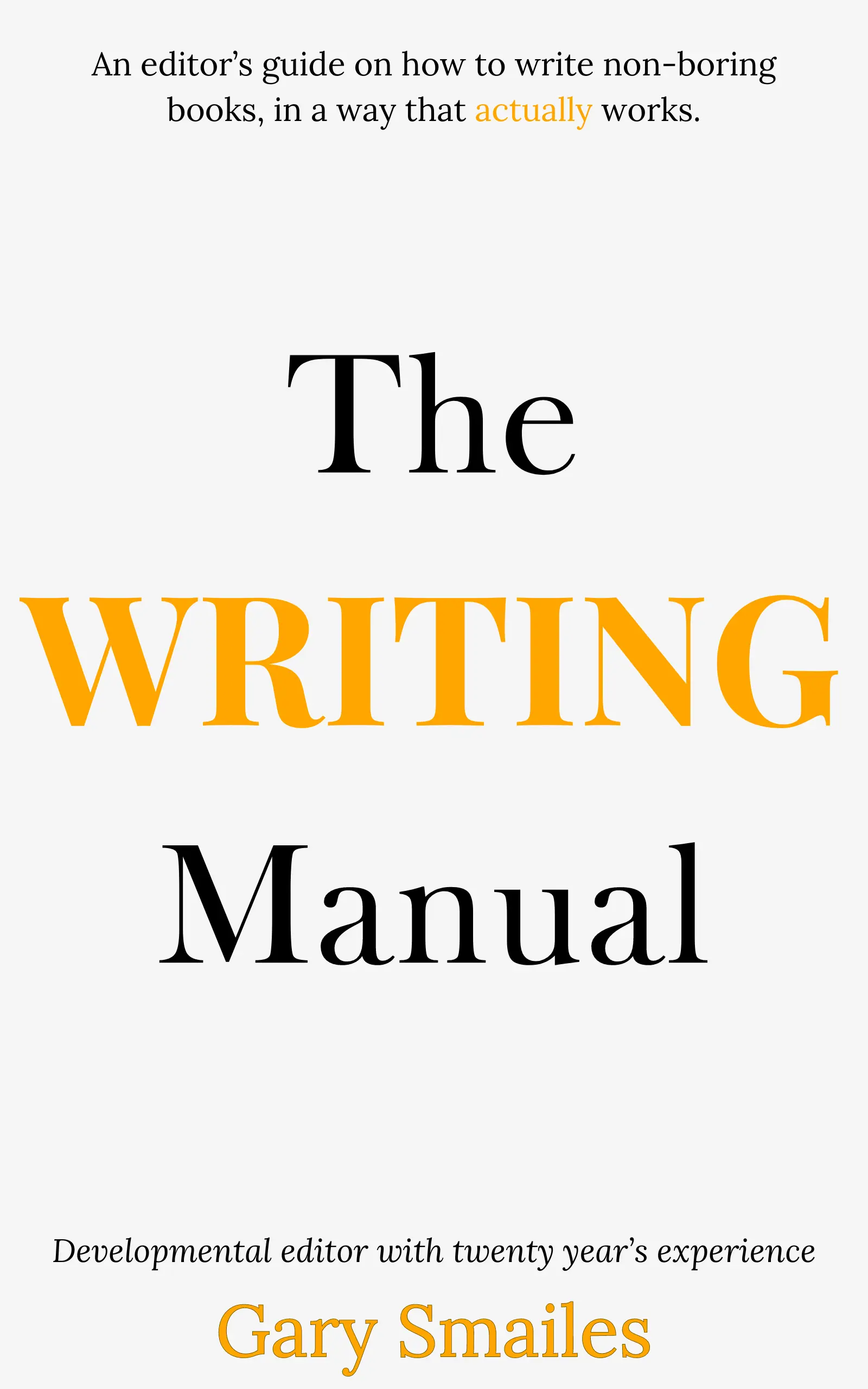
Download FREE ebook
Claim your free eBook today and join over 25,000 writers who have read and benefited from this ebook.
'It is probably one of the best books on writing I've read so far.' Miz Bent