Ideas For Writing Believable Villains


Table of Contents
Foundations of Credible Antagonists
Villains feel real when you stop treating them like obstacles. Write from their side. Give them aims, a worldview, and a code. Then let those pieces drive choices on the page.
Objective, logic, values
Start with three questions.
- What do they want right now.
- Why do they believe this path works.
- Which values they refuse to betray.
Keep answers concrete.
- “Secure water rights for my town before the resort does.”
- “Central control prevents chaos. Decentralized systems fail under pressure.”
- “Protect family. No harm to kids. Fair pay for loyal staff.”
Write one paragraph in their voice. First person works well. One clear aim. A reason. A value. If the paragraph reads like a campaign platform, good. Villains advocate. They persuade themselves first.
Stakes tied to the world
Motivation needs cost. Set it inside real constraints.
- Money. Who funds them. What drains the budget. What penalties hit if funds dry up.
- Time. Deadlines, seasons, patrol shifts, court dates.
- Law and systems. Permits, audits, bylaws, labor rules.
- Reputation. Media heat, donor trust, gang rules, board votes.
- Geography and logistics. Road closures, supply lines, weather, borders.
Example. A biotech CEO wants fast approval for a drug. Funding hinges on milestones. Regulators watch trials. A rival group leaks lab photos. Now decisions around volunteers, data, and payouts have pressure baked in. Choices gain weight because the world pushes back.
Competence with limits
Give them skill. Also give them friction.
- Wins. They pull off a heist, sway a council vote, outmaneuver a cop.
- Blind spots. Loyalty to a sibling. Underestimates rural voters. Trusts data over people.
- Constraints. Ankle monitor. Food allergy. Public office with cameras on.
- Lines. No harm to children. No torture. No dirty money. Or the inverse, no mercy for traitors.
Early victories build credibility. Then the limits bite. A fixer who bribes with finesse freezes when a toddler wanders into a meeting. A general with supply mastery stumbles in street-level politics. Put the crack where the light hits most. Under pressure, the tell shows up in the same way each time.
Try a quick stat card.
- Strengths. “Union rules memorized. Reads people fast.”
- Weaknesses. “Thin skin about respect. Over-corrects with control.”
- Line. “No hits on Sundays.”
- Constraint. “Chronic back pain. Needs heat pads during long sits.”
Now write a scene where both strength and limit appear. Let them win the scene, then pay a price.
Align with the theme
Your theme is a claim. The villain argues the counterclaim.
If your story says truth heals, give the villain a creed built on control of information. If your story says freedom requires responsibility, give the villain a creed built on unchecked freedom or smothering order. Their logic should press the hero’s soft spot.
Mini-pairs:
- Theme. Community saves. Villain creed. Outsiders ruin outcomes, close ranks.
- Theme. Mercy matters. Villain creed. Mercy rewards predators, end it.
- Theme. People deserve second chances. Villain creed. Past behavior predicts future harm, remove risk.
Put them in set pieces where their creed works. Let the world reward them now and then. The hero needs to feel tempted, or at least rattled.
Dodge stock tropes
Skip the laugh, the swivel chair, the cat stroke. Give texture drawn from context.
- Corporate raider. Wears union pins stolen from a father’s toolbox, keeps them in a desk drawer, touches one before tough calls.
- Street boss. Knows every auntie on the block by name, sets aside grocery money from each haul, refuses fentanyl shipments.
- Cleric. Quotes policy during violence reviews, edits confessions for grammar, arranges meals for widows on Fridays.
Replace generic villain beats with specific tells.
- Not “evil grin.” Try “he wiped printer ink off his thumb, slow, then slid the NDA across the table.”
- Not “cold eyes.” Try “her gaze pinned the file label, not the face, and stayed there until the room hushed.”
- Not “maniacal laugh.” Try silence, then a door locked with a soft click.
Menace grows from implication and consequence. Show what happens after the meeting. Show who loses a job. Show which neighbor stops waving.
Action
Write a one-paragraph mission statement in the villain’s voice. One aim, one reason, one value. Keep it under six sentences. Then add one boundary they never cross and one they cross without flinching.
Template:
- Mission. “I will [goal] by [method], because [belief].”
- Value. “I honor [value], even under pressure.”
- Boundary. “I never [line].”
- Easy line to cross. “I always [hard choice] when required.”
Example 1:
“I will win the mayor’s race by cleaning the streets and crushing graft, because order keeps families safe. I honor my mother’s rule, pay what you owe, pay it on time. I never threaten kids. I always leak sealed records when a thug hides behind paperwork.”
Example 2:
“I will secure the dam before summer, because water is life and my town will not beg. I honor fair wages. I never poison rivers. I always sabotage VIP access roads when outsiders block votes.”
Read it out loud. Does it sound like a person you might meet, with a spine, a story, and a bias. Good. Now go seed those traits into scenes.
Psychology and Backstory That Drive Choices
Backstory is not biography. It's the engine that drives every decision your villain makes. You need the wound, the misbelief, and the patterns. Then you need to bury most of it.
The core wound and misbelief
Start with pain. Every compelling villain carries damage that shaped their worldview. The wound creates the misbelief. The misbelief drives the choices.
Think cause and effect:
- Wound: Abandoned by parents at age seven.
- Misbelief: "People leave when you need them most."
- Behavior: Strikes first, isolates others before they isolate him.
Or:
- Wound: Watched corruption destroy her neighborhood.
- Misbelief: "The system rewards only those who break it."
- Behavior: Uses dirty tactics to achieve clean results.
The misbelief feels logical to them. It solved a problem once. Now they apply it everywhere, even when it creates new problems.
Keep the wound specific. "Had a bad childhood" means nothing. "Father gambled away the house when she was fifteen, family lived in a car for eight months" gives you material. She hoards cash, distrusts risk-takers, and views financial vulnerability as moral weakness.
Map formative moments to present behavior
Dig into the moments that taught your villain how the world works. Family dynamics, cultural messages, class experiences, trauma, privilege. Each leaves fingerprints on how they move through scenes.
Take a villain raised in wealth who loses everything. Watch for:
- Status tells: Orders wine by region, not price. Knows which fork to use. Name-drops prep school friends.
- Triggers: Disrespect from service workers. References to "new money." Questions about past addresses.
- Overcompensation: Tips lavishly to prove worth. Mentions expensive purchases. Corrects grammar mid-conversation.
Or a villain from poverty who climbs high:
- Status tells: Counts cash twice. Keeps backup plans for backup plans. Remembers every slight.
- Triggers: Condescension about background. Assumptions about intelligence. Jokes about being "hungry."
- Overcompensation: Designer labels visible. Perfect diction in formal settings. Never splits checks.
Connect the past to present action. If mockery shaped them, they deflect with humor before anyone else gets the chance. If betrayal broke them, they test loyalty obsessively. If chaos ruled their childhood, they micromanage details others ignore.
Personal code and rationalizations
Villains need rules. They tell themselves stories about why harm serves a higher purpose. The code makes them feel righteous, not ruthless.
Examples of personal codes:
- "Weakness invites predators. I eliminate weakness to protect the strong."
- "Truth hurts, but lies kill. I force people to face reality."
- "The system is rigged. I level the playing field by any means necessary."
- "Order prevents suffering. Disorder creates victims. I maintain order."
Notice the logic. Each code starts with a reasonable observation, then leaps to justify extreme action. The leap feels natural to them because their wound taught them the world operates on these rules.
Show the rationalizations in action:
Instead of: "I enjoy causing pain."
Try: "He needed to learn. Now he knows the cost of crossing me. Others will benefit from his lesson."
The rationalization reveals character. A villain who frames violence as education thinks differently than one who frames it as necessary surgery or unfortunate business.
Consistent inconsistencies under pressure
Everyone has tells. Under stress, your villain defaults to learned behaviors. Map the pattern:
- Pressure point: Authority challenged.
- Tell: Straightens papers on desk, aligns pens.
- Escalation: Asks for written reports. Micromanages scheduling.
- Breaking point: Fires someone for minor errors.
Or:
- Pressure point: Personal criticism.
- Tell: Jokes turn sharper, smile gets wider.
- Escalation: Changes subject to others' flaws. Makes cutting observations.
- Breaking point: Public humiliation of the critic.
The consistency matters. If they deflect with humor once, they deflect with humor every time. Readers learn to recognize the warning signs. Characters in your story learn to read the room.
But add layers. The control freak who organizes under stress might leave one thing deliberately messy. The joker who deflects might go silent for exactly three seconds before the punchline. Small variations keep the pattern from feeling mechanical.
Backstory as iceberg
You need to know their full history. Your readers need to see about ten percent. The rest drives the scene from underneath.
Show through action and consequence, not exposition:
- Don't write: "His father beat him, so he flinches when voices are raised."
- Do write: "The volume spiked during the argument, and Marcus stepped sideways, putting the desk between himself and the door."
- Don't write: "She grew up poor and now hoards money."
- Do write: "Sarah counted the twenties twice, then folded them small enough to disappear in her palm."
Let dialogue carry subtext:
"You remind me of someone I used to know." (Someone who hurt them, someone they destroyed, someone they loved.)
"I learned early not to depend on promises." (Story of betrayal, waiting.)
"People show you who they are when they think no one's watching." (They've been watched, they watch others, they've seen masks drop.)
The best backstory moments sneak past readers' radar. They register as character texture, not information dumps.
Action: Create three if-then patterns
Map your villain's predictable responses. If X happens, then they do Y. Every time.
Pattern template:
- If [trigger], then [behavior].
- If [escalation], then [behavior].
- If [breaking point], then [behavior].
Example set 1:
- If questioned about motives, then changes subject to questioner's failures.
- If pressed about past mistakes, then produces evidence of others' worse mistakes.
- If cornered with undeniable truth, then burns bridges and shifts blame to system.
Example set 2:
- If someone shows vulnerability, then offers help with strings attached.
- If help is rejected, then withdraws all support and spreads doubt.
- If confronted about manipulation, then plays victim of misunderstanding.
Example set 3:
- If territory is threatened, then issues private warning.
- If warning is ignored, then demonstrates consequence on smaller target.
- If challenged directly, then destroys challenger's base of support.
Test each pattern in two high-stakes scenes. Same trigger, same response, different context. A corporate villain who hoards information might do it during a merger and during a family dinner. Same pattern, different battlefield.
Scene A: Board meeting. When questioned about budget overruns, pivots to competitor's worse performance, produces charts.
Scene B: Family dinner. When son questions college fund, pivots to brother's worse parenting, produces report cards.
The pattern stays consistent. The stakes shift. Readers recognize the behavior, which builds credibility and dread. Characters learn to predict and counter, which drives conflict.
Now you have the engine. The wound explains why they need control. The misbelief explains how they see the world. The patterns show how they operate. The code makes them feel justified. Plant the tells early. Let the iceberg float below the surface, and trust readers to feel its weight.
Showing the Villain on the Page
Readers believe what they see. Scenes sell belief. Give the villain a target. Put a wall in the way. Attach a consequence to failure. Then let tactics do the talking.
Objectives, obstacles, stakes
Pick one clear objective for the scene. One obstacle with teeth. One cost for losing.
Example:
- Objective: Secure a permit for a nightclub.
- Obstacle: A by-the-book inspector with a public record.
- Stakes: Miss opening weekend, investors walk.
Now watch tactics reveal character:
- Charm route: Offers the inspector a tour, remembers kids’ names from social media, praises the inspector’s safety record.
- Pressure route: Quotes code by section number, brings a lawyer, mentions a reporter already “interested.”
- Workaround route: Reroutes electrical work overnight, logs a backdated order, calls in a favor at City Hall.
Same objective, different choices. The set of choices tells you who holds sway, who bluffs, who prepares, who bullies. Keep the win small early on. A rubber stamp today. A scandal tomorrow.
Mini-exercise: Write a two-paragraph scene with a single blocking obstacle. For each paragraph, swap tactics. The result should feel like two versions of the same person under different weather.
Subtext-rich dialogue
Threats and promises land best when phrased as something else. Word choice, timing, silence. Those do the heavy lifting.
Flat threat:
- “Approve the permit or I will ruin you.”
Subtext threat:
- “No one wants a nightclub fire on this year’s record. Especially during a re-election campaign.”
Flat promise:
- “Work for me and you will never worry about money.”
Subtext promise:
- “Loyal staff never sees payroll delays. Even during down quarters.”
Layer status into dialogue beats:
- Interrupt once, then apologize. Signals control.
- Wait three extra seconds before answering. Signals confidence.
- Repeat one key word from the other person. Signals listening, also dominance.
Dialogue tags should not carry menace. Behavior should. A pause at the door. A file folder placed on the table and left closed. A call taken mid-conversation.
Quick drill: Write a two-line exchange where a threat hides inside a favor. Then change no words, only beats and spacing. See how timing shifts weight.
Show logistics and competence
No hand-waving. Show how schemes work, from procurement to cleanup. Give the villain a network, tools, and a routine.
Example slice:
- A burner phone lives in the glove compartment, switched on only during moving drives.
- Payments flow through a landscaping business, line item for “seasonal mulch.”
- A cousin manages a storage unit near the river. Two locks. Two keys. One key rides on a plain ring, one on a Saints lanyard.
Watch prep, too:
- The villain knows which bank managers rotate branches on Fridays.
- The villain checks the cleaning crew roster before a break-in.
- The villain keeps a code book for city contractors, dog-eared at sections on emergency work orders.
Competence creates dread. Readers feel momentum gathering because processes exist and run. Mistakes still happen. When a plan breaks, show the pivot. A new route. A smaller goal. A sacrifice of a pawn.
Charisma and humanity
Monsters without texture bore readers. Seed grace notes without offering absolution.
- Humor: Deadpan one-liners during stress. A private joke with an enforcer. Self-mockery after a minor slip.
- Loyalty: Pays a hospital bill for a driver’s mother. Sends flowers to a rival’s kid after a surgery.
- Taste: Knows street tacos by vendor name. Collects first-press vinyl. Wears a thrift-store suit tailored sharp.
None of this erases harm. The contrast sharpens harm. A villain who rescues a stray dog and orders a witness beaten on the same page feels real. The reader sees a person making choices, not a mask glued to a skull.
POV filtering
Point of view changes everything. Through the villain’s eyes, logic feels sound. Through the hero’s eyes, threat fills the room.
Same action, two filters:
Villain POV:
“The inspector arrived late, sweating through polyester. He wanted respect. A schedule ruled his life. So I gave him a schedule. A plan with milestones, audit dates, deliverables. We both liked order. Order keeps people safe.”
Protagonist POV:
“The inspector’s knuckles whitened around the file. The club owner laid out a binder thick as a brick and smiled like a tutor. Every word sounded generous. Every page felt like a lock clicking shut.”
Notice how focus shifts. In one, order saves. In the other, order cages. Keep diction aligned with each lens. Villain POV prefers reason, efficiency, duty. Protagonist POV tracks cost, risk, loss of agency.
Action over monologue
Long speeches bleed tension. Better to act. Replace a sermon with a sequence that shows the same message.
Goal examples:
- Intimidation: Prove reach without a speech about reach.
- Escalation: Raise stakes without a threat list.
- Reveal: Expose a secret through a move, not a confession.
Swap list:
- Instead of “I own the police,” a cruiser slows in front of the hero’s car, the officer taps the roof twice, then drives on.
- Instead of “Cross me and your family pays,” the villain pays for a sibling’s dental work before any deal, invoice stamped “Paid in full by Friends of the Neighborhood.”
- Instead of “I never forget a slight,” the villain greets a clerk by name and repeats a joke from three years ago, detail perfect.
Mini-exercise:
- Pick one monologue in your draft. Identify the function: intimidation, escalation, or reveal.
- Break the speech into three beats, each tied to a simple action.
- Stage those beats in a fresh environment, one with public witnesses or fragile objects.
- Write the sequence in eight sentences, no speech longer than eight words.
Readers trust behavior. Behavior under pressure builds authority. Let scenes do the arguing while the villain does the work.
Designing the Hero–Villain Dynamic
Great rivalries run on clarity. Two people want the same thing, or close cousins of the same thing. One plays clean, one plays dirty, or they argue over what clean even means. Friction builds. Choices sharpen. Readers lean in.
Mirror or foil
Give them a shared core. Then split on method or belief.
- A surgeon and a biotech CEO. Both want fewer deaths from rare disease. The surgeon fights for trial access and consent. The CEO fast-tracks therapy by bribing regulators and burying side effects.
- A teacher and a school board chair. Both swear loyalty to kids. The teacher protects one vulnerable student. The chair protects test scores and donors.
Now aim conflict at the hero’s weakness. If the hero fears public shame, the villain attacks reputation. If the hero overvalues fairness, the villain rigs the game and smiles.
Quick drill:
- Name the shared desire in five words.
- Name one rule each refuses to break.
- Write a two-line squabble where both sound right.
Build an escalation ladder
Early scenes prove threat. Midway scenes cost blood, money, trust. Late scenes force a choice that stains the hero’s hands.
Think in rungs:
- Introduction. A small win for the villain. The hero underestimates. Readers see reach and method.
- Pressure test. The villain pokes the hero’s soft spot. Stakes move from abstract to personal.
- Break the pattern. The villain outflanks the hero’s favorite tactic.
- Loss. The hero pays, out loud and on page.
- Irreversible turn. No way back to the old normal.
Simple skeleton:
- Scene 1, a quiet demonstration of influence. A permit appears. A witness recants.
- Scene 2, a public embarrassment. The hero loses face at a hearing or on a live stream.
- Scene 3, a strategic theft. Not money, leverage. A password. A mentor. A vote.
- Scene 4, collateral damage. Someone else pays because the hero resisted.
- Scene 5, rule change. Courts close. The contest venue switches to the villain’s turf.
A win up front gives credibility. Readers relax into danger because proof exists on the page.
Track power and status flips
Leverage shifts fast. Map who holds the room before each scene. Adjust for environment, allies, and timing.
- Environment. The villain oozes confidence in a boardroom, stammers in a hospital. The hero shines in a locker room, wilts at a gala. Use the wrong room for one party to swing control.
- Allies. A single loyal lieutenant tips a meeting. A hostile reporter in the corner drains swagger.
- Timing. After an all-nighter, pride crumbles. After a public triumph, restraint disappears.
Signal flips through action beats:
- Standing versus sitting. Who sits who stands who makes others wait.
- Who asks questions. Who answers with one word.
- Who touches objects. A glass moved a file opened a phone set face down.
Exercise:
- Take one confrontation. Rewrite once in the villain’s office with two lieutenants. Rewrite once in a hospital waiting room at 3 a.m. without backup. Compare how the same lines land.
Externalize ideology with set pieces
Beliefs feel abstract until rules change in a visible space. Stage events where philosophy turns into policy, ritual, or law.
Examples:
- A public auction of seized homes, run like a party. The villain argues efficiency. Families watch numbers erase history. The hero interrupts and pays a price.
- A charity gala where admission requires facial scans “for safety.” Guests comply. The hero refuses. Security escorts the hero past donors and cameras.
- A duel by policy. The villain invokes an old clause to fast-track a vote. The clock runs out for debate. The hero must either walk out and lose influence or stay and legitimize the process.
Design the set piece with three moves:
- Announce the new rule.
- Show how compliance looks easy.
- Reveal the hidden cost for those who refuse.
Force irreversible choices. After the scene, relationships shift. Jobs disappear. A bridge burns on page.
Pressure through networks
A scary opponent rarely works alone. Use systems. Enforcers. Bored clerks with stamps. The point is reach without a face.
- Institutions. A bank “reviews” the hero’s accounts. A permit “expires.” A scholarship “reallocates.” Quotes do the sneer.
- Enforcers. A cousin who runs towing. A precinct captain who loves overtime. A blogger who lives on gossip.
- Procedures. Noise complaints. Surprise inspections. Audits. Each has a form, a clock, a fee.
Show cause and effect:
- After the hero’s speech, a landlord receives a code violation stack.
- After a narrow escape, a travel ban appears at the border.
- After helping a whistleblower, the hero’s clinic loses medical waste pickup for a week.
Networks widen the battlefield. The hero fights ideas and systems, not one fist.
Sample sequence tying theme to cost
Theme example, integrity versus comfort.
Beat 1, small cost, public. The villain leaks a private photo. The hero delivers a shaky press conference, owns the past, keeps integrity. Comfort erodes.
Beat 2, medium cost, relational. The villain offers a clean way out, a promotion with hush clauses. The hero refuses. A partner leaves. Rent becomes a question.
Beat 3, large cost, moral. The villain frames an ally. Freedom for the ally requires a false confession from the hero. The hero signs, saves the ally, loses the job, keeps a shred of self.
Each beat links to theme through action, not speech. Each beat leaves a scar.
Action
Outline three beats where the villain forces the protagonist to pay a visible cost. Tie each to theme.
Template:
- Beat 1, what belief gets tested, what public loss shows on page.
- Beat 2, what relationship strains or breaks because of that belief.
- Beat 3, what irreversible choice stamps the belief into the hero’s bones.
Quick fill example for a theme of community versus control:
- Beat 1, the hero refuses a curfew plan, loses a grant in a televised vote.
- Beat 2, the hero shelters neighbors during a blackout, loses custody time due to a court complaint.
- Beat 3, the hero sabotages a surveillance hub, saves the block, faces charges while the villain wins a parade.
The engine of a story lives in this tug. Frame each clash with clear goals and a price tag. Then let behavior prove who deserves the ending.
Grounding With Research and World Context
Fiction lives or dies on plausible details. Readers spot the holes fast. A corrupt judge who doesn't know court procedure. A hacker who calls Wi-Fi "the internet." A cartel boss who keeps records in English. Each mistake breaks trust and yanks readers out of the story.
Your villain needs to work within the real constraints of their world. Research builds credibility. Context shapes voice. Get both right, and readers believe every threat.
Research occupation and constraints
Start with the basics. How does your villain pay rent? Where do they work? What tools do they touch daily? What acronyms pepper their speech?
- A pharmaceutical executive. Knows FDA approval timelines, clinical trial phases, and patent law. Speaks in risk-benefit ratios and market penetration. Has access to trial data and regulatory contacts. Constrained by board oversight and SEC filings.
- A small-town police chief. Knows municipal budgets, union contracts, and chain of custody. Speaks in radio codes and incident reports. Has access to arrest records and evidence lockers. Constrained by mayors, state oversight, and body cameras.
- A megachurch pastor. Knows nonprofit tax law, donor psychology, and media relations. Speaks in stewardship and vision casting. Has access to congregant data and political networks. Constrained by denominational hierarchy and public scandal.
Each profession shapes vocabulary, priorities, and blind spots. A lawyer thinks in precedent and procedure. An artist thinks in color and composition. A soldier thinks in mission and resources.
Dig into specifics:
- What does a typical Tuesday look like?
- What software do they use? What forms do they sign?
- Who do they report to? Who reports to them?
- What keeps them awake at 3 a.m.?
Research time investment pays off in dialogue authenticity and plot logic.
Reflect socio-economic realities
Money determines options. Class shapes behavior. Culture influences values. Your villain operates within these boundaries, not above them.
A billionaire villain has different resources than a middle manager turned rogue. The billionaire buys silence and influence. The middle manager steals passwords and exploits institutional gaps.
Class markers show through:
- Word choice. "Residence" versus "house" versus "place."
- Time orientation. Long-term wealth building versus short-term survival.
- Risk tolerance. What feels like catastrophe versus Tuesday.
- Social codes. Which rules matter, which bend, which break.
Cultural background influences worldview. A first-generation immigrant villain might prioritize family security over individual freedom. A third-generation politician might value legacy over immediate gain. A working-class villain might distrust institutions while an elite villain assumes access.
Avoid stereotypes by researching individual experiences within broader patterns. Interview people, read memoirs, check local news archives. Look for specific details that contradict assumptions.
Build cause-and-effect chains
Real crimes create real consequences. Media coverage. Police investigations. Community reactions. Legal proceedings. Economic ripples. Your villain's actions should trigger plausible responses from institutions and individuals.
Sketch the ecosystem:
- Who notices first? A witness, an algorithm, a whistleblower?
- What agencies respond? Local police, federal task forces, regulatory bodies?
- Who profits from exposure? Journalists, competitors, reformers?
- Who loses sleep? Family members, employees, victims?
Example chain for embezzlement at a nonprofit:
- Accountant notices irregular transfers during quarterly review.
- Board chair calls emergency meeting, hires forensic auditor.
- Local newspaper gets tip from disgruntled employee.
- State attorney general opens investigation.
- Donors pull funding. Programs shut down. Staff layoffs begin.
- Victims organize class-action suit.
- Federal IRS audit triggers broader probe.
Each link changes the stakes. Early links allow damage control. Later links demand desperate measures. Map the chain, then have your villain try to break it.
Calibrate technology and law
Fiction writers love magic technology and convenient legal loopholes. Readers notice when hackers break encryption in thirty seconds or when evidence disappears without warrants.
Research current capabilities and limitations:
- How long does DNA analysis take? What databases exist? Who has access?
- What surveillance is legal without court orders? What triggers automatic flags?
- How do cryptocurrency transactions work? What leaves traces?
- Which communications are encrypted end-to-end? Which store metadata?
Consult experts or reliable sources. Software engineers for tech questions. Lawyers for legal procedure. Law enforcement for investigation protocol. Journalists for information gathering.
Build in realistic friction:
- Passwords expire. Servers crash. Updates break compatibility.
- Judges require probable cause. Appeals take months. Evidence rules exclude key proof.
- Witnesses disappear. Documents shred. Memories fade.
Your villain should struggle with the same bureaucracy and technical limits as everyone else. Success comes from exploiting gaps, not ignoring rules.
Voice through idiolect and code-switching
People speak differently in different contexts. Your villain's voice should shift based on audience, setting, and stress level.
A venture capitalist villain might use:
- With investors, "synergies," "market disruption," "scalable solutions."
- With family, casual contractions, shared references, gentle teasing.
- With subordinates, direct commands, time pressure, implied consequences.
- Under stress, clipped sentences, repeated phrases, defensive vocabulary.
Map code-switching patterns:
- Formal versus casual register. When do they drop articles? Use slang?
- Technical versus plain language. When do they explain, when assume knowledge?
- Power distance markers. Who gets first names, titles, silence?
Regional and cultural backgrounds add texture:
- Midwest politeness, "I'm going to have to ask you to..."
- Southern indirectness, "Bless your heart" as diplomatic weapon.
- East Coast speed, sentence fragments, interruption as engagement.
- West Coast optimism, "awesome" and "totally" in professional contexts.
Research speech patterns through interviews, podcasts, documentaries, and regional media. Avoid caricature by mixing expected and unexpected elements.
Resource versus constraint inventory
Every villain operates within limits. Map assets against obstacles to find pressure points and plot opportunities.
Assets:
- Financial: Cash flow, credit access, hidden accounts, revenue streams.
- Social: Allies, contacts, reputation, blackmail material, favors owed.
- Institutional: Job title, security clearance, membership access, legal immunity.
- Physical: Location advantages, equipment, safe houses, transportation.
- Information: Insider knowledge, surveillance capabilities, data access.
Constraints:
- Legal: Investigation risk, audit trails, regulatory oversight, court orders.
- Financial: Cash flow problems, frozen assets, expensive operations, market pressure.
- Social: Public image, family obligations, alliance tensions, betrayal risk.
- Physical: Health limits, geographic restrictions, equipment failures, security gaps.
- Temporal: Deadlines, aging evidence, statute of limitations, election cycles.
Balance creates believability. A villain with unlimited resources feels boring. A villain with no resources feels powerless. Pressure-test the balance by asking:
- What happens if their biggest ally defects?
- What happens if their main revenue stream disappears?
- What happens if their best-kept secret goes public?
Sample inventory pressure test
A corrupt city council member:
Assets: Municipal budget access, zoning vote, developer relationships, insider land information, local media friendships.
Constraints: Term limits, public meetings, state oversight, federal anti-corruption laws, neighborhood activist groups, rival council members.
Pressure test 1: A federal investigation subpoenas financial records. Asset (developer relationships) becomes constraint (conspiracy exposure risk). The villain must choose between protecting allies and self-preservation.
Pressure test 2: A neighborhood group organizes recall petition. Constraint (public accountability) forces villain to burn asset (media friendships) by calling in favors for positive coverage. Success costs future influence.
Each test reveals character through choices under pressure.
Action
Create a "resources vs. constraints" inventory for your villain. List five assets and five constraints. Then pressure-test the balance in two plot turns where constraints force difficult choices about asset deployment.
Template:
- Turn 1: Which constraint threatens which asset? How does the villain respond?
- Turn 2: How does that response create new constraints or burn existing assets?
The goal is plausible struggle. Your villain should win through cleverness and preparation, not convenience. Readers respect opponents who work within realistic limits while pursuing unrealistic goals.
Research transforms cardboard cutouts into credible threats. Context shapes voice into authentic menace. Ground your villain in real-world constraints, and watch them become the opponent your protagonist truly deserves.
Revision Passes for Authentic Antagonists
Revision turns a serviceable antagonist into someone readers believe. Not through big rewrites every time. Through a few focused passes that tighten voice, motive, and consequence.
Do a villain-only read
Strip the story to their thread. Open your draft and jump scene to scene where the antagonist appears or exerts force. Dialogue. Off-page orders. The fallout others face. Read in order without the hero’s scenes in between. You are looking for consistency and causality.
Questions to mark in the margin:
- What does the antagonist want in this scene, and why now?
- How does this action move them closer to the goal?
- Where do their values show, in word choice or restraint?
- Does the tone match their stress level and leverage?
Red flags:
- Whiplash motives. Mercy in chapter five, pointless cruelty in chapter seven, no trigger in between.
- Magic reach. They pull strings in rooms they never entered and with people they never met.
- Tone drift. Boardroom precision in one scene, cartoon villain in the next.
Quick fix trick:
- Write a one-line mission at the top of each scene in their thread. If the line repeats, you likely have filler. If the line contradicts a prior one, you likely missed a beat that would justify the shift.
Kill clichés and generic beats
Readers skim over stock phrases. They drain menace. Swap placeholders for specifics tied to your character’s body, job, and taste.
Search and replace list to run:
- evil grin
- cold eyes
- steepled fingers
- purrs
- snarls
- icy tone
- maniacal laugh
Trade them for precise beats:
- Instead of evil grin: he shows a lower canine when pleased, a habit from an old boxing scar.
- Instead of cold eyes: she blinks once, slow, then opens the dossier.
- Instead of purrs: he speaks from the back of his throat, almost whispering, never repeating a phrase.
- Instead of snarls: the nostril flare, the pen pressed flat until it cracks.
Exercise:
- Pick three cliché lines. Rewrite each with a concrete physical detail, a tool from their world, or a choice under pressure. Keep verbs plain. The menace lives in proportion and timing, not adjectives.
Line edit for subtext
Threats work harder when they ride under the words. Cut the billboard sentences. Make the meaning do the heavy lifting.
On-the-nose:
- “Talk and I will ruin you.”
With subtext:
- “Your audit is next quarter. Busy season for headlines.”
On-the-nose:
- “I own the police.”
With subtext:
- “Officer Diaz still sends holiday cards.”
On-the-nose:
- “Don’t cross me.”
With subtext:
- “Pick a charity you like.”
Three-step method:
- Underline every threat, promise, and reveal.
- Replace half with implication tied to leverage, timing, or shared history.
- Add one sensory anchor per scene. The scrape of a chair. The smear of ink on a thumb. Concrete details carry menace better than speeches.
Track continuity and foreshadowing
Readers remember what you teach them. If the antagonist deploys a skill, resource, or limit in chapter twenty, show a trace earlier.
Build a simple ledger:
- Capabilities. Languages, tech skill, influence, combat level.
- Resources. Property, staff, access, favors owed.
- Limits. Allergies, codes, schedules, court orders, lines they refuse to cross.
- Tells. Stress habits, lies, power plays, fatigue markers.
Plant small signals:
- A throwaway line about a semester abroad plants the later use of a language.
- A scene with a locksmith invoice explains a clean entry two chapters later.
- A donation to a hospital board explains a delayed warrant.
Continuity check:
- Date stamps match commute times.
- Legal steps follow sequence.
- Injuries linger over days, not hours.
- Burned contacts stay burned unless repaired on the page.
Build smart feedback loops
Fresh eyes save you months. Choose readers for specific goals, then feed them focused questions.
Beta readers for credibility:
- Where did the antagonist feel thin or convenient?
- Which scene made you believe their competence?
- Where did their choices surprise you in a good way?
Developmental edit for structure:
- Does the escalation track? Early wins, rising stakes, pressure on the hero’s weak point.
- Do reversals come from choices, not lucky breaks?
Sensitivity read for representation:
- Cultural, regional, or identity cues used with care and context.
- Harmful stereotypes avoided, nuance preserved.
- Voice matched to background without caricature.
Give readers context. A one-page summary of the antagonist’s goal and code helps them target notes.
Build a villain style sheet
Treat your antagonist like a newsroom treats a subject profile. One document that nails voice, choices, and limits. Keep it beside you during line edits.
Include:
- Misbelief: the false rule steering choices.
- Core goal: the win they measure everything against.
- Public face: how they present in rooms with power.
- Private fear: the thing they do not want exposed.
- Code: two lines they will not cross.
- Easy sins: two lines they step over without blinking.
- Tactics under stress: isolate, over-control, charm, bargain.
- Tells: speech rhythm, filler words, gestures, writing tic, signature insult.
- Diction: jargon, register, forbidden words, preferred verbs.
- Competence lane: where they are expert.
- Limits: where they bluff.
- Resources: money, people, access, time.
- Constraints: oversight, laws, rival networks, family ties.
- Network map: key allies, leverage held, points of failure.
- Banned clichés: phrases and beats you refuse to use.
Mini example:
- Misbelief: Safety lives at the top of the org chart.
- Goal: Control the city’s bid process.
- Code: No harm to kids. No violence on weekends.
- Easy sins: Blackmail. Data theft.
- Tells: Cleans glasses with shirt hem before lying. Avoids contractions when angry.
- Diction: procurement, scope, deliverables, risk exposure.
- Limit: Hates uncertainty. Freezes if plans shift mid-meeting.
Use the sheet during copyedits. If a line breaks the code or diction, fix or justify on the page.
Action
Run two passes this week.
Pass one, villain-only read:
- Pull every scene where the antagonist acts or influences outcomes.
- Add a one-line mission at the top of each.
- Mark motive, leverage, and fallout. Trim scenes where nothing moves.
Pass two, style sheet copyedit:
- Build the sheet. Twenty minutes, no polishing.
- Search the draft for banned clichés from your list. Replace with specifics tied to body or job.
- Scan for on-the-nose threats. Swap half for implication.
- Check three capabilities and three limits against earlier chapters. Plant one new breadcrumb if needed.
Revision is not punishment. It is where your antagonist starts to feel inevitable. Not because they win by luck, but because each choice flows from a clear goal, a tight code, and a world that pushes back.
Frequently Asked Questions
Where should I start when creating a credible antagonist?
Begin with three concrete pillars: a clear objective for the scene, the internal logic that says this path will work, and the values they refuse to betray. Write a one‑paragraph mission statement in their voice (first person helps) so you can hear their reasoning and bias—this is the quickest route to learning how to write believable antagonists.
Keep stakes local and tangible (who funds them, what deadline looms) and test the paragraph against a small stat card of strengths, weaknesses and a hard line. If the antagonist reads like a persuasive campaign platform to themselves, you’re on the right track.
How do I tie an antagonist’s motivation to the world so choices feel costly?
Embed motivation in real constraints: money, time, law, reputation and geography. Sketch the cause‑and‑effect chain (who notices, which agencies respond, what media attention follows) so every decision has a believable consequence rather than feeling like a contrived plot device.
Use a resource versus constraint inventory to pressure‑test plans—ask what happens if a donor withdraws or a subpoena lands—and let those pressures force morally compromising choices on the page.
How can I balance competence with believable limits?
Give the antagonist clear expertise and early wins to build credibility, then attach recurring constraints or blind spots—health issues, legal lines, loyalty obligations—that will bite later. Write scenes where they win but pay a price so competence never becomes invincible convenience.
Map a simple if‑then pattern for their responses under pressure (if criticised, then deflect with others’ failures) and reuse it across contexts; consistency with limits makes the character feel skilled and human rather than omnipotent.
What are practical ways to dodge villain clichés and show threat instead?
Replace stock beats (evil grin, maniacal laugh) with specific, contextual details tied to the antagonist’s body, job or tastes—a thumb that wipes ink, a file placed face‑down, a campaign pin touched before speaking. Menace grows from implication and consequence, not adjectives.
Also favour action over monologue: demonstrate control with a parked patrol car, a delayed permit, or a quietly paid invoice instead of a speech. These behaviours sell credibility and let the villain persuade readers as well as other characters.
How do I map the wound and misbelief so the antagonist’s choices make sense?
Find the core wound, state the misbelief it produced, then trace how that misbelief drives behaviour in specific if‑then patterns. Make the wound concrete (dates, events, economic details) so the misbelief (“people leave”, “systems must be broken”) reads as a logical, if flawed, survival strategy.
Keep most backstory underwater—the iceberg approach—showing traces through reflexes, vocabulary and small reversals rather than large info dumps. Readers will sense motive when behaviour consistently reflects that buried history.
How much research do I need and where should I focus it for an antagonist?
Research enough to honour occupational and legal constraints: work routines, acronyms, timelines, and realistic limits on technology and law. Consult primary sources—short interviews, forums, field observation—and specialist sources for tech or legal procedure so your antagonist’s operations feel plausible.
Focus on those details that will affect choices on page (what lives in pockets, typical Tuesday schedules, what a permit actually requires) rather than encyclopaedic knowledge; a few well‑placed specifics build far more trust than broad sweeps.
What revision passes help make an antagonist authentic and memorable?
Run a villain‑only read (pull every scene where they act or exert influence) and put a one‑line mission at the top of each to check motive and causality. Then build a concise villain style sheet—misbelief, code, tells, diction, assets and limits—and use it during targeted line edits to remove clichés and strengthen subtext.
Finally, plant breadcrumbs for continuity and ask readers specific questions about credibility; focused feedback from beta readers, a developmental editor or sensitivity readers will reveal where motives wobble or logistics feel convenient.
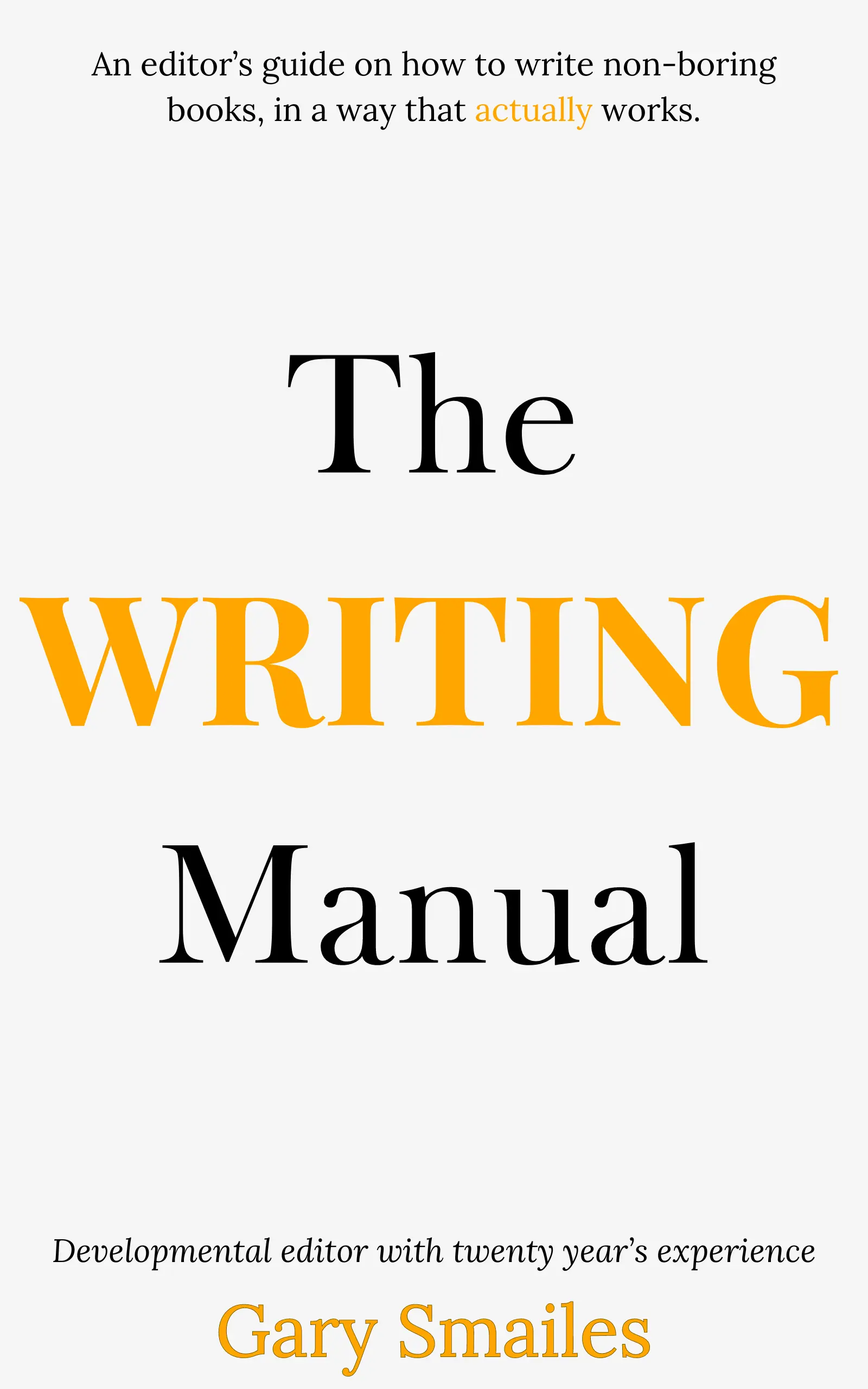
Download FREE ebook
Claim your free eBook today and join over 25,000 writers who have read and benefited from this ebook.
'It is probably one of the best books on writing I've read so far.' Miz Bent