Ideas To Make Your Non Fiction Writing More Engaging


Table of Contents
Nail the Reader Promise and Throughline
Give readers a promise they care about. Then keep it. Everything else hangs off this.
A strong throughline starts with a controlling idea. One sentence, no fluff, clear outcome. Who you help, what they do, and why it matters now.
Examples:
- Busy managers who run one-page meetings get more focus in less time, so teams move faster.
- Freelancers who quote with value-based packages earn more and stop chasing hours.
- New gardeners who follow a four-week soil-first plan grow herbs indoors, without special gear.
Good ideas pass three checks:
- Specific reader, not “everyone.”
- Observable change, not vague uplift.
- Urgency, not someday.
Write three versions. Trim until one sings.
Frame a guiding question
Readers stay engaged when each chapter answers one question. A guiding question gives you scope and gives them momentum.
Examples:
- How do first-time managers run one-on-ones people value?
- What pricing system helps a solo designer stop undercharging?
- How does a teacher build a feedback loop that students use?
Keep the question visible at the top of your draft. Put it in the opening. Use it to reject side trips. If a paragraph does not move toward an answer, cut or move it.
Establish stakes early
Say what happens if nothing changes. Stakes create pull. No scare tactics, only clear consequences.
For a hiring guide:
- Do nothing, and interviews drag on. Strong candidates accept other offers. Teams stay short-staffed and burn out.
For a sleep book:
- Do nothing, and late-night screen time keeps your cortisol high. Work suffers. Moods swing. Relationships strain.
Then show a payoff, in plain terms and with a time frame:
- Follow this plan and you will fill roles in six weeks on average, with fewer backouts.
- Use this evening routine and you will sleep through most nights within 14 days.
Map outcomes to your table of contents
Your table of contents is a promise in chapters. Each one should push the same boulder uphill.
Start with three to five outcomes. Link each chapter to one. If a chapter does not serve an outcome, fold it elsewhere or cut it.
Mini example for a pricing book:
- Outcome 1: Set a clear offer.
- Chapter 1: Pick a niche problem worth solving.
- Chapter 2: Build a three-tier package.
- Outcome 2: Price with confidence.
- Chapter 3: Anchor with outcomes, not hours.
- Chapter 4: Handle price objections without discounting.
- Outcome 3: Run a repeatable process.
- Chapter 5: Proposal template and follow-up schedule.
Run a finger test on your TOC. Read each line out loud. Hear the flow. If sequence feels like a list of topics, reorder around cause and effect. Setup first, then choice, then application, then payoff.
Keep the promise visible inside chapters
Open with a nut graf that connects to the controlling idea. One short paragraph, scope and payoff.
For a chapter on objections:
- Today you will learn a four-step reply for price pushback. You will label the concern, restate value, offer one trade, and confirm next steps. Use the script, then adapt the wording to your voice.
Close with a bridge to the next piece. Name a gap you will close next, or a payoff you will deliver next. Readers feel progress when loops close.
Write a 50–60 word narrative brief
This forces focus. Draft it before you outline, then update after your first pass.
Template:
“This project tackles [problem] for [reader], explores [key question], and shows [method] so readers achieve [outcome], supported by [X, Y, Z].”
Three examples:
- This project tackles stalled onboarding for small startups, explores how founders train without bloated manuals, and shows a checklist-plus-demo approach so readers ship a two-hour onboarding kit, supported by one case study, a sample script, and a metrics sheet.
- This project tackles underpriced design work for solo freelancers, explores what pricing model stops scope creep, and shows a three-tier package system so readers send profitable quotes, supported by two examples and a proposal template.
- This project tackles shallow note-taking for college students, explores how to retain information beyond the test, and shows a spaced-retrieval routine so readers lock in core ideas, supported by a weekly plan and two quick quizzes.
Print your brief. Tape it above your desk. Start each writing session by reading it. End each session by checking pages against it.
Quick exercises
- Five-minute test: Write three controlling ideas. Remove one clause from each. Keep the strongest.
- Post-it test: Write your guiding question on a sticky note. Place it on your screen while you draft. Any section that drifts, mark it.
- TOC audit: For each chapter title, write the outcome it advances in five words or fewer. No match, fix the title or the content.
A clear promise with a visible throughline keeps readers moving. It also keeps you honest when the draft tries to wander. Set the promise, set the question, set the stakes, then build only what serves them.
Structure for Flow: Hooks, Beats, and Bridges
Great nonfiction moves like a good conversation. You grab attention. You set terms. You build pressure and release it. Then you guide the reader to the next idea before their focus slips. Here is how to engineer that flow.
Start with a hook, then land a nut graf
Open strong, then explain the point of the chapter in one clear paragraph.
Three hook types that work:
- Story. On Monday, Maya fired her third CRM in a year. Her sales team cheered. The CFO did not.
- Data. Seventy percent of team updates go unread after 24 hours.
- Question. If you had two hours this week, where would you get the biggest lift in lead quality?
Follow with a nut graf. Scope and payoff. Keep it tight.
Example for a meetings chapter:
- Today we fix long status meetings. You will learn the timer rule, the two-question check, and a handoff script. The goal is a 30-minute meeting that ends with clear owners and dates.
A hook earns attention. The nut graf tells readers what they get, how far you will go, and why this section exists now.
Checklist:
- One hook, one nut graf.
- No backstory before the nut graf.
- Put the chapter’s promise in one sentence the reader can repeat.
Map beats that pull readers through
Use a simple beat map to shape each section. No drama, only thinking. The beats:
- Setup
- Rising tension, a myth or mistake
- Insight or turning point
- Application
- Payoff, plus next step
Mini example for a hiring chapter:
- Setup. Your last two hires did not make it past probation. You wrote better ads and still struggled.
- Rising tension. The myth says more candidates solve the problem. In practice, more noise hides the few good fits.
- Insight. Quality comes from clarity. A five-sentence role scorecard raises the bar and cuts noise.
- Application. Write the scorecard now. Who succeeds here. What outcomes in 90 days. How progress gets measured. What resources they control. What constraints they face.
- Payoff. Expect fewer applicants and better interviews within two weeks. Next step, rewrite the ad using the scorecard language.
Read your draft against these beats. If a stretch feels flat, you likely missed tension. If readers stall, you likely skipped the turn.
Keep causality visible with Because, But, Therefore
Causality is the spine of flow. Use three simple links.
- Because introduces cause.
- But introduces friction or exception.
- Therefore shows consequence or choice.
Paragraph level:
- Because your intake form is vague, you attract mismatched leads. But you blame pricing and drop your rate. Therefore your calendar fills with low-fit clients and your profit shrinks.
Section level:
- Because most note systems capture highlights, not decisions, students forget under pressure. But a weekly retrieval block cements recall. Therefore we set a 20-minute Sunday review with three prompts.
Scan your draft. If you see a lot of also and and then, fix the joins with cause and effect. Flow comes from why, not from lists.
Signpost with descriptive subheads
Subheads are the handles readers use to skim, stop, and reenter. Add one every 300 to 600 words. Make each one do two jobs, preview content and state why it matters.
Weak subheads:
- Background
- Tips
- Examples
Stronger subheads:
- Why more candidates make hiring slower
- A five-sentence scorecard you can write in ten minutes
- Use this three-line email to get a faster reply
Two tests:
- Skim-only test. If a reader sees only your subheads, they should still follow the argument.
- Replace-and-check test. Swap a subhead with a question. Does the next paragraph answer it in the first two lines?
Close each section with a purpose-built bridge
Do not drop the reader at the curb. Walk them to the next door. A bridge closes a loop you opened, then names the next gap or payoff.
Use one of these moves:
- Answer the chapter’s guiding question in one sentence, then name the next problem. Now you know how to cut meeting time by half. Next you need a way to keep decisions from slipping. That is where the decision log comes in.
- Sum the win, add a time frame, then cue the next step. You have a scorecard and a tighter ad. Give it a week. Then we fix your screening call so good candidates do not leak out.
Keep bridges short. One or two lines. Place them at the end of each major section, and at chapter end.
Build a one-page beat sheet
A beat sheet keeps you honest. It links hook to payoff, and payoff to bridge. One page per chapter is enough.
Use a simple outline:
- Chapter title
- Hook
- Guiding question
- Beats, one line each
- Payoff
- Bridge to next chapter
Sample for a pricing chapter:
- Chapter: Anchor with outcomes, not hours
- Hook: A client balked at 60 dollars per hour, then paid 8,000 for the same project when framed by outcomes.
- Guiding question: How do you stop hour-based thinking from dragging your price down?
- Beats:
- Setup: You sell time because time feels safe.
- Tension: Hourly pricing punishes speed and caps income.
- Insight: Buyers pay for change, not labor.
- Application: Write three outcome anchors. Tie each to business metrics the buyer cares about.
- Application: Redraft your proposal page to lead with outcomes, then scope, then timeline.
- Payoff: Two proposal examples with raised fees and higher close rates.
- Bridge: Next we handle the two objections that surface when you move off hours, comparison shopping and scope fear.
Print the sheet. Keep it beside you while drafting. When you drift, the sheet pulls you back.
Quick drills
- Hook rewrite. Write three hooks for one chapter, one story, one data point, one question. Read them aloud. Pick the one that makes you lean forward.
- Nut graf cut. Write the nut graf in three sentences. Cut it to two. Then one.
- Causality pass. Mark every and then. Replace half with because, but, or therefore.
- Subhead check. Replace each subhead with a question. If the next paragraph does not answer it in two lines, fix it.
- Bridge line. Write one closing sentence for your current section, then one next-step sentence. Tape them to your monitor.
Action: Create a one-page beat sheet linking each chapter or section to its hook, guiding question, beats, payoff, and bridge. Keep it visible while you write and while you edit. Your draft will move faster, and your reader will feel the pull from start to finish.
Blend Story, Data, and How-To
Nonfiction readers want three things: proof something works, understanding of how it works, and confidence they will make it work for themselves. Give them story alone and they feel inspired but lost. Give them data alone and they trust but stay passive. Give them steps alone and they follow blindly until they hit their first snag.
The fix is triangulation. Story shows the principle in action. Data proves the principle at scale. Steps let readers test the principle themselves. Together, they build both belief and capability.
Use the show, tell, apply sequence
Think of this as a mini-arc you repeat throughout your chapters. Show a scene. Tell the concept. Apply with steps.
Show: Paint a specific moment where someone faced the problem and applied your solution. Keep it tight. One person, one situation, one outcome.
- Sarah walked into the Monday standup with three sticky notes. Red for blocked. Yellow for at risk. Green for on track. Her team of eight developers finished their update in twelve minutes instead of the usual forty-five.
Tell: Extract the principle and explain why it works. Connect the scene to larger patterns or research.
- Color coding turns status into signal. Instead of parsing paragraphs of text, team members scan for patterns. Blocked items cluster. Risks become visible before they spread. The cognitive load drops and focus sharpens on what needs attention.
Apply: Break the principle into concrete steps readers can follow.
- Pick three status categories that matter to your team. Assign each a color. Train everyone to flag their work before the meeting. Start each update by scanning colors, not reading reports. Address reds first, yellows second, greens last.
This sequence works because each piece reinforces the others. The story makes the concept memorable. The concept makes the story meaningful. The steps make both useful.
Triangulate your evidence
Weak nonfiction leans on one type of evidence. Strong nonfiction combines three: research, practitioner examples, and your commentary.
Research adds weight. Look for studies, surveys, meta-analyses. But keep the citations light and the conclusions clear.
- A 2022 Harvard Business Review study of 1,200 meetings found that visual status tools reduced meeting length by 34% and increased follow-through by 28%.
Practitioner examples add credibility. Show how working professionals adapted your advice to their reality.
- Marcus, a project manager at a 50-person startup, tried color coding but his remote team found sticky notes clunky. He moved the system to Slack with red, yellow, and green emoji. Same principle, different tool. Meeting time dropped from 30 minutes to 15.
Your commentary adds context. Connect the dots between research and practice. Point out limitations. Address common questions.
- The Harvard study focused on teams of five to twelve people. Larger groups need different approaches. Color coding works best when everyone understands what triggers each status level. Without clear definitions, yellow becomes a dumping ground and the signal gets muddy.
This triangle builds trust. Research shows the method has broader support. Examples show it works in the real world. Your commentary shows you understand the boundaries and trade-offs.
Make visuals work harder with three-part captions
Tables, charts, and diagrams can carry huge cognitive load if you design them right. But most writers treat visuals as decoration instead of argument.
Every visual needs a caption that states three things: claim, evidence, implication.
Weak caption:
- Meeting efficiency by status method
Stronger caption:
- Claim: Color-coded status updates cut meeting time by one-third
- Evidence: Teams using visual status tools averaged 18 minutes per standup versus 27 minutes for text-based updates (n=45 teams, 6-month study)
- Implication: A team that meets daily saves 45 minutes per week, or 39 hours per year
The three-part structure forces you to think about why the visual exists and what conclusion you want readers to draw. It also lets readers process the data without having to hunt through paragraphs for context.
Position visuals strategically. Place them after you introduce the concept but before you give the steps. This way readers see the pattern, understand the scale, then learn to apply it themselves.
Sequence examples from simple to advanced
Start with the cleanest, most straightforward case. End with the messiest, most complex one. This builds confidence and demonstrates range.
Simple example: A small team with clear roles using color coding for daily standups.
Intermediate example: A cross-functional project team using color coding for monthly reviews, with different colors for different workstreams.
Advanced example: A 200-person organization using color coding at multiple levels, from individual tasks to department-wide initiatives, with escalation rules and automated reporting.
Each example should add one new wrinkle while keeping the core principle intact. Readers see the method working at their current level, then see how it scales as their situation grows more complex.
Watch for cognitive overload. If you jump from simple to advanced too quickly, you lose people. If you stay simple too long, you lose credibility. Three levels usually hit the sweet spot.
Address the counterexample head-on
Every method has limits. Every principle has exceptions. Show where your advice breaks down. This builds trust and prevents readers from abandoning the whole approach when they hit the first edge case.
Structure counterexamples like this:
- Situation where the method fails
- Why it fails
- What to do instead
- How to recognize when you are in this situation
Example for color-coded status updates:
- Counterexample: A research team working on long-term projects with unclear timelines tried color coding but found everything stayed yellow for months. Status never changed, so the visual signal carried no information.
- Why it fails: Color coding requires meaningful status transitions. If work stays in the same state for weeks, the system becomes noise.
- Alternative: Switch to milestone markers instead of status colors. Track progress toward specific deliverables rather than current state.
- Recognition: If more than 60% of items stay the same color for over two weeks, your categories are too broad or your work cycles are too long for this method.
Counterexamples show intellectual honesty. They also prevent readers from concluding the method is useless when it is simply misapplied.
Build a three-part chapter template
For each major chapter, include:
- One case study showing the method in action
- One counterexample showing where it breaks down
- One practical walkthrough with specific steps
Case study: 300-400 words. One person, one situation, clear before and after. Focus on the decision points and the specific actions they took.
Counterexample: 200-300 words. Honest assessment of failure plus alternative approach. Shows you understand boundaries.
Practical walkthrough: 400-500 words. Step-by-step instructions with time estimates and materials needed. Test these with real people before you publish.
This template gives every chapter the same rhythm. Readers know what to expect and how to process each type of content. You know you have covered all the bases.
Quick quality checks
- Scene test: Can you picture the story happening to a specific person at a specific time?
- Data test: Would someone cite your research in their own work?
- Step test: Can a smart reader follow your instructions without asking questions?
- Triangle test: Does each piece of evidence support the others, or do they point in different directions?
- Sequence test: Can a beginner follow your progression, or do you jump levels?
Run these checks on one chapter. Mark what needs work. Fix it. Then apply the same standards to the rest.
The goal is not perfection. The goal is confidence. When readers finish a chapter, they should believe the method works, understand why it works, and feel equipped to make it work for themselves.
Action: For each chapter, add one case study, one counterexample, and a practical walkthrough that applies the lesson. Test the walkthrough with three people who match your target reader. Note where they stumble and smooth those spots before you publish.
Make It Actionable and Interactive
Reading sparks ideas. Action builds skill. Your job is to move readers from nodding along to doing the work with you.
Design exercises with clear finish lines
Exercises fail when readers wonder where to start or when to stop. Give a name, a goal, time, materials, steps, and a finish line.
Example exercise
- Name: Write a 50-word narrative brief
- Goal: Nail the reader promise
- Time: 10 minutes
- Materials: Timer, notebook, outline
- Steps:
- Copy this frame: "This project tackles [problem] for [reader], explores [key question], and shows [method] so readers achieve [outcome], supported by [X, Y, Z]."
- Fill the brackets with your current topic.
- Read aloud. Trim to 50–60 words.
- Finish line: One clean brief saved at the top of your draft
Keep scope tight. One problem, one outcome. Use verbs that signal action, not aspiration.
Add checklists and mini‑projects
Checklists reduce mess. Mini‑projects create momentum.
Example checklist
- Purpose stated in one sentence
- Time estimate listed
- Materials listed
- Steps numbered, each step starts with a verb
- Clear pass or fail criteria
Example mini‑project
- Name: Turn one concept into a how‑to
- Time: 45 minutes
- Materials: Two pages from your draft, a case study, one blank page
- Steps:
- Highlight one concept in the draft.
- Write a scene which shows the concept in action, 120–150 words.
- Explain the concept in two sentences.
- Break the concept into five steps readers follow today.
- Finish line: A show, tell, apply section ready for feedback
Keep mini‑projects small enough for one sitting. Promise one win, deliver one win.
Build knowledge checks and reflection prompts
Knowledge checks prevent false confidence. Reflection prompts build transfer.
Quick quiz format
- Three questions
- One trap option which matches a common myth
- One reference for each wrong answer
Example
- Which sentence defines a controlling idea best?
- A. A topic list for a chapter
- B. A testable promise for a specific reader
- C. A catchy theme for marketing
- Where should a nut graf sit in a chapter?
- A. First line
- B. After the hook
- C. Last paragraph
Reflection prompts
- What result did today's exercise produce?
- Which step slowed progress?
- Where would a reader stumble here?
- What revision would remove that stumble? Replace with a concrete change, not a hope.
Place checks at natural pauses. Offer a quick route back to the relevant section.
Reinforce learning with spaced retrieval
Readers forget fast without prompts. Plan short drills which resurface core ideas across later chapters.
Drill template
- Name: Retrieval flash
- Time: 2 minutes
- Prompt: From memory, write the three beats in your section which move from problem to payoff.
- Check: Compare with your outline. Circle missing beats.
- Repeat: Day 1, Day 3, Day 7
Variation
- Prompt: List five verbs which strengthen your current draft. No nouns allowed.
- Prompt: Handwrite your controlling idea from memory. Compare to the 50-word brief. Mark changes.
Use tiny time boxes. Short wins keep readers engaged.
Provide toolkits readers will use
Give files which remove setup work. Name files clearly. Offer both PDF and editable formats. Add a QR code or short link near the point of use.
Starter toolkit
- Narrative brief template, PDF and Google Doc
- Chapter beat sheet, one page
- Case study worksheet, with before and after fields
- Counterexample checklist, with failure signs and alternatives
- Revision checklist, 20 items, printable
- "You try it" box template, with slots for time, materials, steps, and success criteria
Place tool links where readers need them. For print, add a QR code with a caption which states purpose, format, and version date.
Use a standard "You try it" box
Give readers a box they learn to trust. Keep signal strong and fluff out.
Template
- You try it: [name of task]
- Time:
- Materials:
- Steps:
- Success looks like:
- If stuck:
Example
- You try it: Write a nut graf
- Time: 12 minutes
- Materials: Your chapter outline, timer
- Steps:
- Write one sentence which names the problem, the scope, and the payoff.
- Add one sentence which names who the chapter serves.
- Add one sentence which names what the chapter will not cover.
- Read aloud. Trim to 70–90 words.
- Success looks like: A three‑sentence paragraph which matches your controlling idea and sets clear expectations
- If stuck: Read the hook out loud, then ask, "So what, for whom, and how soon?" Answer in plain language. Then try again.
Repeat this box at the end of every major section. Readers start to anticipate the move from theory to practice.
Pilot with three readers
Real readers expose weak steps, vague language, and bad timing. Run a quick pilot before publication.
Plan
- Recruit three target readers with different experience levels
- Assign one exercise to each
- Ask for a live run, screen on, mic off for you
Sharpen Voice and Sentences for Momentum
Voice drives engagement. Weak sentences kill momentum. Your readers notice energy before they notice expertise.
Choose concrete nouns and active verbs
Abstract nouns drain life from sentences. Active verbs push readers forward.
Weak: "Implementation of the methodology requires consideration of various factors."
Strong: "Use this method after you check three factors."
Weak: "There was a determination made by the team to pursue optimization."
Strong: "The team decided to optimize the process."
Hunt down these energy vampires:
- Implementation → use, apply, start
- Consideration → check, weigh, compare
- Determination → decision, choice, plan
- Optimization → improve, streamline, fix
- Utilization → use
- Facilitation → help, guide, enable
Replace "there is" and "there are" constructions. They hide the real subject and sap momentum.
Before: "There are three reasons why this approach works."
After: "This approach works for three reasons."
Before: "There is a need for writers to focus on clarity."
After: "Writers need clarity."
Cut fillers, throat-clearing, and hedges
Readers want information, not warm-up acts.
Delete these momentum killers:
- "It should be noted that..."
- "It's important to understand that..."
- "What's interesting is..."
- "The fact of the matter is..."
- "At the end of the day..."
- "In order to..."
- "Due to the fact that..."
Hedge words make you sound uncertain:
- Sort of, kind of, somewhat
- Fairly, rather, quite
- Tends to, appears to, seems to
- Perhaps, maybe, possibly
Compare these versions:
Hedged: "This approach tends to be somewhat effective in many cases, and it seems to work fairly well for most writers who appear to need better clarity."
Direct: "This approach works. Most writers see clearer prose within a week."
Vary sentence length for rhythm
Short sentences punch. Medium sentences explain. Long sentences explore ideas and build connections between concepts while maintaining forward momentum.
Read this paragraph aloud:
"Good writers vary sentence length. They start with short, punchy statements. Then they build longer sentences that develop the idea and show relationships between concepts. Finally, they return to short sentences for impact."
Count the words: 6, 7, 17, 10. The rhythm moves readers forward.
Here's the same content with flat rhythm:
"Good writers always vary their sentence length for better reading flow. They typically start with short, direct statements that grab attention immediately. Then they usually build longer sentences that carefully develop ideas. Finally, they consistently return to short sentences for maximum impact."
Count: 11, 12, 11, 12. Monotonous. Readers drift away.
Use parallelism for lists
Parallel structure creates flow and helps readers process information faster.
Weak parallel structure:
"To improve your writing: edit ruthlessly, be concrete in your word choices, and make sure you read your work aloud."
Strong parallel structure:
"To improve your writing: edit ruthlessly, choose concrete words, and read aloud."
Each item follows the same pattern: verb + object.
More examples:
Weak: "The method requires planning, implementation of the system, and you need to track results."
Strong: "The method requires planning, implementation, and tracking."
Weak: "Writers should focus on clarity, being concise, and making sure they're consistent."
Strong: "Writers should focus on clarity, concision, and consistency."
Apply given→new ordering for cohesion
Start sentences with information readers already know. End with new information. This creates smooth transitions between ideas.
Example paragraph with given→new flow:
"Most writers struggle with clarity. Clarity improves when writers choose concrete words over abstract ones. Concrete words help readers visualize ideas. Visualization builds understanding and keeps readers engaged."
Notice how each sentence picks up the ending of the previous sentence and moves forward.
Address readers directly with "you"
Direct address creates connection. Second person pulls readers into the action.
Academic distance: "One should consider the implications of word choice on reader comprehension."
Direct engagement: "Consider how your word choices affect reader understanding."
Passive voice creates distance: "Mistakes will be made during the editing process."
Active voice with direct address: "You'll make mistakes while editing. Fix them in the next draft."
When giving instructions, always use "you":
"To apply this method, you first identify the problem, then you gather evidence, and finally you test your solution."
Pose curiosity-driving questions
Questions create forward momentum. They make readers want answers.
Instead of: "The next section discusses three common mistakes."
Try: "Which three mistakes kill reader engagement?"
Instead of: "There are several benefits to this approach."
Try: "What happens when you apply this approach consistently for 30 days?"
Place questions at natural transition points. Use them to bridge sections and chapters.
Read aloud to catch clunky phrasing
Your ear catches problems your eye misses. Awkward rhythms, tongue twisters, and unclear pronoun references become obvious when spoken.
Read at normal speaking pace. Mark places where you:
- Stumble over words
- Run out of breath mid-sentence
- Need to re-read for clarity
- Pause longer than the punctuation suggests
Common problems you'll hear:
- Too many words starting with the same sound
- Sentences that never end
- Unclear pronoun references
- Misplaced modifiers
Maintain consistent tone and distance
Pick your pronouns and stick with them throughout each chapter.
First person (I/we): "I discovered this method through trial and error. We tested it with 200 writers."
Use when: Sharing personal experience, building credibility, telling stories.
Second person (you): "You'll notice improvement within two weeks. Your readers will thank you."
Use when: Giving instructions, making predictions, creating connection.
Third person (they/writers/readers): "Writers who apply this method see results quickly. Readers respond to clearer prose."
Use when: Discussing research, making general statements, maintaining academic distance.
Don't mix randomly:
"I believe you should know that writers often struggle with clarity, and we need to help them improve."
Pick one perspective per chapter and maintain it.
Run two editing passes
Pass 1: Compression (cut 15–25%)
- Delete unnecessary words
- Combine short, choppy sentences
- Remove throat-clearing and hedges
- Cut repetitive phrases
- Eliminate weak verb constructions
Pass 2: Verbs and nouns
- Replace abstract nouns with concrete ones
- Change passive voice to active voice
- Substitute strong verbs for weak verb + adverb combinations
- Remove unnecessary adjectives and adverbs
- Ensure every sentence has a clear subject doing a clear action
Example revision:
Original (32 words): "There is a tendency for many writers to make the mistake of using too many unnecessary words in their sentences, which can result in confusion for readers."
After compression (22 words): "Many writers use too many unnecessary words in their sentences, which results in confusion for readers."
After verbs and nouns (11 words): "Writers who use unnecessary words confuse readers."
Action: Print one chapter. Read it aloud with a timer. Mark every stumble. Do a 15–25% compression pass, cutting unnecessary words and phrases. Then do a verbs-and-nouns pass, replacing abstractions with concrete actions and specific details. Compare word count before and after each pass.
Edit and Test for Engagement
Drafts feel solid until a real reader meets them. Editing turns intent into results. Testing shows where momentum slips.
Start with a developmental edit
Structure first. Voice later.
- Pin your controlling idea above your desk. Keep it in view.
- Print your table of contents. Grab a pen.
Run three quick passes.
-
Alignment pass
Write one sentence for each chapter: “This chapter moves the reader from A to B by doing X.” If a clean sentence will not come, cut or merge. Chapters without movement drain energy.
-
Pacing pass
Mark where a chapter opens, turns, and lands. Hooks arrive in the first page. A turning point sits near the middle. Payoff lands near the end. If a section sags, shorten or split.
-
Stakes pass
Note the cost of doing nothing. Name a risk early. Repeat the consequence when attention dips. Readers follow momentum, not polite summaries.
Mini-exercise
- Read only headings and first sentences. Do they tell a clear story from problem to payoff?
- If not, reorder or rewrite until the path feels inevitable.
A quick example
Draft: Chapter 3 opens with a two-page history of email. The chapter goal is “reduce inbox anxiety.” History slows momentum and hides stakes.
Fix: Open with a short scene, someone drowning in 1,200 unread messages. Name the loss, missed deadlines or lost trust. Then give the method.
Line edit for clarity, transitions, and voice
Line work sells the argument. Keep the reader on rails.
- Prefer subject, verb, object.
- Replace abstractions with concrete nouns and strong verbs.
- Use Because, But, Therefore to keep causality clear.
Before: “There are several factors which need consideration prior to implementation.”
After: “Check three factors before launch.”
Before: “A reassessment of the strategic allocation of resources is recommended.”
After: “Reassign budget to the top two channels.”
Use parallel structure
Weak: “The method requires planning, implement the system, and you need to track results.”
Strong: “The method requires planning, implementation, and tracking.”
Bridge your ideas
Before: “Teams trust long intros. Intros often expand beyond scope. Readers lose interest.”
After: “Teams trust long intros. Because they want to earn trust, they add background. But length drags. Therefore, cut to the problem within two paragraphs.”
Tighten hedges and filler
Delete phrases like “It should be noted” or “In order to.” Trim “sort of,” “kind of,” “appears to.” Readers want conclusions, not throat-clearing.
Copyediting and proofreading for polish
Clarity is not enough. Consistency builds trust.
Create a one-page style sheet
- Spelling choice, US or UK
- Oxford comma, yes or no
- Numerals, 1–9 as words, 10+ as digits
- Headings, title case or sentence case
- Hyphenation rules, email vs e-mail
- Voice and tense, present preferred
- Terms, names, product labels
- Common flags, e.g., versus for example
Two passes, two goals
- Mechanics pass. Scan for punctuation, spacing, capitalization, numbers, and lists. Fix typos.
- Slow read. Read aloud. Mark places where breath runs out, pronouns confuse, or rhythm stumbles.
Pro tip
Change format before proofing. Print on paper or view on a phone. New layout exposes old mistakes.
Usability tests with real readers
Books teach. Tests confirm learning.
Table-read method
- Pair up. One reads aloud. One marks stumbles.
- Note where the reader slows, re-reads, or frowns.
- Ask three questions at the end: What was the point? Where did attention dip? What will you do next?
Skim test
- Read only the table of contents and subheadings.
- Do headings tell a complete story from problem to payoff?
- If the story breaks, fix the sequence or the labels.
Stall log
Keep a simple grid while testing.
- Location, page and paragraph
- Symptom, stumble, confusion, boredom
- Suspected cause, unclear term, weak transition, missing example
- Fix, define, add a bridge, swap a case study
One hour with two readers yields a week of smart edits.
Keep an evidence ledger
Authority grows when claims rest on solid sources. Track proof with discipline.
Set up a spreadsheet
- Claim, short sentence
- Source, author or org
- Location, link or page range
- Date accessed
- Pull quote
- Strength notes, sample size, method, conflicts
- Limitations, scope, missing groups, uncertainty
Example lines
-
Claim: “Shorter subject lines lift open rates on mobile.”
Source: Litmus, 2024 Email Client Market Share.
Location: URL.
Limitations: B2C heavy sample.
-
Claim: “Spacing practice across a week improves recall.”
Source: Roediger and Karpicke, 2006.
Location: Journal pages.
Limitations: Lab setting, college students.
Publish with confidence. Readers spot hand-waving. A ledger prevents it.
Action: targets and a change log
Set clear revision targets
- Add an explicit transition at every section boundary.
- Close every open loop. Answer each question you raise.
- End each chapter with one next step.
- Compress by 15 to 25 percent.
- Replace passive with active throughout instructions.
- Standardize headings and terms to match your style sheet.
Keep a dated change log
Columns to use
- Date
- File and version
- Change summary
- Pages or sections
- Reason, clarity, accuracy, consistency, pace
- Outcome, word count shift, test notes
- Owner
Example entries
- 2025-07-12, v0.7, Cut 480 words from Chapter 2. Moved case study to Chapter 4. Reason, pace. Outcome, +3 test engagement questions answered without prompts.
- 2025-07-14, v0.8, Added transitions at section breaks, Chapters 5–6. Reason, stalls at headings. Outcome, stall log clear on re-test.
One more pass. Read the whole thing in one sitting. If your mind wanders, mark the spot and fix the cause. The goal is simple. A reader starts. A reader stays. A reader finishes, then acts.
Frequently Asked Questions
How do I write a controlling idea that keeps my non‑fiction draft focused?
Write a single sentence that names who you help, the starting point, the end state and the method, for example: "This book helps X move from A to B by C, because Y." Treat that line as your north star and tape it above your desk so every chapter serves the promise. This is the practical way to write a controlling idea for a non‑fiction book that prevents drift.
Pressure‑test it: can a stranger state the reader and the observable change in one breath? If not, tighten nouns, add a time frame, or drop secondary promises until you have one crisp outcome readers care about now.
What is a one‑page beat sheet and how do I use it for chapter planning?
A one‑page beat sheet maps a chapter from hook to bridge: title, hook, guiding question, one‑line beats (setup, tension, insight, application), payoff and a bridge to the next chapter. Use a beat sheet per chapter as you draft so you can see whether the hook earns attention and the payoff delivers on the promise.
Keep the sheet beside you while writing and while line editing; when a paragraph or example drifts from a beat, the sheet makes it obvious whether to cut, move or convert the material into an appendix or tool.
How should I map objectives to a table of contents so every chapter advances outcomes?
Build a simple grid: chapters as rows and learning objectives as columns. For each chapter row list at least one measurable outcome (use Bloom’s verbs like Apply, Create, Remember). Empty cells reveal bloat; overlapping cells show redundancy you should merge or reorder.
Do a quick "finger test": read the TOC aloud—if it sounds like a list of topics rather than progress toward outcomes, reorder chapters around cause, choice, application and payoff until the sequence feels inevitable.
How do I design "You try it" activities with reliable time estimates?
Use a fixed template: name, time, difficulty, materials, 3–5 verb‑led steps, expected output and an "If stuck" recovery tip. Keep activities single‑purpose and small so readers complete them in one sitting. Label them consistently so readers learn the pattern and can plan.
Crucially, pilot each activity with two to five beta readers from your target audience: time them, collect outputs and adjust the stated time and steps until most readers finish within the estimate. This is how to design "You try it" exercises with time estimates that actually work in the field.
How do I triangulate story, data and how‑to so chapters build trust and capability?
Use a repeatable "show, tell, apply" pattern: open with a tight scene that illustrates the problem, explain the principle and evidence, then give step‑by‑step application. Pair each visual with a three‑part caption (claim, evidence, implication) so visuals advance the argument rather than decorate it.
Include a counterexample and an alternative fix in every chapter so readers know boundaries. This blend—story for empathy, data for credibility, and clear steps for transfer—ensures readers both believe the method and can make it work themselves.
What editing rounds and reader tests should I run before publishing?
Work in waves: developmental editing first to fix structure and learning objectives, line editing next for clarity and transitions, then copyediting and proofreading for consistency and mechanics. Between these rounds run reader tests—skim tests, table reads and beta activity trials—to surface stalled sections and unclear instructions.
Set measurable revision targets (for example, cut 15–25% redundancy, add transitions at every section break, and reach an 80% completion rate on exercises during testing) and keep a dated change log so you make deliberate, trackable improvements rather than endless tinkering.
What is an evidence ledger and a reverse outline, and how do they catch problems early?
An evidence ledger is a spreadsheet tracking each claim with columns for claim, source, location in text, date accessed, pull quote and strength notes; it prevents hand‑waving and makes sourcing faster during copyediting. Build it as you draft rather than during revision.
A reverse outline is one sentence per paragraph describing its purpose; read the sentences in order to test logical flow and find orphaned or repetitive paragraphs. Together, the evidence ledger and reverse outline catch factual, scope and structural problems before readers do.
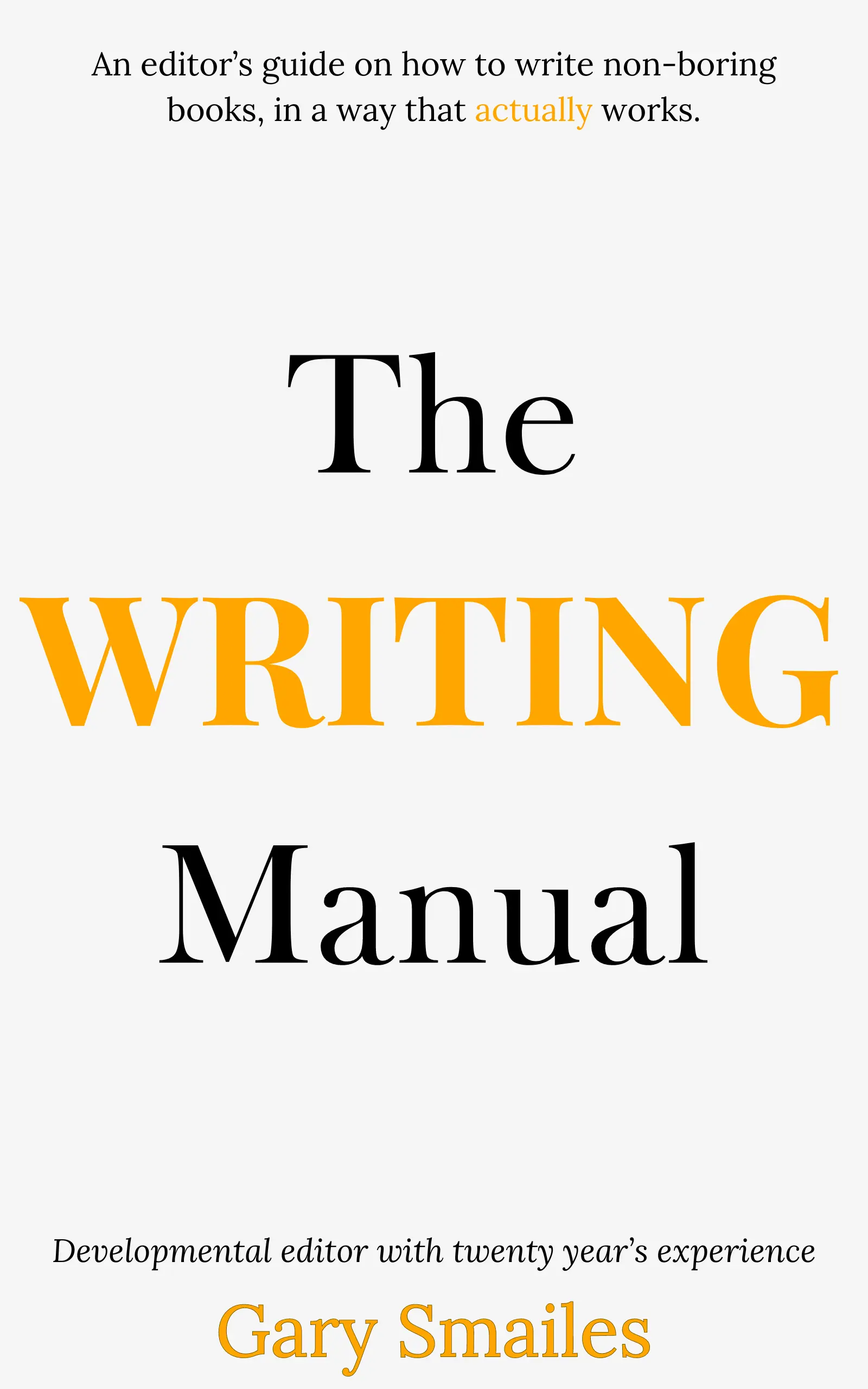
Download FREE ebook
Claim your free eBook today and join over 25,000 writers who have read and benefited from this ebook.
'It is probably one of the best books on writing I've read so far.' Miz Bent