The Adverb Problem And Why Authors Should Care


Table of Contents
What People Mean by “The Adverb Problem”
When writers groan about “adverbs,” they usually mean one specific kind. The -ly ones. The “quickly,” “suddenly,” “angrily,” “quietly,” “carefully” gang.
And the complaint is not “adverbs are evil.” The complaint is “this sentence is asking an adverb to do work the sentence should be doing on its own.”
Think of “the adverb problem” as a symptom report. A cough, not the disease.
Adverbs often signal a weak verb, or a vague one
Look at this:
He walked quickly to the door.
Nothing is broken here. You can understand it. You can picture it. The issue is energy. “Walked” is generic, and “quickly” is a little sticky note slapped on top to add urgency.
Swap in a verb with built-in speed:
He hurried to the door.
Now the sentence carries its own weight. Fewer words, same meaning, more snap.
But here’s the part writers miss. “Hurried” is not always the best choice. The right verb depends on context.
- If he is scared, “bolted” changes the temperature.
- If he is trying to look calm, “strode” adds performance.
- If he is injured, “limped” is a story event, not a speed note.
The point is not “replace every adverb with a spicy verb.” The point is to ask why you needed the adverb in the first place. Often the verb is doing office work when the scene needs a specialist.
A quick self-edit test: if you delete the adverb and the sentence becomes flat but still grammatical, you probably have a weak verb problem.
He walked to the door.
Yep. Flat. So you either sharpen the verb, or you add concrete detail so “walked” earns its keep.
He walked to the door, slow enough to hear the lock click behind him.
Now “walked” feels chosen.
Adverbs often “tell” emotion instead of creating it
This is the big one, and it shows up most in dialogue tags.
“Get out,” she said angrily.
The tag tells me how to hear the line. Fine. The trouble is, the line itself often does not support the instruction, or it supports it so well the instruction becomes redundant.
If the dialogue already carries anger:
“Get out. Now.”
You do not need “angrily.” The reader heard it. Adding “angrily” is like tapping the microphone after you already heard the speaker.
If the dialogue does not carry anger, “angrily” becomes a patch.
“I think you should leave,” she said angrily.
That’s a mismatch. The words sound polite, the tag insists on fury. Maybe she is the sort of person who weaponizes politeness. Great. But then the scene needs to show it. Give the reader something they can feel, not a label.
Try replacing the adverb with a beat, a small action that delivers the emotion:
“I think you should leave.” She held the door open and did not look at him.
Same basic moment. Now the anger has a shape. A choice. A behavior.
This is why editors fuss about “said angrily.” It often points to an underwritten emotional moment. The writer knows the character is angry, but the page has not earned it yet.
Another common version is the intensity adverb:
“I’m really sorry.”
Sometimes people talk like this. Fine. But in fiction, “really” often signals the apology is thin, or the scene needs more specificity. What is she sorry for, exactly? What does she fear will happen now? What is she willing to do?
A stronger apology is not louder. It is clearer.
“I’m sorry I lied about the money. I thought I could fix it before you noticed.”
Now you have stakes and character, not volume.
Overuse makes the prose feel padded, repetitive, or melodramatic
One adverb is not a problem. Ten on a page starts to feel like the writer is leaning on a crutch.
Here’s what adverb-heavy prose often does to rhythm:
- It slows the sentence.
- It makes actions feel general.
- It keeps stacking the same note, “hard,” “fast,” “loud,” “sudden,” “angry,” without giving the reader fresh information.
And repetition is sneaky. You might not notice you used “quietly” five times in three pages. The reader does. Not consciously, maybe, but in their body. The prose starts to feel stuffed.
Melodrama is another risk. Adverbs are an easy way to dial emotion up without doing the scene work.
He stared bitterly. She laughed cruelly. He spoke coldly.
Those are labels, and labels pile up. After a while, everyone sounds like they are auditioning for a soap opera.
If you want bitterness, cruelty, coldness, show me the behavior. The withheld kindness. The timing of the laugh. The choice of words. The edit where someone decides to hurt and then does.
The key distinction: adverbs aren’t wrong, unconsidered adverbs are
Adverbs have jobs. Sometimes they do those jobs better than anything else. The trouble starts when you use them by reflex.
A considered adverb does one of these things:
- Adds meaning you cannot get from the verb alone.
- Sharpens timing or emphasis.
- Matches the viewpoint voice, how the character thinks.
An unconsidered adverb tries to rescue a sentence from vagueness.
If you want a simple rule to keep you honest, use this three-part question every time you see an -ly word:
- Is the adverb repeating what the sentence already shows?
- Is the adverb vague, like “quickly” or “suddenly,” instead of specific?
- Is the adverb doing the job of dialogue, action, or detail?
If you answer yes to any of those, do not panic. You are not a bad writer. You found a spot to revise.
And that’s the real meaning of “the adverb problem.” It’s not a ban. It’s a flashlight.
When Adverbs Hurt Your Prose (With Common Patterns to Spot)
Adverbs do their worst work when you use them as a shortcut. You want the reader to hear a tone, feel tension, see motion, sense urgency. Instead of building those effects with words and choices inside the scene, you paste on an adverb and hope nobody notices the seam.
Editors notice. Readers feel it, even if they never name it.
Here are the repeat offenders I see in manuscripts, with fixes you can try in five minutes.
Dialogue tags as a crutch
This is the classic:
“I don’t care,” he said angrily.
“Sure you don’t,” she said sarcastically.
“Stop,” he said softly.
The tag becomes an acting note. You are telling the reader how the line should sound instead of writing a line that carries the sound.
Two problems tend to show up.
Problem one: redundancy. The dialogue already does the job.
“I don’t care. Leave me alone.”
We already have anger. Adding “angrily” is underlining a word you already bolded.
Problem two: compensation. The dialogue is bland, so the adverb has to drag emotion onto the page.
“I don’t care,” he said angrily.
If he does not care, why is he angry? Maybe he is lying. Maybe he cares a lot. Great, now the line needs to carry that contradiction.
Try these swaps.
Option A: let the dialogue reveal the tone.
“I don’t care,” he said. “Ask someone else.”
No adverb needed. The second sentence does the lifting.
Option B: use an action beat to deliver the emotion.
“I don’t care.” He shoved the drawer closed hard enough to rattle the lamp.
Now the anger lives in the room, not in a label.
Option C: use subtext, the grown-up version of “sarcastically.”
Instead of:
“Fine,” she said sarcastically.
Give the reader a reason to hear the bite:
“Fine,” she said. “Because this plan has worked so well before.”
The line carries the sarcasm. The tag can stay simple.
A note on “softly,” because writers love “softly.” Often it means, “please read this as tender.” If the moment is tender, you can show tenderness through word choice and restraint.
“Stop,” he said softly.
Try:
“Stop,” he said. “You’re going to hurt yourself.”
You kept the gentleness, and you earned it.
Intensifier stacking, or how to turn punch into pudding
Intensifiers are the words you reach for when you want emphasis but do not want to pick a sharper noun or verb. “Really,” “very,” “extremely,” “quite,” “somewhat.”
They pile up fast.
She was very tired.
He was really scared.
It was extremely important.
She felt quite sure.
Notice what those sentences have in common. They do not tell us what tired looks like, what scared makes him do, what important risks, what sure rests on. The intensifier is doing the emotional labor, and it is not strong enough for the job.
Worse, stacking intensifiers trains the reader to tune out. If everything is “very” something, nothing is.
Here are three clean fixes.
Fix 1: remove the intensifier and see if you lost anything.
She was tired.
Often you did not lose meaning. You lost noise.
Fix 2: replace “very + feeling” with a physical or behavioral sign.
Instead of:
He was really scared.
Try:
He checked the lock twice, then a third time.
Fear becomes visible. Stakes get real without you declaring them.
Fix 3: make the sentence specific.
Instead of:
It was extremely important to get there on time.
Try:
If they missed the hearing, the judge would issue the warrant.
Now “important” has teeth. No “extremely” required.
Want a quick exercise? Search your draft for “really” and “very.” Pick ten. For each one, do one of these: delete it, replace the whole sentence with a specific fact, or add one concrete detail that proves the point.
You will feel the prose tighten. You will also feel, for a moment, personally attacked by your past self. Normal.
Vague action and “camera directions”
These adverbs sneak in when you are picturing the scene like a film and narrating the camera.
He looked closely at the map.
She moved slowly across the room.
He turned suddenly.
The problem is not the adverb, it is the vagueness. “Looked closely” does not tell us what he saw. “Moved slowly” does not tell us why she is slow. “Turned suddenly” describes timing, not meaning.
Ask one question: what does the reader gain from the adverb?
If the answer is “a general sense of motion,” you have work to do.
Try upgrading the action into something you can see.
Instead of:
He looked closely at the map.
Try:
He traced the river with his finger until it forked, then frowned at the blank space where the road should be.
Now we are in the moment with him.
Instead of:
She moved slowly across the room.
Try:
She kept her weight on her heels, careful not to creak the boards.
Now “slowly” has a reason, and the reason adds tension.
Instead of:
He turned suddenly.
Try:
A chair scraped behind him. He spun.
The “suddenly” is built into the cause and effect. The sentence earns the snap.
A side note: “suddenly” is almost always removable. If something happens without warning, show the lack of warning. The reader will experience it as sudden. They do not need the label.
Adverbs that shove your narrator into explaining
Some adverbs create distance. They make the narrator sound like they are interpreting the scene for us instead of letting us live inside it.
Common offenders include “obviously,” “clearly,” “naturally,” “apparently,” “fortunately,” “sadly.”
Obviously, he was lying.
She clearly didn’t understand.
Fortunately, the phone rang.
Those words tell the reader what to think. They also reveal author anxiety. You do not trust the scene to land, so you add commentary.
If you are writing in a close viewpoint, this commentary often feels like a different person stepped in to explain things. Even in an omniscient voice, it gets old fast unless you are doing it with intention and consistency.
Try replacing the adverb with evidence.
Instead of:
Obviously, he was lying.
Try:
He met her eyes and nodded. “Of course.” His hand tightened around the glass until his knuckles went pale.
Now the reader concludes “lying” without being instructed.
Instead of:
Fortunately, the phone rang.
Try:
The phone rang, saving her from answering.
Even better, show what “saving” means in the body.
The phone rang. She exhaled through her nose and reached for it too fast.
You kept the relief. You avoided the narrator winking at the reader.
Rhythm and pacing drag, especially in action
Action scenes live on clean verbs and clean sentences. Frequent -ly words gum up the works.
Compare these two versions.
Version A:
He moved quickly down the hall, breathing heavily, listening carefully, stepping quietly, turning suddenly when he heard a noise.
You can feel the strain. The sentence is doing aerobics.
Version B:
He ran down the hall. Breath burned in his throat. He stayed close to the wall. A noise. He turned.
Same event. More speed. More control. Notice how the rhythm changes when you stop qualifying every action and start choosing actions with edges.
Here’s a simple trick for action: read the paragraph out loud. If you find yourself chewing through a row of adverbs, you have a pacing issue. Cut the modifiers first, then see what verbs need upgrading, then break long sentences into shorter beats.
Your goal is not adverb-free purity. Your goal is prose that moves when it should move, and lingers when it should linger.
And when an adverb keeps showing up in one of these patterns, treat it like a note from a blunt friend. Something in the sentence is underpowered. Fix the engine, and you will not need so many bumper stickers.
How to Fix Adverb Overuse (Without Making Your Writing Stiff)
You do not fix adverbs by going on an -ly purge. You fix them by asking what job the adverb is trying to do, then giving that job to something stronger.
Most adverbs fall into one of three roles.
- They prop up a weak verb.
- They summarize an emotion you have not put on the page.
- They patch tone in dialogue because the line itself is not carrying it.
Handle those, and your prose tightens without turning into a gym brochure full of “muscular” verbs.
Swap “adverb + generic verb” for one precise verb
If you write “walked slowly,” you have told me almost nothing. Slow because tired, cautious, injured, bored, smug, scared? The adverb hides the decision.
The fix is not “find a fancier verb.” The fix is “pick the verb that matches the moment.”
Here’s how I want you to think about the menu:
- Speed: sprinted, raced, bolted
- Intent: hurried, rushed, charged
- Fear: fled, scrambled, darted
- Stealth: crept, slipped, eased
- Weariness: trudged, dragged, plodded
- Confidence: strode, sauntered
Notice something. Those are not synonyms. They are different scenes.
So if you have:
He ran quickly to the car.
Ask two questions.
- Why is he running?
- What does his body look like while he does it?
Now you can choose.
- If he is late and annoyed: He hurried to the car.
- If he heard a gunshot: He bolted to the car.
- If he is in shape and chasing someone: He sprinted to the car.
- If he is trying to look calm: he might not run at all. He walked fast and kept his face blank. Sometimes the best fix is admitting the character would not do the “efficient” action.
A quick exercise: take five “verb + adverb” pairs from your draft. Rewrite each two ways.
- with a stronger verb
- with the original verb, but with a detail that explains the adverb
Compare. Keep the one that fits your voice and your viewpoint.
Convert adverb information into concrete detail
“Smiled happily” is a summary. Summaries are useful in outlines, not so useful in scenes.
If the point is happiness, show what happiness does to a person in your story.
Instead of:
She smiled happily.
Try options with different flavors of happiness.
- Relief: She smiled, shoulders dropping as if someone cut a cord.
- Pride: She smiled and lifted her chin a fraction, waiting for him to notice.
- Joy you cannot hide: She grinned, teeth showing, and let out a small sound she tried to swallow.
- Performative happiness: She smiled without showing teeth and kept her eyes on the exit.
Same umbrella emotion. Different weather.
Look for the adverbs that end in “-ly” and answer the question “how,” then translate “how” into one of these:
- a body cue (hands, breath, posture)
- a choice in dialogue (short, blunt, evasive, generous)
- a sensory detail (heat in the face, tight throat, stomach drop)
- a change in behavior (steps back, moves closer, avoids eye contact)
You do not need three details. Pick one clean detail that hits the reader fast.
Use beats instead of loaded dialogue tags
Dialogue tags with adverbs often show up when you want tone, but the line is not doing the work.
“I’m fine,” she said coldly.
The tag tells me “coldly.” The dialogue says “fine,” which is one of the most flexible words in the language. It can mean fine, furious, crushed, lying, done.
Give “coldly” a body.
“I’m fine.” She turned back to the sink and scrubbed the same spot until the sponge squeaked.
Now the coldness is action. The reader feels it.
Or give coldness a choice.
“I’m fine.” She did not look up. “Did you need something?”
You are not naming the tone. You are building the tone.
A few reliable beats for common tag-adverbs:
- “angrily”: clipped movement, objects handled too hard, refusal to answer the real question
- “softly”: fewer words, smaller gestures, physical closeness, lowered gaze
- “sarcastically”: specific counterexample, over-precise politeness, a pointed “sure”
- “nervously”: unnecessary talking, stalling, checking the door, hands busy with nothing
- “coldly”: lack of eye contact, delayed response, formal wording, withdrawal
Try this: highlight every dialogue tag with an adverb in one chapter. For each, choose one of three fixes.
- Delete the adverb and keep “said.”
- Replace the tag with a beat.
- Rewrite the line so the tone comes through without support.
You will keep some. You should. The goal is not purity. The goal is control.
Do a targeted edit pass, not a full rewrite
Adverbs feel overwhelming because they are everywhere. Treat them like a sweep, not a demolition.
Here is a clean method.
- Search for “ly”.
- Highlight every hit.
- For each, ask three questions:
- Is the adverb redundant with what the sentence already shows?
- Is the adverb vague, standing in for a clearer choice?
- Is the adverb doing the job of a better verb, detail, or beat?
Then make one of three moves.
- Keep: the adverb adds a specific meaning you would otherwise need extra words to convey.
- Replace: swap in a stronger verb or a sharper noun.
- Rewrite: rebuild the sentence so the meaning lives in the action or the image.
Set a small rule for yourself. Fix ten per pass. Stop. Your brain needs breaks, and your style needs consistency. Over-editing creates a new problem, stiff prose.
Also, watch out for false positives. “Family,” “only,” “reply,” “sly,” “apply.” Your search will catch them. Do not start a vendetta against “only” unless you enjoy pain.
Keep voice, keep viewpoint, keep your nerve
Some adverbs belong because a character’s mind talks that way. A chatty first-person narrator might use “honestly” or “seriously” as a verbal tic. A comedic voice might lean on adverbs for timing. A stressed viewpoint might label feelings fast because the character has no space for lyric reflection.
If the adverb supports voice, keep it on purpose.
The test is simple. Read the paragraph without the adverb.
- If the sentence loses meaning, you needed it.
- If the sentence loses personality, you might have needed it.
- If the sentence improves, the adverb was clutter.
One caution: do not replace every adverb with a showy verb. “He ambulated” is not a win. Neither is stuffing your page with “careened,” “hurtled,” and “catapulted” because you are afraid of “ran.”
Plain verbs are fine. Plain verbs with clean context are better than fancy verbs with no scene.
You are aiming for sentences where the reader does not notice your effort. They notice the moment. They believe the motion. They hear the voice in their head, and it sounds like a person, not a writer trying to behave.
When Adverbs Are the Best Choice (Yes, Sometimes)
You do not win a prize for removing every adverb. You win when the reader forgets they are reading. Sometimes an adverb helps you do that.
The anti-adverb rule gets repeated because beginners lean on adverbs the way toddlers lean on furniture. Useful at first, then clunky. But once you have balance, you get to choose. Choice is the point.
Here are the situations where I will defend an adverb in the margin, and I will do it with a straight face.
Clarity over cleverness
Writers get into trouble when they treat every adverb as a problem to solve with a “better” verb. The result reads like you swallowed a thesaurus and started sweating synonyms.
Look at this:
He said quietly.
Simple. Clear. No fuss.
Now watch what often replaces it:
He murmured.
Fine. “Murmured” works.
But then the writer keeps going and starts reaching:
He susurrated.
Now your reader is thinking about vocabulary, not the scene. Worse, “susurrated” sounds like a dinosaur with allergies. You have not improved the line. You have pulled focus.
Clarity matters most in moments where the reader needs to orient fast, where the action is moving, where the emotional temperature is high, or where the prose voice is plainspoken. In those spots, a clean verb plus a small adverb often beats a rare verb.
A useful test: if your replacement verb makes you feel proud of yourself, pause. Pride is a warning light.
Controlling emphasis and timing
Adverbs are rhythm tools. They let you place stress on a beat without adding a clause, a sentence, or a whole paragraph of explanation.
Compare these:
She opened the envelope and read the first line. She froze.
That works. Sharp. Fast.
Now:
She opened the envelope and read the first line. She froze suddenly.
“Said suddenly” gets mocked, and often for good reason. Yet “suddenly” has a job here. It changes the timing in the reader’s ear. Without it, “froze” lands as a clean action beat. With it, “froze suddenly” leans into shock, into the whiplash of the moment.
The trick is restraint. Use adverbs for timing when timing is the point.
Comedy is a good example. One adverb placed well can do the work of a drum roll.
He looked at the “Congratulations” banner, then slowly turned to me.
“Slowly” is the joke. You can write a longer description of his head turning, his expression changing, his realization blooming. Or you can put one word where the reader hears it.
Drama uses the same trick, different mood.
“Say it,” she said quietly.
That “quietly” pulls the line inward. It forces the reader to lean in.
If you find yourself adding three adverbs in a row to manage rhythm, stop. One is a choice. Three is panic.
Distinguishing similar actions without bloating the page
Sometimes the action is simple, and you need a small modifier to separate one version of the action from another.
He smiled nervously.
You can expand it:
He smiled, too fast, lips tight, eyes searching her face for permission.
That is stronger in a slow, intimate scene. In a fast scene, it turns into speed bumps.
If you are writing a chase, an argument, a rapid-fire conversation, you do not want to pause for a facial anatomy lesson every time someone reacts. An adverb lets you label the category of the smile and move on.
Same with:
- laughed bitterly
- spoke evenly
- answered flatly
- held on tightly
These are efficient. Efficiency matters when the reader’s attention should stay on the larger motion of the scene.
The discipline is knowing when you are using the adverb as a shortcut, and when you are using it as a bandage for a weak moment. If the emotion is central, show it. If the emotion is a passing signal, label it and keep going.
Preserving viewpoint authenticity
In close third or first person, your narration is tied to a mind. Minds label things quickly. Under stress, people do not narrate like poets. They think in blunt tags.
He smiled nervously.
A person might think that. They might not think, “His zygomatic muscles tightened while his pulse accelerated.” They might not even notice details. They notice the category. Nervous. Angry. Wrong.
Adverbs can support that interior labeling, especially when the viewpoint character is tired, frightened, distracted, or emotionally overloaded.
Example:
I laughed stupidly and wished I could pull the sound back into my mouth.
“Stupidly” is judgment, not description. It tells you how the narrator treats themself. That is voice. Take it out and you lose attitude.
Another:
She nodded automatically.
“Automatically” signals dissociation, routine, compliance, shock, lots of options. In a close viewpoint, that one word carries the character’s self-awareness, or lack of it.
If your narrator is the sort of person who calls their own behavior “pathetic,” “carefully,” “too loudly,” let them. Those adverbs are part of the mind on the page.
Avoiding thesaurus syndrome
When writers hear “strong verbs,” some start swapping in intense verbs everywhere. The prose gets loud. Every movement becomes an event. Nobody walks. They stomp, prowl, barrel, thunder, slink, lunge. After a page, the reader is exhausted, and the tone starts to wobble.
Sometimes the right move is to keep the plain verb and use a small modifier.
She walked quickly to the door.
“Walked quickly” is not elegant, but it is normal speech. In some voices, normal speech is the goal.
If you replace it with:
She hastened to the door.
Now you have a different voice. More formal. More distant. Maybe that suits your book. Maybe it does not.
Or worse:
She hurtled to the door.
Now she is a human cannonball.
The point is consistency. If your narrative voice is spare and contemporary, a plain verb plus an adverb often fits better than a fancy verb. If your voice is elevated, the fancy verb might fit and the adverb might stick out. Either way, the choice should match the page around it.
Here’s a quick self-check I use when line editing: if your “strong verb” makes the character feel out of character, put the plain verb back and try an adverb or a detail instead. Your job is not to impress. Your job is to keep the spell unbroken.
Adverbs are not the enemy. Automatic adverbs are. When you choose an adverb for clarity, timing, efficiency, viewpoint, or tone, you are not being lazy. You are being readable. And readers, inconveniently, like that.
Building an "Adverb-Aware" Editing Habit
If you try to "fix adverbs" by swatting every word ending in -ly, you will end up tired, annoyed, and weirdly in love with verbs like saunter.
A better approach is smaller and repeatable. You want a habit, not a crusade. Something you run on every draft the way you run spellcheck, only with more judgment and less false confidence.
Create a personal watch list
Start with a quick inventory. Not of all adverbs, only of your repeat offenders.
Here's how to do it in ten minutes:
- In your draft, search for ly.
- Copy the adverbs into a list as you skim. No analysis yet.
- Tally repeats.
You will see patterns fast. Most writers do. Common ones include:
- intensifiers: really, very, so, quite
- reassurance words: just, simply
- speed and timing: suddenly, quickly
- dialogue training wheels: softly, angrily, sarcastically
Now pick three to five to watch. That's your list. Keep it in a note at the top of the manuscript, or in a sticky note file you open during revisions.
Then set a reduction goal per draft, and make it measurable. "Use fewer adverbs" is not a goal. Try something like:
- "Cut really by 80 percent."
- "No more than two dialogue-tag adverbs per chapter."
- "If suddenly appears, rewrite the sentence unless the timing is the point."
The goal is not purity. The goal is awareness.
A small secret from the editing desk: once you know your personal crutches, you start hearing them as you type. That is when revision gets easier.
Use a three-question test
When you hit an adverb, do not argue with it. Interrogate it.
Ask three questions.
1) Is it redundant?
If the verb already carries the meaning, the adverb is luggage.
- "whispered softly"
- "shouted loudly"
- "grinned widely"
Strike the adverb first. Read the sentence again. If nothing important changed, keep it gone.
2) Is it vague?
Adverbs often blur the moment instead of sharpening it.
- "He looked closely at the letter."
Closely how? Squinting, leaning in, holding it to the lamp, checking the signature, counting the zeros?
Vague adverbs are a signal, not a sin. They tell you where the reader wants a clearer picture.
3) Is it doing the job of a better verb, detail, or beat?
This is the big one. Many adverbs are covering for a missed opportunity.
- "She said coldly."
Coldness is behavior. Give the reader behavior.
Try:
"She didn't look up from her phone. 'No.'"
Or:
"She wiped the counter where he'd rested his hand. 'No.'"
The line of dialogue stays simple. The beat carries the temperature.
You will not rewrite every adverb sentence this way. You do not need to. You are sorting: keep, cut, replace.
Calibrate by scene type
Context matters. A line edit rule that works in a fistfight scene can ruin a grief scene.
Action scenes: keep pace clean.
Action wants clean verbs and clean lines. Too many modifiers slow the reader's eye.
Instead of:
"He moved slowly toward the door."
Try a decision or an action with a clear verb:
"He crept to the door."
Or if you want the plain verb:
"He moved to the door, careful with each step."
Notice the difference. The second version uses detail rather than an -ly word, and it feels more physical.
Also watch "timing" adverbs in action: suddenly, instantly, quickly. If every beat is sudden, nothing is. Use one when contrast matters.
Intimate or emotional scenes: allow a few, if they sharpen the inner life.
In close viewpoint, people label their own reactions.
- "I laughed nervously."
- "He answered quietly."
Those lines can be efficient and honest, especially when the viewpoint character is stressed and not pausing to narrate micro-gestures.
The check is specificity. Does the adverb give the reader a clearer read, or is it a shortcut around doing the emotional work? If you are leaning on "sadly," "angrily," "happily" in key moments, you are probably summarising. Put the emotion back into the body, the choices, the silence.
Combine the adverb pass with other craft checks
Adverbs rarely travel alone. They hang out with other habits that soften prose.
Pair your adverb pass with quick hunts for:
Filter words: saw, felt, heard, noticed, realized
These often invite adverbs.
- "She suddenly realized…"
Cut the filter and the adverb often disappears with it.
Try:
"The door was unlocked."
Or:
"Her key slid in without resistance."
Weak verbs: was, were, got, went, did
These breed adverbs because the verb is doing no work.
- "He went quickly down the hall."
Better: "He hurried down the hall."
Or: "He ran down the hall."
Pick the verb that matches the character and situation. Do not pick the fanciest option. Pick the accurate one.
Telling language: emotional summaries
- "He was extremely angry."
Ask what anger does in this person. Silence, sarcasm, shaking hands, sudden politeness, careless cruelty? Put one on the page.
These checks stack well because they target the same problem from different angles: the sentence is explaining instead of showing the reader what happens.
Final polish: keep the adverbs you mean
By the time you reach line editing or copyediting, your job changes. You are no longer rewriting whole paragraphs. You are making smart, consistent choices.
Do three things:
1) Read for repetition.
Even good adverbs turn sour when they repeat. If you used "quietly" four times in two pages, your prose has a verbal tic. Swap two
Frequently Asked Questions
What exactly is "the adverb problem" in fiction writing?
"The adverb problem" usually refers to instances where an -ly adverb is doing the work the sentence, verb or scene should be doing — for example, tagging bland dialogue with "angrily" instead of showing anger through action or word choice. Editors use the term as a diagnostic: the adverb is a symptom of underwritten emotion, weak verbs or lazy pacing.
Seeing an adverb flagged is useful: it points you to weaker spots in your prose where a clearer verb, a concrete detail or a short beat would make the moment earn its feeling instead of labelling it.
How can I reduce adverb overuse in dialogue (practical steps)?
Search your draft for dialogue‑tag adverbs like "said angrily" or "said softly" and treat each hit with the three‑question test: is it redundant, vague, or covering for an action? Replace the tag with a beat (an action), rewrite the line so its tone is clear, or keep a limited number of purposeful adverbs. This is the best way to reduce adverb overuse in dialogue without killing voice.
Practical swaps: "She said angrily" → "She slammed the table." or "She said, 'Get out.' Then she turned her back." Do a chapter‑by‑chapter pass and fix ten tag adverbs per session to keep the work manageable.
When should I keep an adverb — aren’t they always lazy?
Adverbs are useful when they serve clarity, timing, viewpoint authenticity or economy. In close first or close third, a character’s interior mind may label reactions with an adverb; keeping that -ly word can preserve voice. Similarly, a single adverb can control rhythm in a fast scene or mark comic timing where a longer description would stall the momentum.
The rule is choice, not banishment: if an adverb improves emphasis, preserves voice, or distinguishes similar actions without bloating the page, keep it deliberately and sparingly.
What does an "adverb‑aware editing pass" look like?
Run a targeted adverb pass during line editing or proofreading: search for "ly", copy the results into a short list, and apply the three‑question test (redundant, vague, or doing someone else's job). For each hit, either keep, replace with a stronger verb or concrete detail, or rewrite the sentence as an action beat.
Make it measurable — for example, "fix ten adverbs per pass" or "no more than two dialogue‑tag adverbs per chapter" — and include the pass in your final polish so you reduce adverb density without overworking voice or creating stiffness.
How do I replace adverbs with stronger verbs or concrete detail?
Ask what the adverb is trying to tell you (speed, fear, stealth, hesitation) and then pick a verb that carries that meaning or add one clear sensory detail or body cue. For example, "walked quickly" can become "hurried," "bolted," "crept," or "walked with his hand on the knob." Each choice sets a different scene temperature.
A useful exercise: take five "verb + adverb" pairs from your draft and rewrite each twice — once with a stronger verb, once keeping the verb but adding a concrete detail — then choose which best fits voice and viewpoint.
Do adverbs slow action scenes, and how do I fix pacing without losing nuance?
Yes — frequent -ly words gum up rhythm in action passages because they force the reader to process qualifiers instead of beats. Fix this by choosing verbs with edges, breaking long sentences into short staccato beats, and reserving adverbs only when timing is the point (one well‑placed "slowly" for comic effect or a deliberate pause, for example).
Read action paragraphs aloud: if you "chew through" a row of adverbs, delete modifiers first, upgrade verbs second, then rework sentence length to restore speed and clarity.
Will removing adverbs make my prose stiff or kill my voice?
Not if you replace labels with behaviour and viewpoint detail. The aim is not adverb‑free prose but readable prose: keep adverbs that are true to your character's voice and remove reflexive ones that compensate for underwritten emotion or weak verbs. Run the "read without the adverb" test — if the paragraph loses personality, adjust rather than delete blindly.
Remember voice is preserved by consistent choices: if your narrator thinks in blunt tags, those adverbs can be part of voice. Use the same three‑question test and let judgement, not dogma, guide your edits.
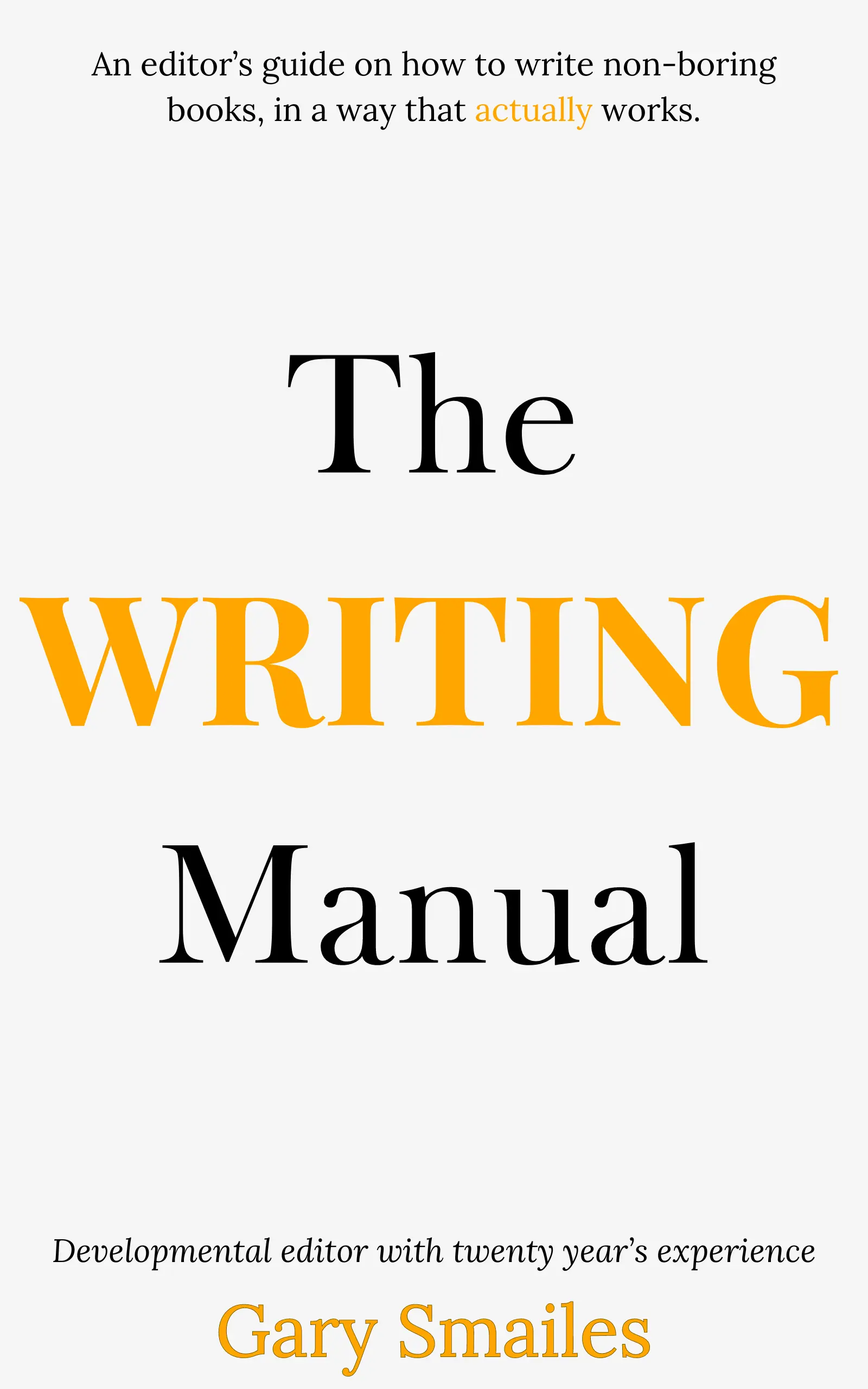
Download FREE ebook
Claim your free eBook today and join over 25,000 writers who have read and benefited from this ebook.
'It is probably one of the best books on writing I've read so far.' Miz Bent